Departments of Pediatrics (KM Richardson, E Kerns, and RJ McCulloh).
Medical Informatics and Telemedicine (SD Fouquet), Children's Mercy Kansas City, Mo.
Acad Pediatr. 2019 Sep-Oct;19(7):828-834. doi: 10.1016/j.acap.2019.03.001. Epub 2019 Mar 7.
To evaluate the individual-level impact of an electronic clinical decision support (ECDS) tool, PedsGuide, on febrile infant clinical decision making and cognitive load.
A counterbalanced, prospective, crossover simulation study was performed among attending and trainee physicians. Participants performed simulated febrile infant cases with use of PedsGuide and with standard reference text. Cognitive load was assessed using the NASA-Task Load Index (NASA-TLX), which determines mental, physical, temporal demand, effort, frustration, and performance. Usability was assessed with the System Usability Scale (SUS). Scores on cases and NASA-TLX scores were compared between condition states.
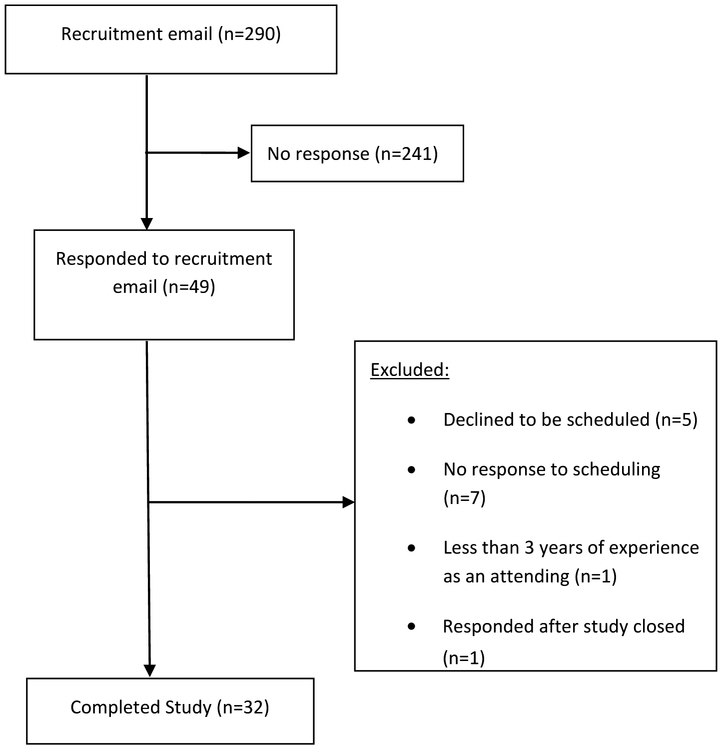
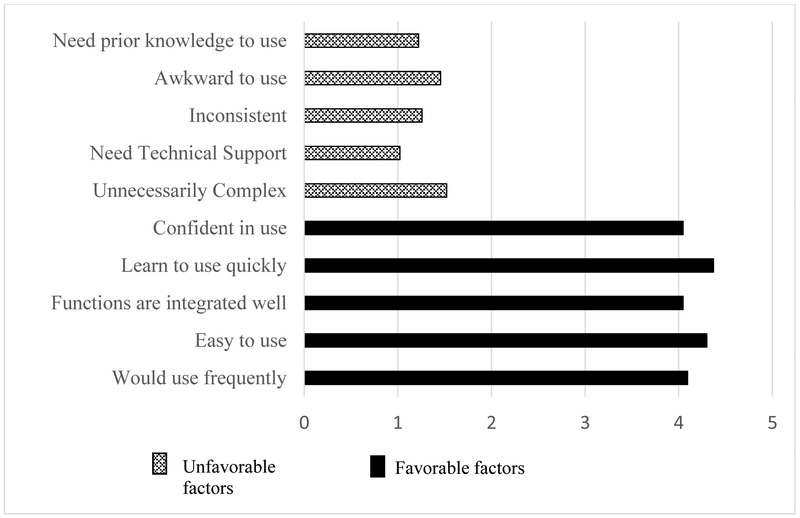
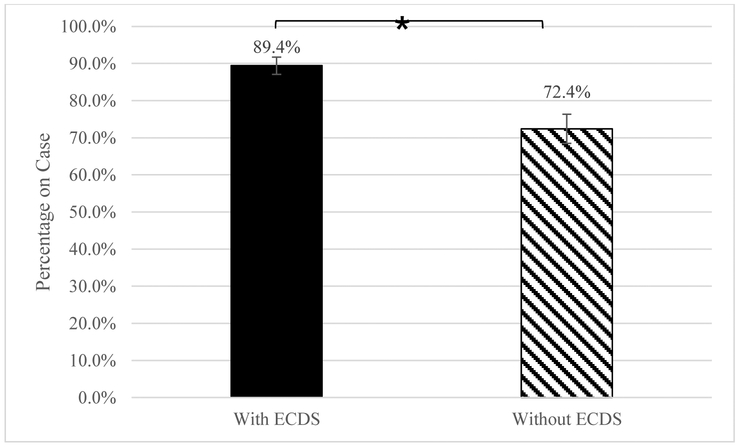
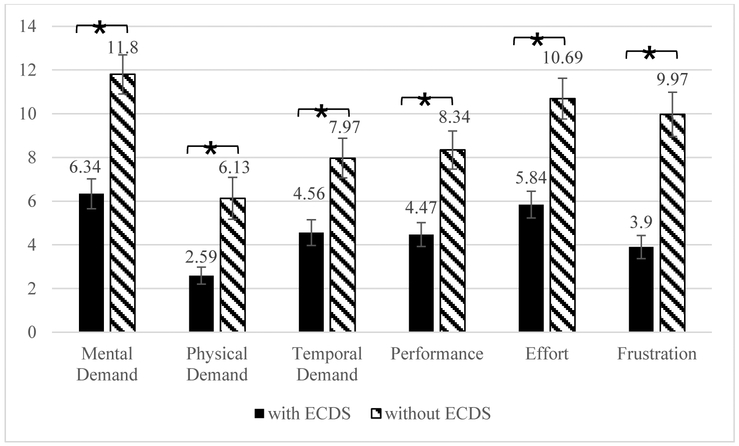
A total of 32 participants completed the study. Scores on febrile infant cases using PedsGuide were greater compared with standard reference text (89% vs 72%, P = .001). NASA-TLX scores were lower (ie, more optimal) with use of PedsGuide versus control (mental 6.34 vs 11.8, P < .001; physical 2.6 vs 6.1, P = .001; temporal demand 4.6 vs 8.0, P = .003; performance 4.5 vs 8.3, P < .001; effort 5.8 vs 10.7, P < .001; frustration 3.9 vs 10, P < .001). The SUS had an overall score of 88 of 100 with rating of acceptable on the acceptability scale.
Use of PedsGuide led to increased adherence to guidelines and decreased cognitive load in febrile infant management when compared with the use of a standard reference tool. This study employs a rarely used method of assessing ECDS tools using a multifaceted approach (medical decision-making, assessing usability, and cognitive workload,) that may be used to assess other ECDS tools in the future.
评估电子临床决策支持(ECDS)工具 PedsGuide 对发热婴儿临床决策和认知负荷的个体影响。
在主治医生和住院医生中进行了一项平衡、前瞻性、交叉模拟研究。参与者使用 PedsGuide 和标准参考文本进行模拟发热婴儿病例。使用 NASA 任务负荷指数(NASA-TLX)评估认知负荷,该指数确定心理、生理、时间需求、努力、挫折和绩效。使用系统可用性量表(SUS)评估可用性。病例和 NASA-TLX 分数在条件状态之间进行比较。
共有 32 名参与者完成了研究。使用 PedsGuide 的发热婴儿病例得分高于标准参考文本(89%比 72%,P=0.001)。与对照相比,使用 PedsGuide 的 NASA-TLX 分数较低(即更优)(心理 6.34 比 11.8,P<0.001;生理 2.6 比 6.1,P=0.001;时间需求 4.6 比 8.0,P=0.003;绩效 4.5 比 8.3,P<0.001;努力 5.8 比 10.7,P<0.001;挫折 3.9 比 10,P<0.001)。SUS 的总得分为 100 分中的 88 分,在可接受性量表上的评级为可接受。
与使用标准参考工具相比,使用 PedsGuide 可提高发热婴儿管理的指南依从性并降低认知负荷。本研究采用了一种很少使用的方法,通过多方面的方法(医疗决策、评估可用性和认知工作量)评估 ECDS 工具,这可能用于未来评估其他 ECDS 工具。