Manchester Centre for Synthetic Biology of Fine and Speciality Chemicals (SYNBIOCHEM), Manchester Institute of Biotechnology, Faculty of Science and Engineering, University of Manchester, 131 Princess Street, Manchester, M1 7DN, United Kingdom.
Structural & Computational Biology Unit, European Molecular Biology Laboratory, Meyerhofstraße 1, 69117, Heidelberg, Germany.
Commun Biol. 2019 Feb 28;2:83. doi: 10.1038/s42003-019-0333-6. eCollection 2019.
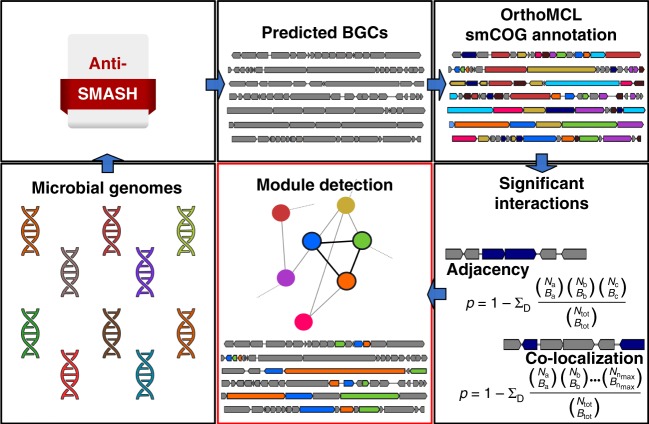
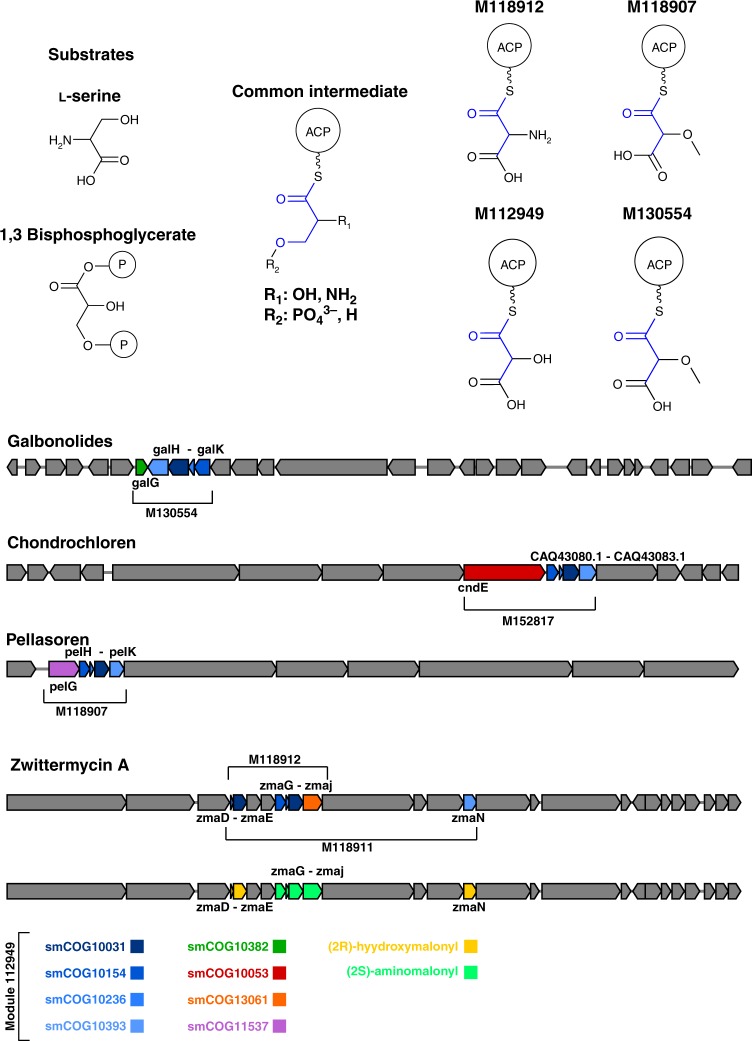
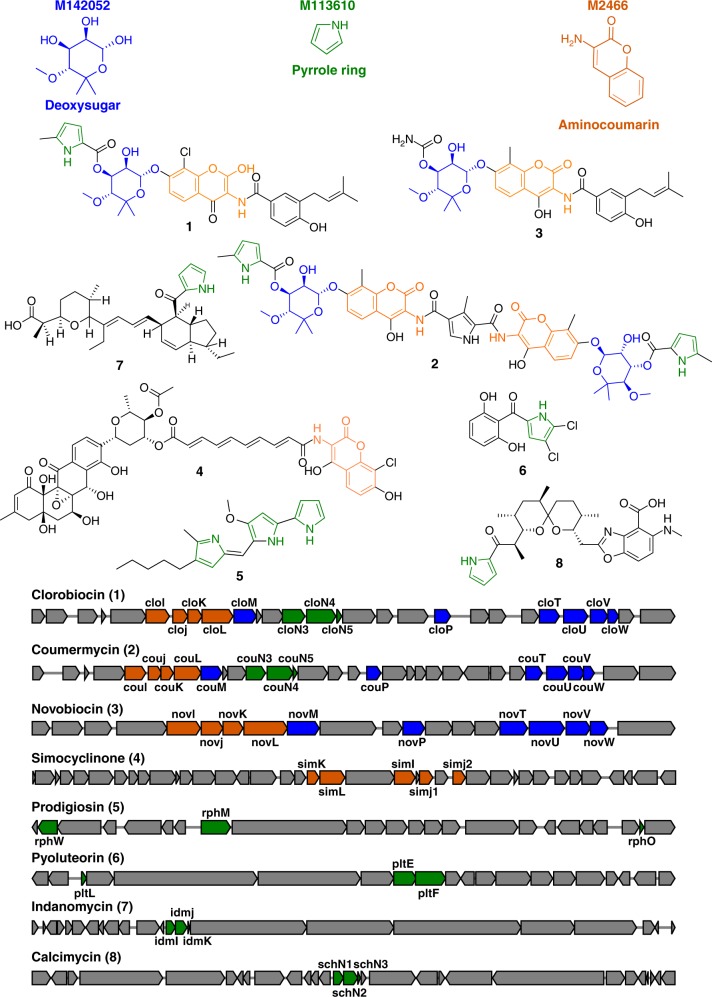
The biosynthetic machinery responsible for the production of bacterial specialised metabolites is encoded by physically clustered group of genes called biosynthetic gene clusters (BGCs). The experimental characterisation of numerous BGCs has led to the elucidation of subclusters of genes within BGCs, jointly responsible for the same biosynthetic function in different genetic contexts. We developed an unsupervised statistical method able to successfully detect a large number of modules (putative functional subclusters) within an extensive set of predicted BGCs in a systematic and automated manner. Multiple already known subclusters were confirmed by our method, proving its efficiency and sensitivity. In addition, the resulting large collection of newly defined modules provides new insights into the prevalence and putative biosynthetic role of these modular genetic entities. The automated and unbiased identification of hundreds of co-evolving group of genes is an essential breakthrough for the discovery and biosynthetic engineering of high-value compounds.
负责产生细菌特殊代谢物的生物合成机制由一组被称为生物合成基因簇(BGCs)的物理聚类的基因编码。对许多 BGCs 的实验表征导致了 BGC 内基因亚簇的阐明,这些亚簇共同负责不同遗传背景下相同的生物合成功能。我们开发了一种无监督的统计方法,能够成功地以系统和自动化的方式检测到大量预测 BGC 中的模块(假定的功能亚簇)。我们的方法证实了多个已知的亚簇,证明了它的效率和敏感性。此外,由此产生的大量新定义的模块为这些模块化遗传实体的普遍性和潜在生物合成作用提供了新的见解。数百个共同进化基因群的自动和无偏识别是发现和生物合成高价值化合物的关键突破。