Department of Obstetrics and Gynecology, University of California, Irvine, Orange, California.
Department of Obstetrics and Gynecology, Long Beach Memorial Miller Children's and Women's Hospital, Long Beach, California.
Am J Perinatol. 2019 Sep;36(11):1106-1114. doi: 10.1055/s-0039-1681097. Epub 2019 Mar 11.
We compare validation characteristics of four early warning systems for maternal morbidity.
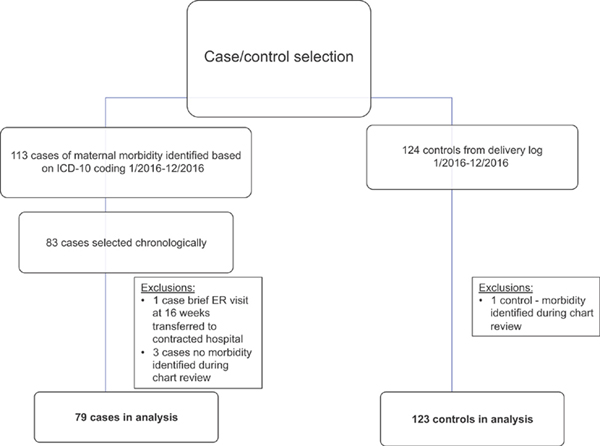
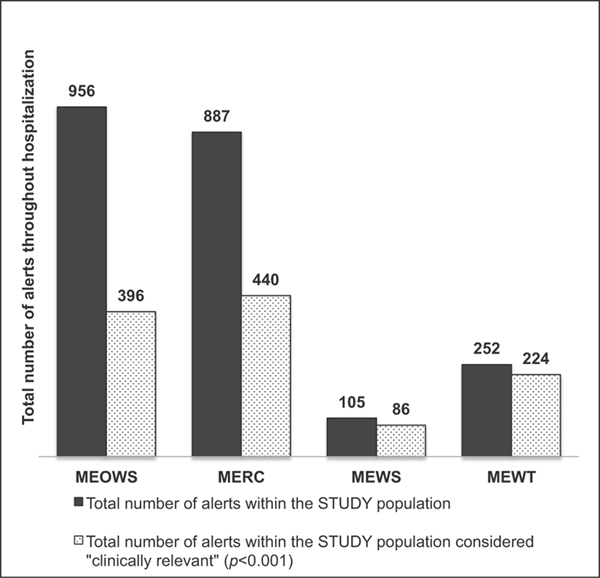
We used a retrospective cohort of severe maternal morbidity cases between January 2016 and December 2016 compared with a cohort of controls. We determined if the modified early obstetric warning score (MEOWS), maternal early recognition criteria (MERC), modified early warning system (MEWS), or maternal early warning trigger (MEWT) would have alerted. We developed criteria to determine which of these alerts was considered clinically "relevant."
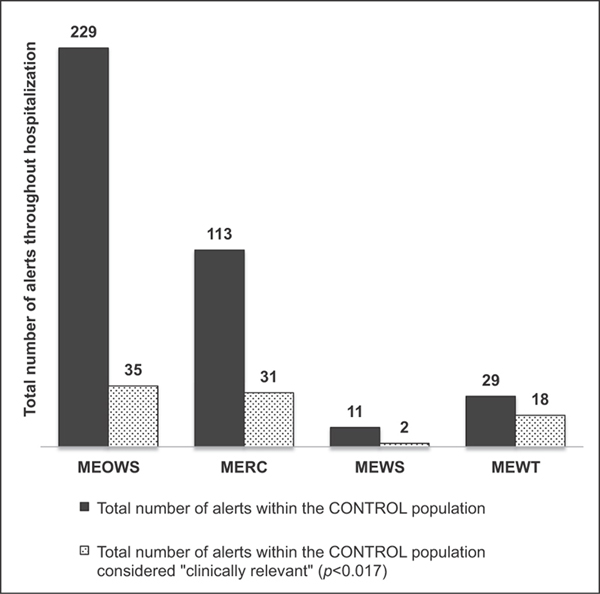
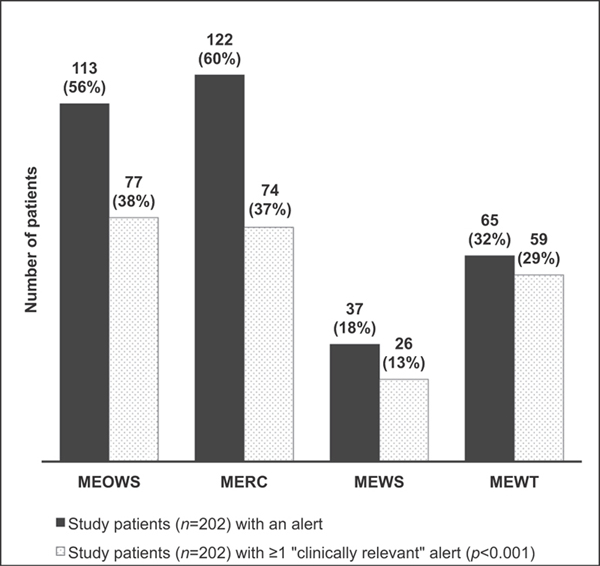
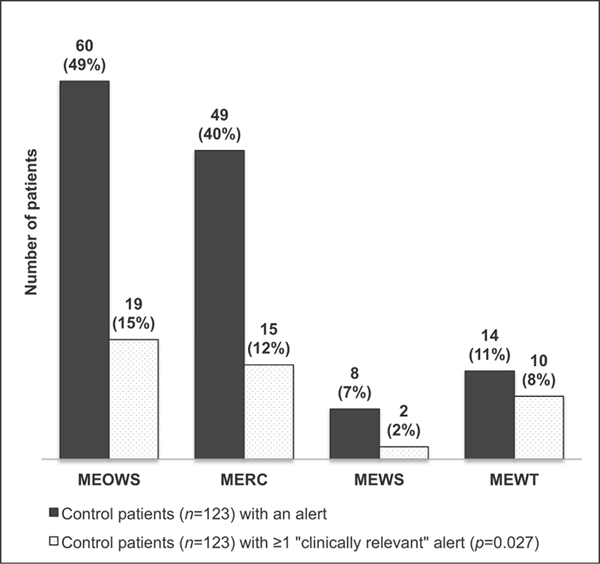
We reviewed 79 morbidity cases and 123 controls. MEOWS and MERC were more sensitive than MEWS or MEWT (67.1 and 67.1% vs. 19% and 40.5%, < 0.001); however, MEWT and MEWS were more specific (88.6% MEWT and 93.5% MEWS vs. 51.2% MEOWS and 60.2% MERC, < 0.001). In the control population, 70% of MEWT alerts still appeared "relevant" to the clinical scenario in contrast to the MEOWS (32%) or MERC systems (31%).
There are limited comparative data regarding how early warning systems perform in an American population for maternal morbidity. None of the systems performs with high sensitivity and specificity. High-volume, high-acuity units may decide that the lower sensitivity of the MEWT is relatively acceptable when considering the high false trigger rate of the other more sensitive systems. In addition, triggers in the MEWT system were more likely to be clinically relevant even in cases that did not have severe morbidity.
我们比较了四种孕产妇发病率预警系统的验证特征。
我们使用了 2016 年 1 月至 12 月期间严重孕产妇发病率病例的回顾性队列与对照组进行比较。我们确定了改良产科预警评分(MEOWS)、孕产妇早期识别标准(MERC)、改良早期预警评分(MEWS)或孕产妇早期预警触发(MEWT)是否会发出警报。我们制定了标准来确定这些警报中哪些被认为是临床“相关”的。
我们回顾了 79 例发病率病例和 123 例对照。MEOWS 和 MERC 比 MEWS 或 MEWT 更敏感(67.1%和 67.1%比 19%和 40.5%, < 0.001);然而,MEWT 和 MEWS 更特异(88.6%MEWT 和 93.5%MEWS 比 51.2%MEOWS 和 60.2%MERC, < 0.001)。在对照组中,与 MEOWS(32%)或 MERC 系统(31%)相比,70%的 MEWT 警报仍然与临床情况“相关”。
关于预警系统在美国人群中对孕产妇发病率的表现,目前仅有有限的比较数据。没有一个系统具有高敏感性和特异性。高容量、高重症单位可能认为,在考虑到其他更敏感系统的高假触发率的情况下,MEWT 的低敏感性相对可以接受。此外,即使在没有严重发病率的情况下,MEWT 系统的触发因素也更有可能具有临床相关性。