Department of Natural Sciences, Bonn-Rhein-Sieg University of Applied Sciences, von-Liebig-Strasse 20, D-53359 Rheinbach, Germany.
Institute of Crop Science and Resource Conservation, Faculty of Agriculture, University of Bonn, Klein-Altendorf 2, D-53359 Rheinbach, Germany.
Int J Mol Sci. 2019 Mar 9;20(5):1200. doi: 10.3390/ijms20051200.
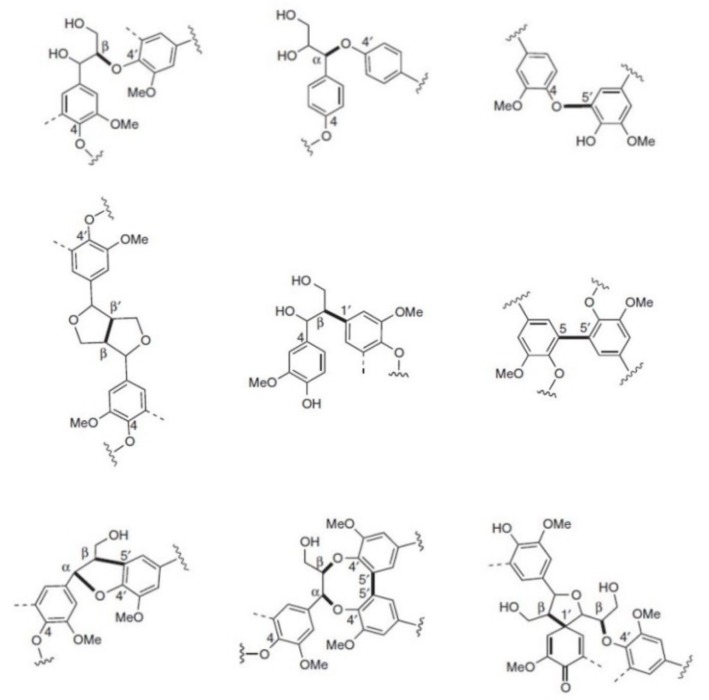
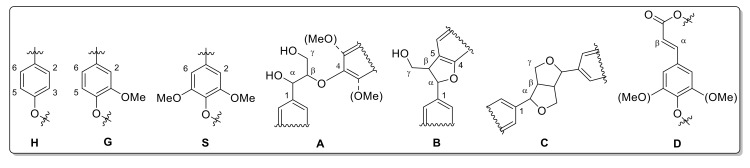
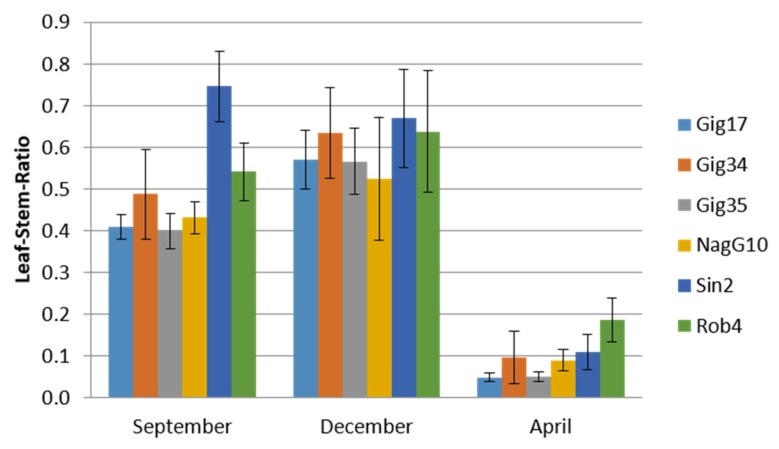
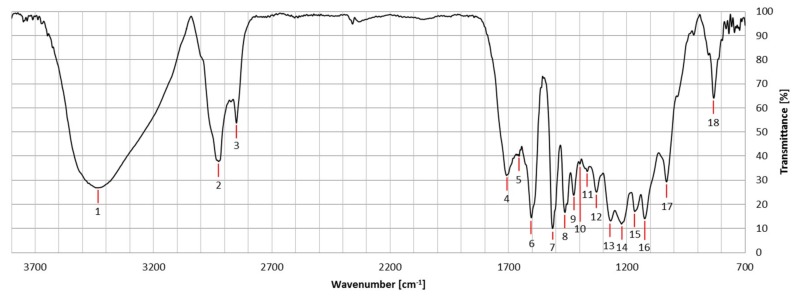
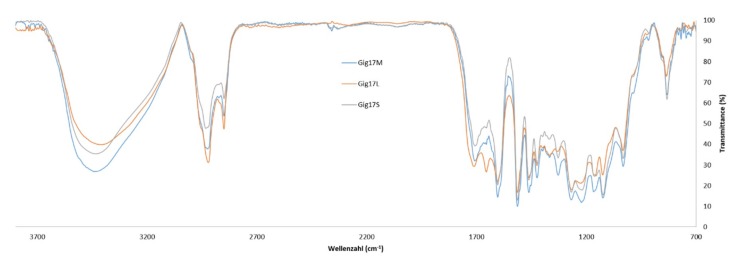
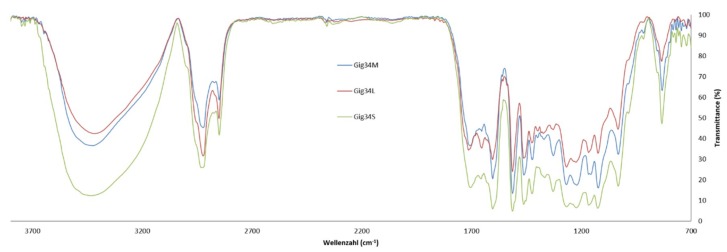
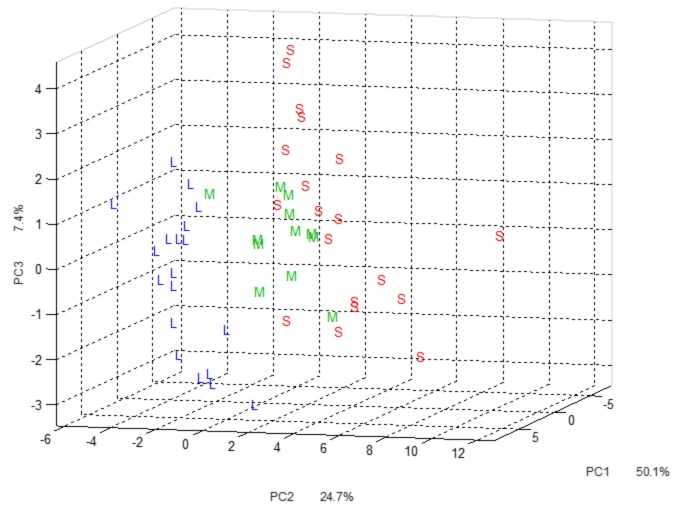
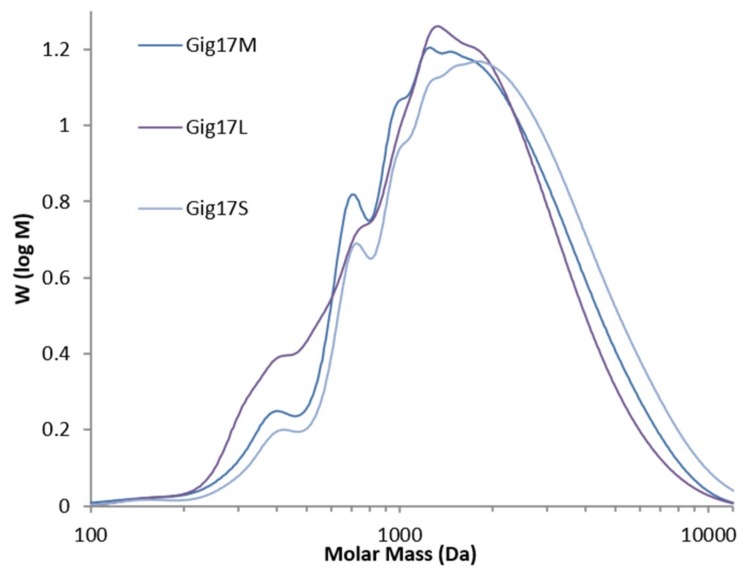
As a renewable, offers numerous advantages such as high photosynthesis activity (as a C₄ plant) and an exceptional CO₂ fixation rate. These properties make very attractive for industrial exploitation, such as lignin generation. In this paper, we present a systematic study analyzing the correlation of the lignin structure with the genotype and plant portion (stem versus leaf). Specifically, the ratio of the three monolignols and corresponding building blocks as well as the linkages formed between the units have been studied. The lignin amount has been determined for . x (Gig17, Gig34, Gig35), . (NagG10), . (Sin2), and . (Rob4) harvested at different time points (September, December, and April). The influence of the genotype and plant component (leaf vs. stem) has been studied to develop corresponding structure-property relationships (i.e., correlations in molecular weight, polydispersity, and decomposition temperature). Lignin isolation was performed using non-catalyzed organosolv pulping and the structure analysis includes compositional analysis, Fourier transform infradred (FTIR), ultraviolet/visible (UV-Vis), hetero-nuclear single quantum correlation nuclear magnetic resonsnce (HSQC-NMR), thermogravimetric analysis (TGA), and pyrolysis gaschromatography/mass spectrometry (GC/MS). Structural differences were found for stem and leaf-derived lignins. Compared to beech wood lignins, lignins possess lower molecular weight and narrow polydispersities (<1.5 vs. >2.5 beech) corresponding to improved homogeneity. In addition to conventional univariate analysis of FTIR spectra, multivariate chemometrics revealed distinct differences for aromatic in-plane deformations of stem versus leaf-derived lignins. These results emphasize the potential of as a low-input resource and a -derived lignin as promising agricultural feedstock.
作为一种可再生资源,杨树具有光合作用活性高(作为 C₄ 植物)和 CO₂ 固定率异常高的特点。这些特性使得杨树非常适合工业开发,例如木质素的生成。在本文中,我们进行了一项系统的研究,分析了木质素结构与杨树基因型和植物部位(茎与叶)之间的相关性。具体来说,研究了三种单体木酚的比例以及相应的构建块,以及这些单元之间形成的键。我们测定了 Gig17、Gig34、Gig35、NagG10、Sin2 和 Rob4 在不同时间点(9 月、12 月和 4 月)收获时的木质素含量。研究了杨树基因型和植物组成(叶与茎)的影响,以建立相应的结构-性质关系(即分子量、多分散性和分解温度的相关性)。木质素的分离采用非催化的有机溶剂蒸煮法,结构分析包括组成分析、傅里叶变换红外(FTIR)、紫外/可见(UV-Vis)、异核单量子相关核磁共振(HSQC-NMR)、热重分析(TGA)和热解气相色谱/质谱(GC/MS)。我们发现茎和叶衍生的木质素存在结构差异。与山毛榉木木质素相比,杨树木质素的分子量较低,多分散性较窄(<1.5 与山毛榉木的 >2.5),这表明其均一性更好。除了对 FTIR 光谱进行传统的单变量分析外,多元化学计量学还揭示了茎与叶衍生木质素的芳香面内变形的明显差异。这些结果强调了杨树作为低投入资源的潜力,以及杨树衍生木质素作为有前景的农业原料的潜力。