Center of Trauma, Daping Hospital, Third Military Medical University, Chongqing, China.
Department of Orthopedics, Southwest Hospital, Third Military Medical University, Chongqing, China; and.
FASEB J. 2019 Jun;33(6):7261-7273. doi: 10.1096/fj.201802172R. Epub 2019 Mar 11.
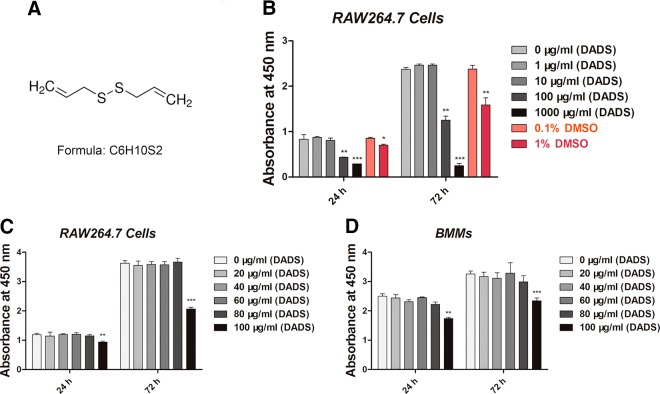
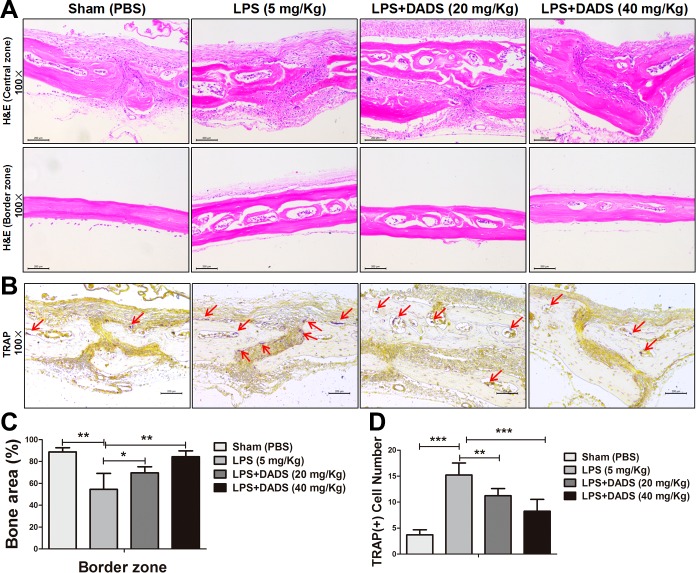
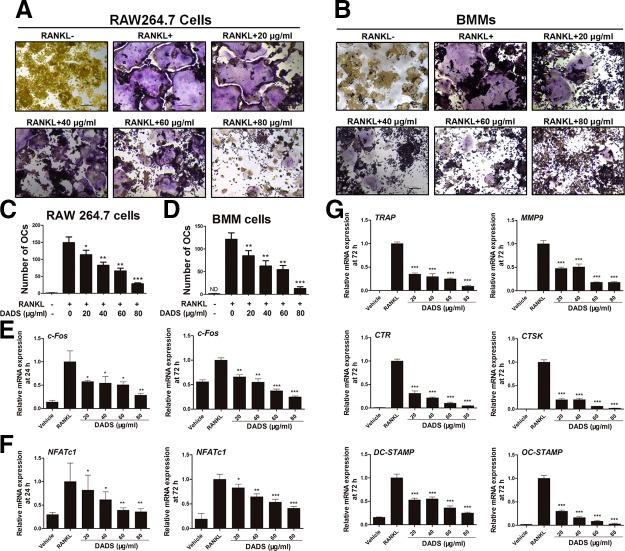
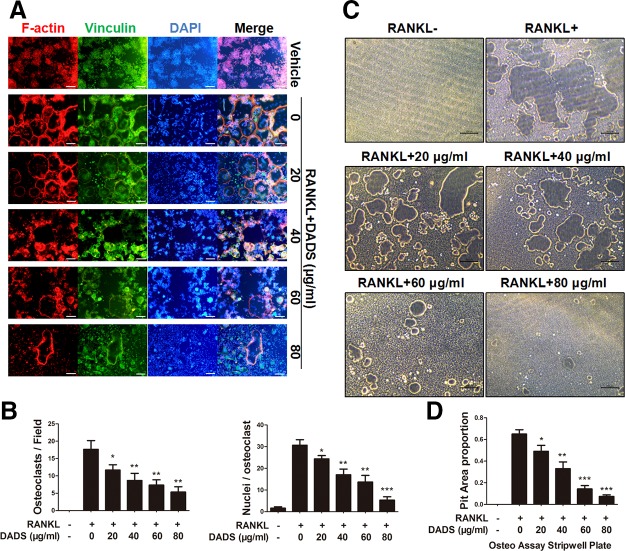
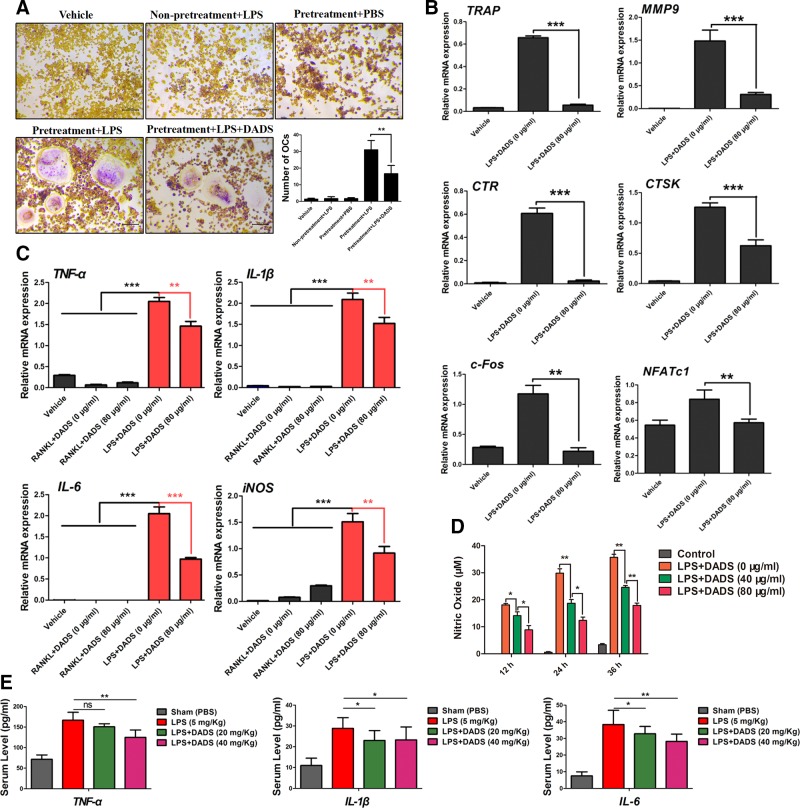
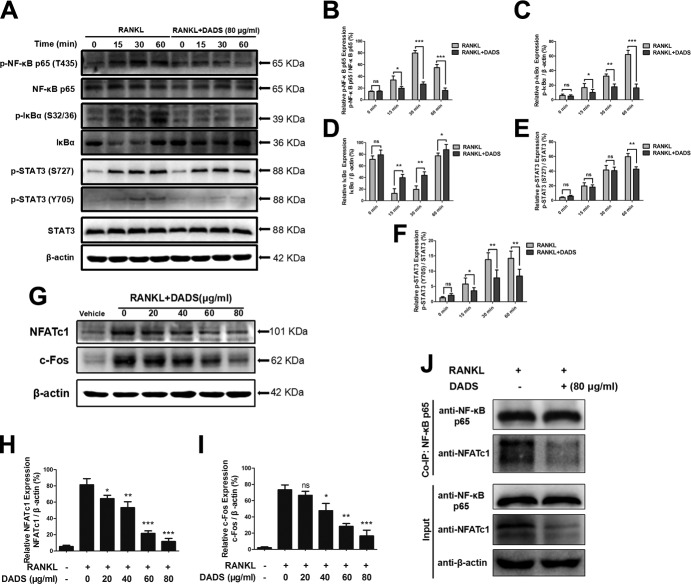
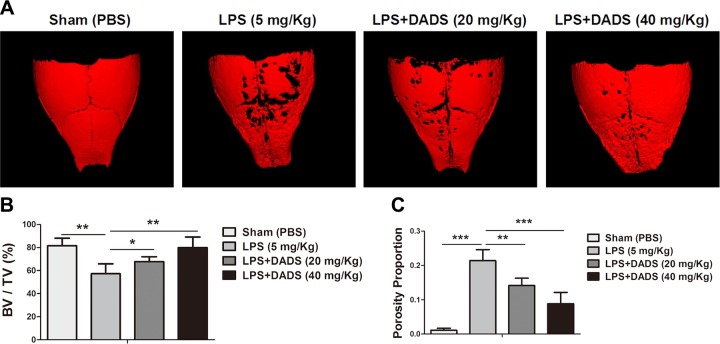
Skeletal homeostasis is closely effectuated by the regulation of bone formation and bone resorption. Osteoclasts are multinuclear giant cells responsible for bone resorption. Overactivated osteoclasts and excessive bone resorption result in various lytic bone diseases, such as osteoporosis, osteoarthritis, periprosthetic infection, and inflammatory aseptic loosening of orthopedic implants. In consideration of the severe side effects caused by the currently available drugs, exploitation of novel drugs has gradually attracted attention. Because of its anti-inflammatory, antioxidant, and antitumor capacities, diallyl disulfide (DADS), a major oil-soluble organosulfur ingredient compound derived from garlic, has been widely researched. However, the effects of DADS on osteoclasts and lytic bone diseases are still unknown. In this study, we investigated the effects of DADS on receptor activator of NF-κB ligand (RANKL)- and LPS-mediated osteoclastogenesis, LPS-stimulated proinflammatory cytokines related to osteoclasts, and LPS-induced inflammatory osteolysis. The results showed that DADS significantly inhibited RANKL-mediated osteoclast formation, fusion, and bone resorption in a dose-dependent manner inhibiting the NF-κB and signal transducer and activator of transcription 3 signaling and restraining the interaction of NF-κB p65 with nuclear factor of activated T cells cytoplasmic 1. Furthermore, DADS also markedly suppressed LPS-induced osteoclastogenesis and reduced the production of proinflammatory cytokines with LPS stimulation to indirectly mediate osteoclast formation. Consistent with the results, DADS prevented the LPS-induced severe bone loss by blocking the osteoclastogenesis. All of the results indicate that DADS may be a potential and exploitable drug used for preventing and impeding osteolytic lesions.-Yang, J., Tang, R., Yi, J., Chen, Y., Li, X., Yu, T., Fei, J. Diallyl disulfide alleviates inflammatory osteolysis by suppressing osteoclastogenesis NF-κB-NFATc1 signal pathway.
骨稳态是通过骨形成和骨吸收的调节来实现的。破骨细胞是负责骨吸收的多核巨细胞。破骨细胞过度激活和过度骨吸收导致各种溶骨性骨疾病,如骨质疏松症、骨关节炎、假体周围感染和骨科植入物的炎症性无菌性松动。考虑到目前可用药物引起的严重副作用,新型药物的开发逐渐引起了关注。由于其抗炎、抗氧化和抗肿瘤能力,二烯丙基二硫(DADS),一种源自大蒜的主要油溶性有机硫成分化合物,已被广泛研究。然而,DADS 对破骨细胞和溶骨性骨疾病的影响尚不清楚。在这项研究中,我们研究了 DADS 对核因子-κB 配体(RANKL)和 LPS 介导的破骨细胞生成、LPS 刺激的与破骨细胞相关的促炎细胞因子以及 LPS 诱导的炎症性骨溶解的影响。结果表明,DADS 以剂量依赖的方式显著抑制 RANKL 介导的破骨细胞形成、融合和骨吸收,抑制 NF-κB 和信号转导和转录激活因子 3 信号,并抑制 NF-κB p65 与激活 T 细胞细胞质 1 的核因子的相互作用。此外,DADS 还显著抑制 LPS 诱导的破骨细胞生成,并减少 LPS 刺激下促炎细胞因子的产生,从而间接介导破骨细胞形成。与结果一致,DADS 通过阻断破骨细胞生成来防止 LPS 诱导的严重骨质流失。所有结果表明,DADS 可能是一种有潜力和可开发的药物,可用于预防和阻碍溶骨性病变。-杨,J.,唐,R.,易,J.,陈,Y.,李,X.,于,T.,费,J. 二烯丙基二硫缓解炎症性骨溶解 通过抑制破骨细胞生成 NF-κB-NFATc1 信号通路。