Ministry of Agriculture Key Laboratory of Molecular Biology of Crop Pathogens and Insects, Institute of Insect Sciences, Zhejiang University, Hangzhou, 310058, People's Republic of China.
Virol J. 2019 Mar 11;16(1):32. doi: 10.1186/s12985-019-1138-4.
Viruses in the genus Begomovirus (Family Geminiviridae) include many important economic plant viruses transmitted by whiteflies of the Bemisia tabaci species complex. In general, different begomoviruses may be acquired and transmitted by the same whitefly species with different efficiencies. For example, the species Mediterranean (MED) in this whitefly species complex transmits tomato yellow leaf curl virus (TYLCV) at a higher efficiency than papaya leaf curl China virus (PaLCuCNV). However, the proteomic responses of whitefly to the infection of different begomoviruses remain largely unknown.
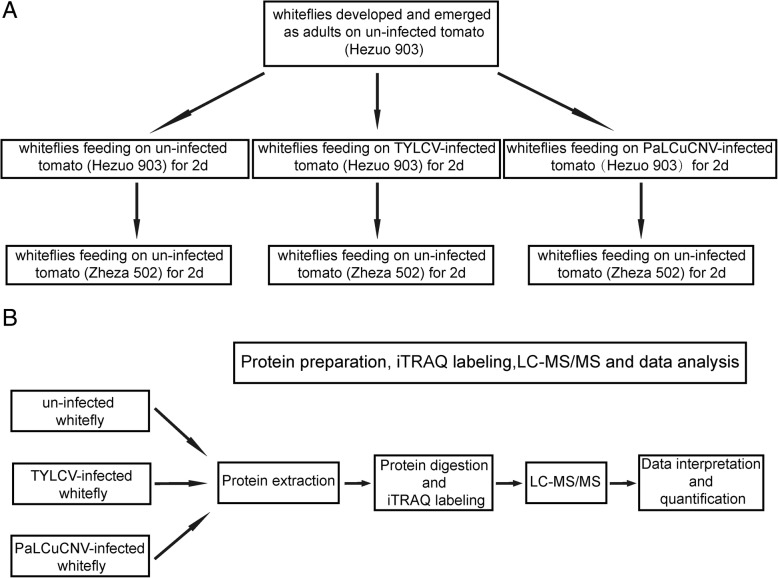
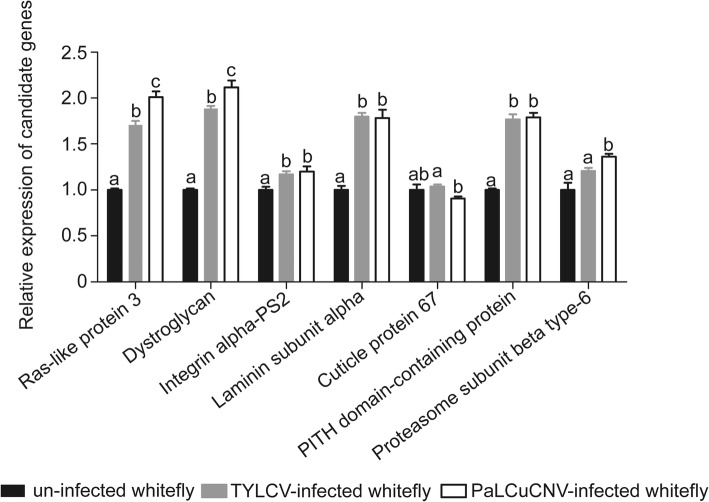
We used iTRAQ-based proteomics coupled with RT-qPCR to investigate and compare responses of the MED whitefly to the infection of TYLCV and PaLCuCNV.
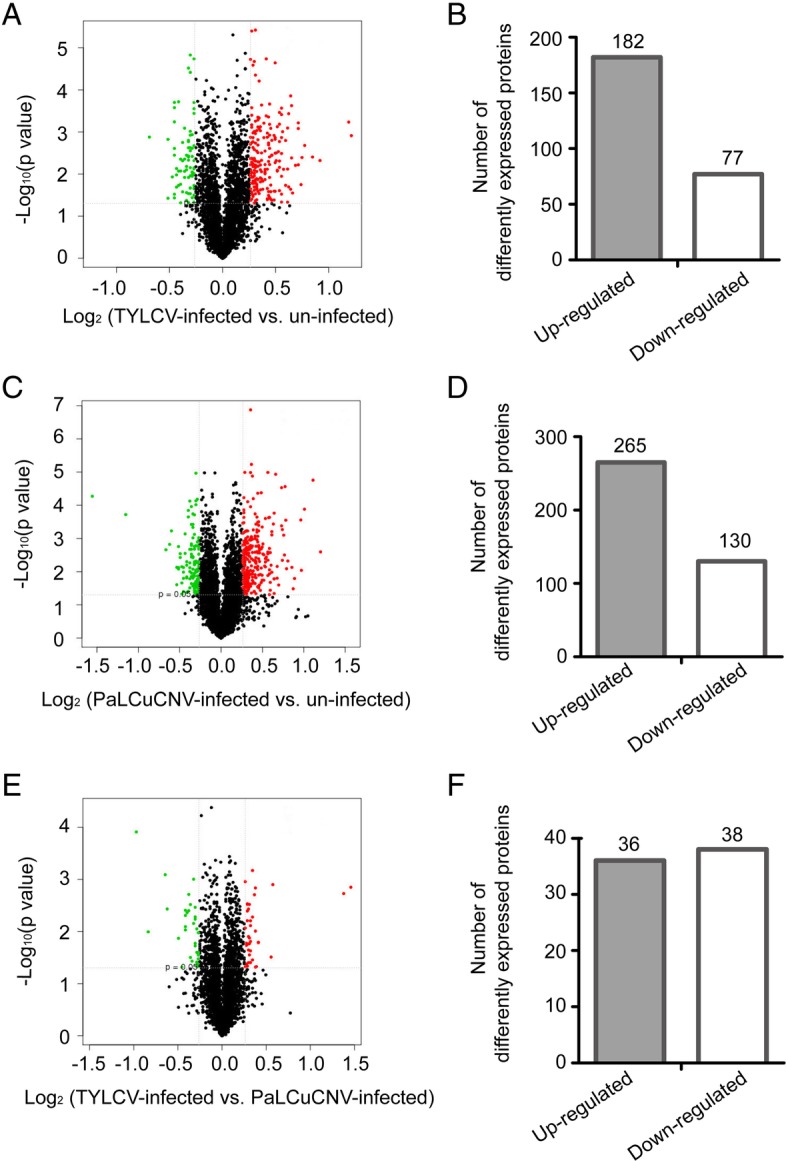
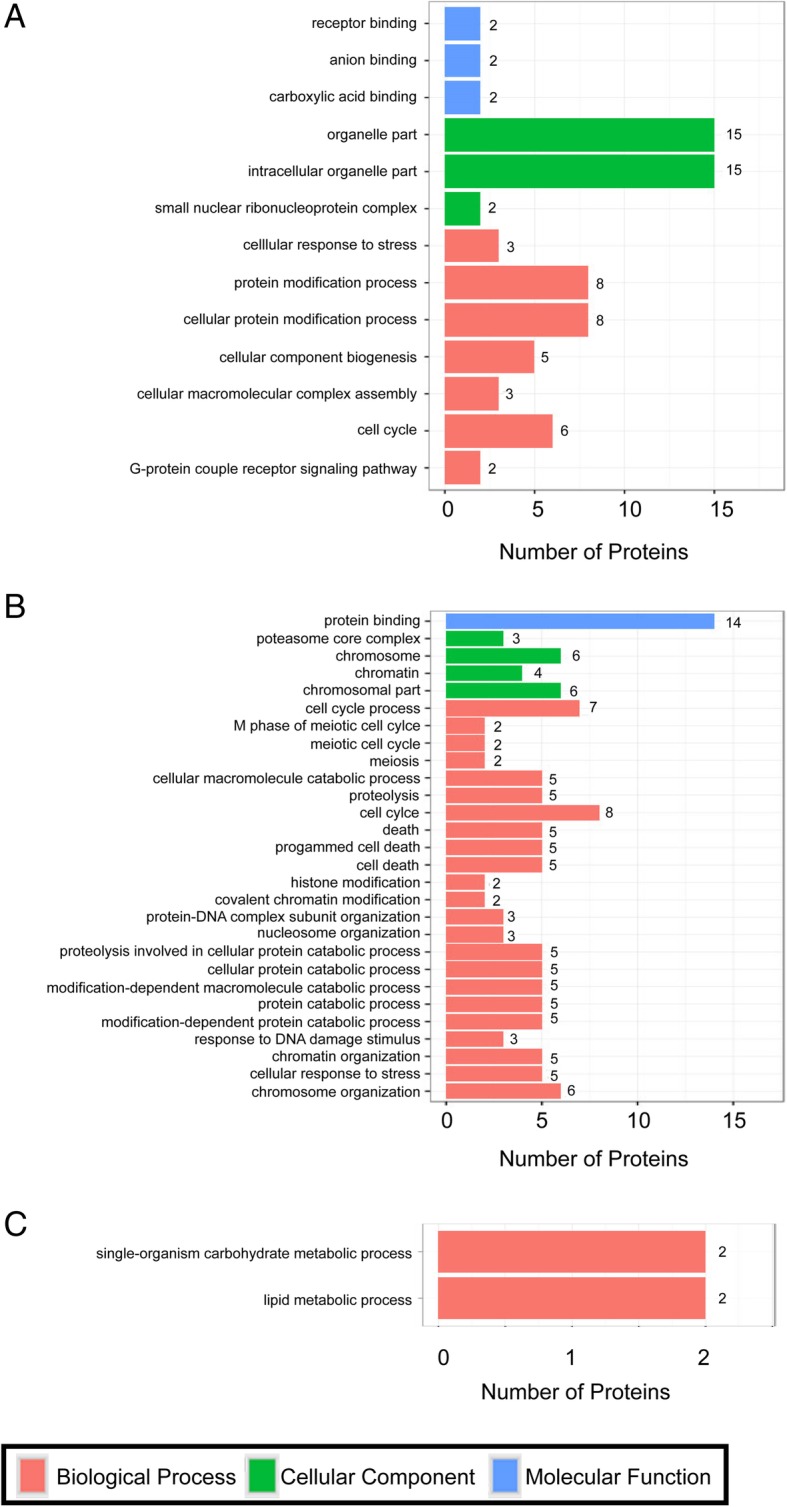
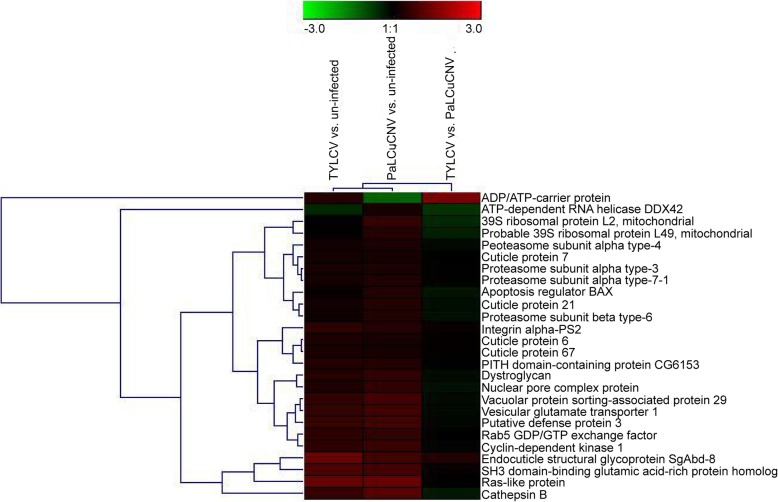
Totally, 259, 395 and 74 differently expressed proteins (DEPs) were identified in the comparisons of TYLCV-infected vs. un-infected, PaLCuCNV-infected vs. un-infected, and TYLCV-infected vs. PaLCuCNV-infected whiteflies, respectively. These proteins appear associated with catabolic process, metabolic process, transport, defense response, cell cycle, and receptor. The comparisons of TYLCV-infected vs. un-infected and PaLCuCNV-infected vs. un-infected shared some similar DEPs, indicating possible involvement of laminin subunit alpha, dystroglycan, integrin alpha-PS2 and cuticle proteins in viral transport as well as the role of putative defense proteins 3 and PITH in anti-viral response. However, 20S proteasome subunits associated with regulation of virus degradation and accumulation were up-regulated in PaLCuCNV-infected but not in TYLCV-infected whiteflies, which may be related to the constraints of PaLCuCNV accumulation in MED.
These findings provide valuable clues for unravelling the roles of some whitefly proteins in begomovirus transmission.
双生病毒属(病毒科)中的病毒包括许多由烟粉虱复合种传播的重要经济植物病毒。一般来说,不同的双生病毒可能被同一烟粉虱种以不同的效率获得和传播。例如,该复合种中的地中海烟粉虱(MED)比番木瓜曲叶病毒(PaLCuCNV)更有效地传播番茄黄曲叶病毒(TYLCV)。然而,烟粉虱感染不同双生病毒的蛋白质组响应在很大程度上仍然未知。
我们使用 iTRAQ 基于蛋白质组学结合 RT-qPCR 来研究和比较 MED 烟粉虱感染 TYLCV 和 PaLCuCNV 的反应。
总共在 TYLCV 感染与未感染、PaLCuCNV 感染与未感染以及 TYLCV 感染与 PaLCuCNV 感染的烟粉虱的比较中鉴定了 259、395 和 74 个差异表达蛋白(DEP)。这些蛋白似乎与分解代谢过程、代谢过程、运输、防御反应、细胞周期和受体有关。TYLCV 感染与未感染和 PaLCuCNV 感染与未感染的比较共享一些相似的 DEP,表明层粘连蛋白亚单位 alpha、dystroglycan、整合素 alpha-PS2 和角质蛋白可能参与病毒运输,而防御蛋白 3 和 PITH 可能在抗病毒反应中发挥作用。然而,与病毒降解和积累调节相关的 20S 蛋白酶体亚基在 PaLCuCNV 感染的烟粉虱中上调,但在 TYLCV 感染的烟粉虱中没有上调,这可能与 PaLCuCNV 在 MED 中的积累限制有关。
这些发现为揭示一些烟粉虱蛋白在双生病毒传播中的作用提供了有价值的线索。