Institute of Animal Welfare and Animal Husbandry, Friedrich-Loeffler-Institut, Dörnbergstr. 25/27, 29223, Celle, Germany.
Department of Animal Sciences, University of Göttingen, Albrecht-Thaer-Weg 3, 37075, Göttingen, Germany.
Sci Rep. 2019 Mar 11;9(1):4037. doi: 10.1038/s41598-019-40576-9.
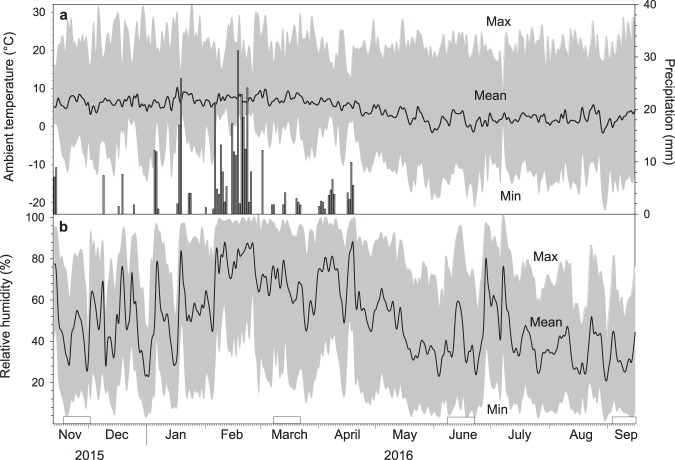
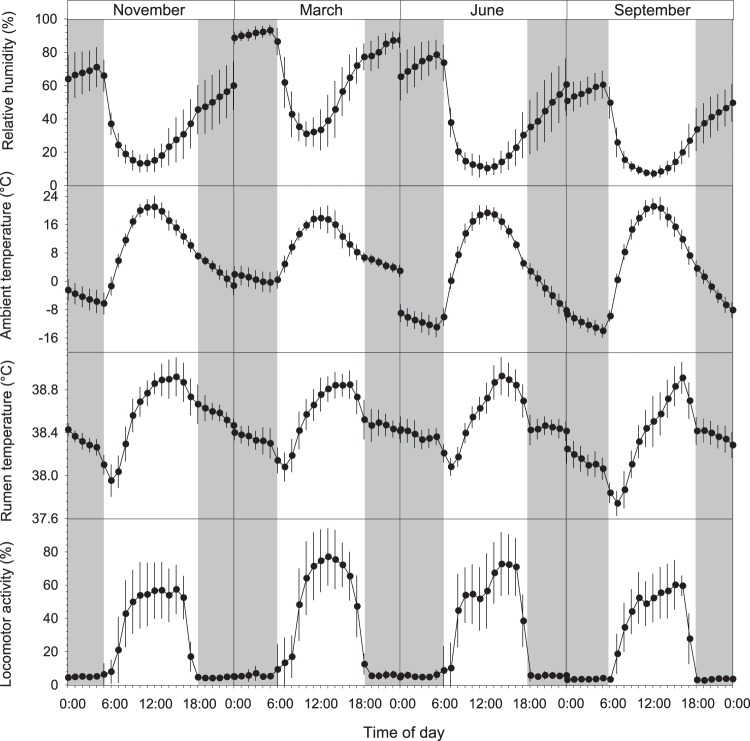
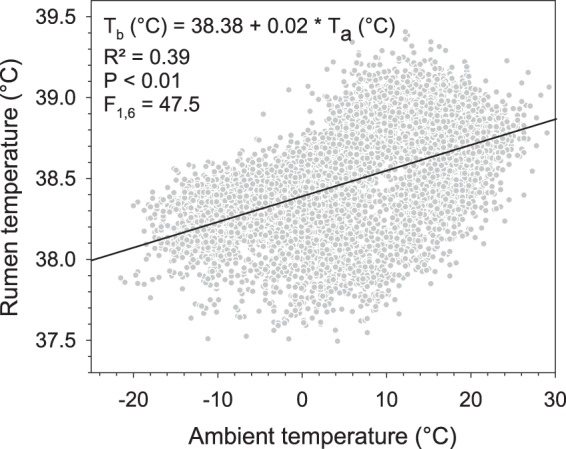
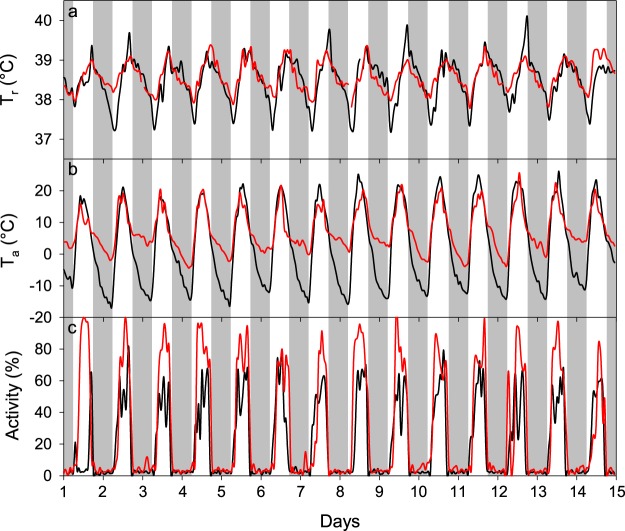
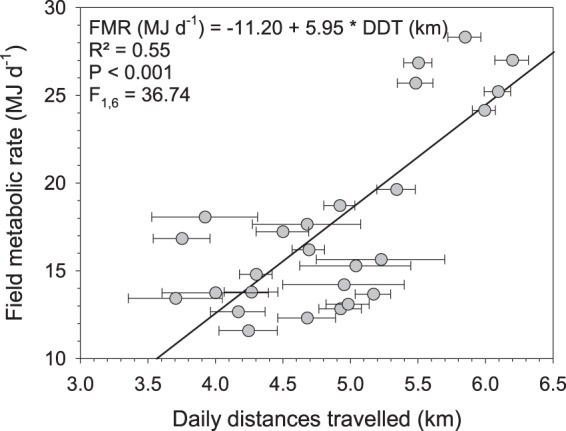
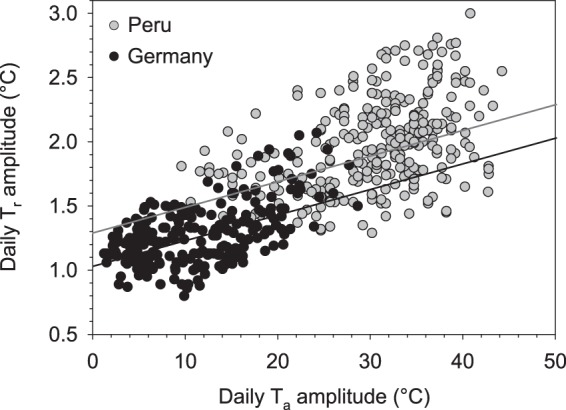
Some large herbivores exhibit seasonal adjustments in their energy metabolism. Therefore, our aim was to determine if the llama (one of the most extensively kept livestock breeds) exhibits seasonal adjustment of their energy expenditure, body temperature and locomotion, under its natural high altitude Andean habitat. For this purpose, energy expenditure, body temperature and locomotion were measured in seven non-pregnant llama dams for ten months on the Andean High Plateau (4400 m above sea level). Daily energy expenditure was measured as field metabolic rate using the doubly labelled water method at four different measurement times. Additionally, a telemetry system was used to continuously record activity, body temperature (3 min intervals) as well as the position (hourly) of each animal. The results show that llamas adjusted their body temperature and daily energy expenditure according to environmental conditions. Furthermore, llamas under high altitude Andean climatic conditions exhibited a pronounced daily rhythm in body temperature and activity, with low values at sunrise and increasing values towards sunset. Llamas also had remarkably low energy expenditure compared to other herbivores. Thus, despite the domestication process, llamas have not lost the ability to adjust their body temperature and daily energy expenditure under adverse environmental conditions, similar to some wild herbivores.
一些大型草食动物在能量代谢方面表现出季节性调整。因此,我们的目的是确定在其天然高海拔安第斯栖息地中,羊驼(最广泛饲养的家畜品种之一)是否表现出能量消耗、体温和运动的季节性调整。为此,我们在安第斯高原(海拔 4400 米以上)对七头非怀孕的羊驼母畜进行了十个月的测量。每日能量消耗通过双标记水法在四个不同的测量时间以野外代谢率的形式进行测量。此外,还使用遥测系统连续记录每个动物的活动、体温(3 分钟间隔)以及位置(每小时)。结果表明,羊驼根据环境条件调整体温和每日能量消耗。此外,在高海拔安第斯气候条件下,羊驼的体温和活动呈现出明显的日节律,日出时体温和活动最低,日落时逐渐升高。与其他草食动物相比,羊驼的能量消耗也非常低。因此,尽管经过了驯化过程,但羊驼在不利的环境条件下仍然没有失去调整体温和每日能量消耗的能力,这与一些野生草食动物相似。