Chen Yang, Zhang Yuping, Ouyang Zhengqing
The Jackson Laboratory for Genomic Medicine, Farmington, CT 06032, USA.
Pac Symp Biocomput. 2019;24:338-349.
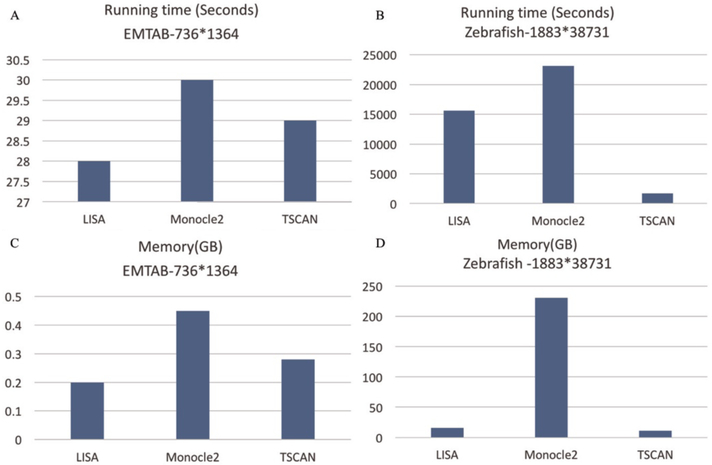
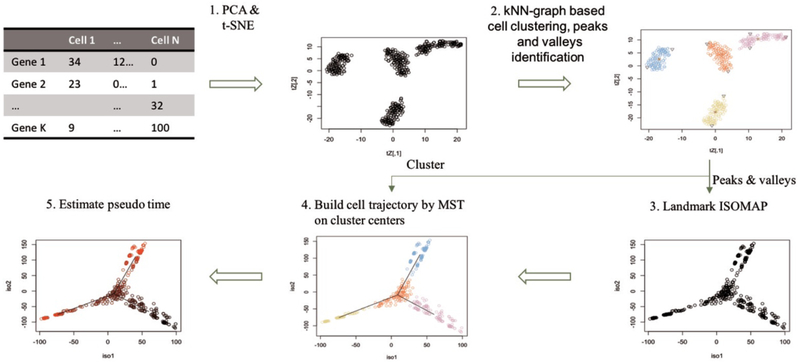
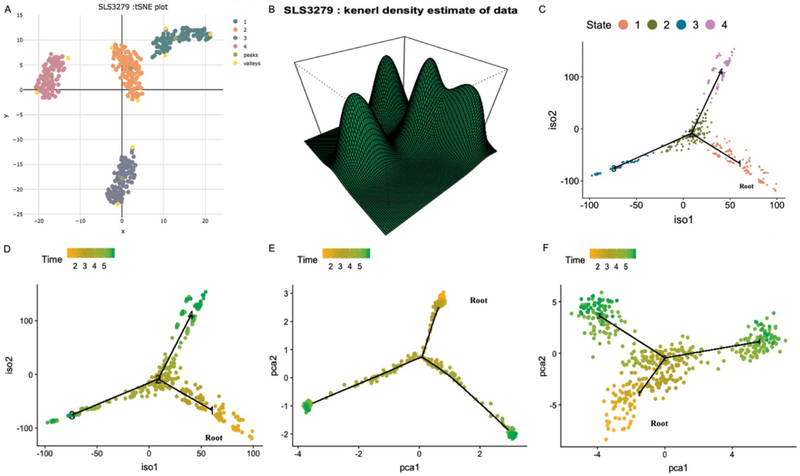
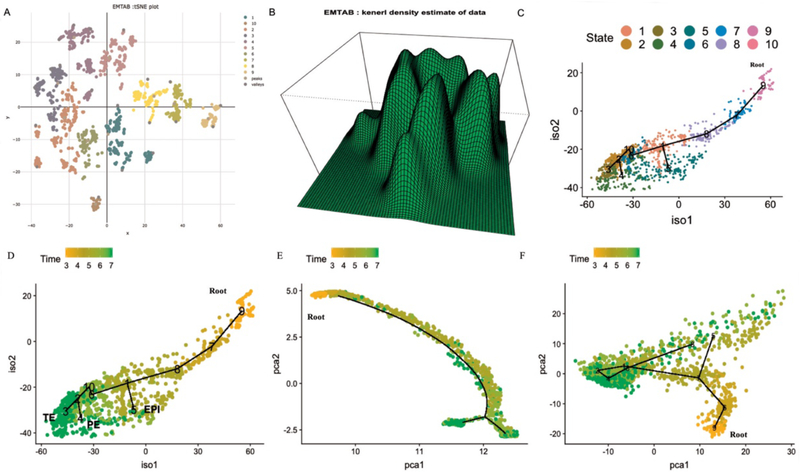
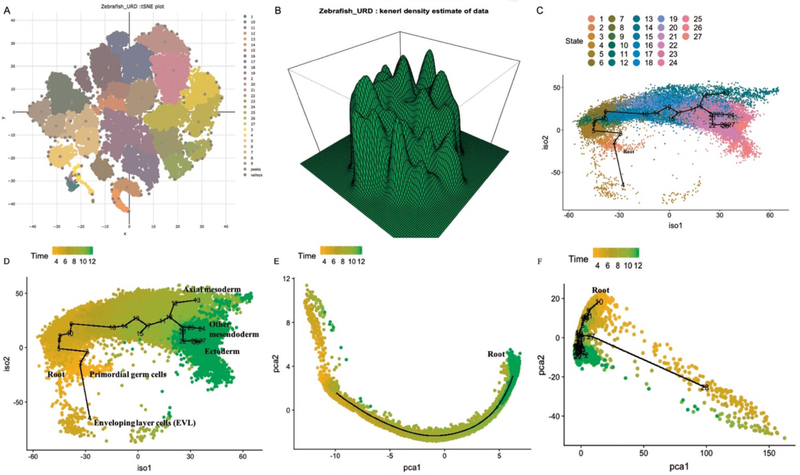
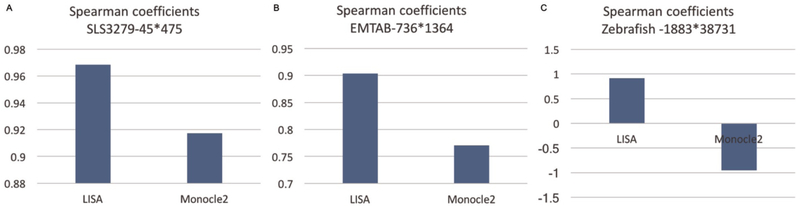
Cell trajectory reconstruction based on single cell RNA sequencing is important for obtaining the landscape of different cell types and discovering cell fate transitions. Despite intense effort, analyzing massive single cell RNA-seq datasets is still challenging. We propose a new method named Landmark Isomap for Single-cell Analysis (LISA). LISA is an unsupervised approach to build cell trajectory and compute pseudo-time in the isometric embedding based on geodesic distances. The advantages of LISA include: (1) It utilizes k-nearest-neighbor graph and hierarchical clustering to identify cell clusters, peaks and valleys in low-dimension representation of the data; (2) Based on Landmark Isomap, it constructs the main geometric structure of cell lineages; (3) It projects cells to the edges of the main cell trajectory to generate the global pseudo-time. Assessments on simulated and real datasets demonstrate the advantages of LISA on cell trajectory and pseudo-time reconstruction compared to Monocle2 and TSCAN. LISA is accurate, fast, and requires less memory usage, allowing its applications to massive single cell datasets generated from current experimental platforms.
基于单细胞RNA测序的细胞轨迹重建对于获取不同细胞类型的全景图和发现细胞命运转变至关重要。尽管付出了巨大努力,但分析大量单细胞RNA测序数据集仍然具有挑战性。我们提出了一种名为“单细胞分析地标等距映射法(LISA)”的新方法。LISA是一种无监督方法,用于在基于测地距离的等距嵌入中构建细胞轨迹并计算伪时间。LISA的优点包括:(1)它利用k近邻图和层次聚类来识别数据低维表示中的细胞簇、峰和谷;(2)基于地标等距映射,它构建细胞谱系的主要几何结构;(3)它将细胞投影到主要细胞轨迹的边缘以生成全局伪时间。对模拟和真实数据集的评估表明,与Monocle2和TSCAN相比,LISA在细胞轨迹和伪时间重建方面具有优势。LISA准确、快速且内存使用较少,使其能够应用于从当前实验平台生成的大量单细胞数据集。