Department of Civil Engineering, SRM Institute of Science and Technology, Kattankulathur, Kancheepuram 603203, Tamil Nadu, India.
Waste Management Unit, United Nations University (UNU-FLORES), 01067 Dresden, Germany.
Int J Environ Res Public Health. 2019 Mar 7;16(5):832. doi: 10.3390/ijerph16050832.
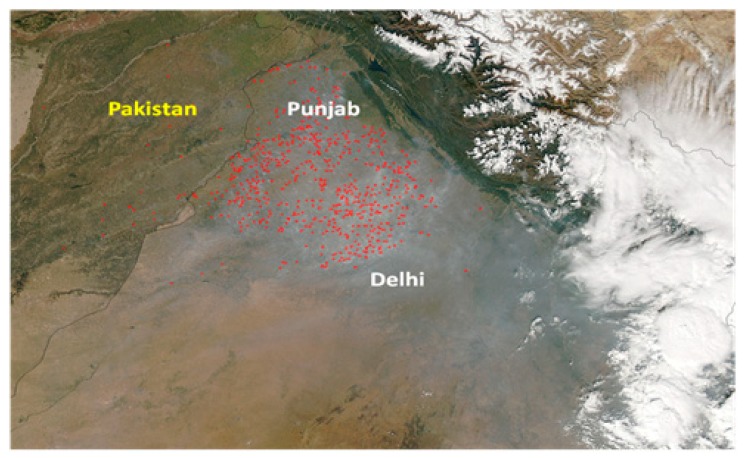
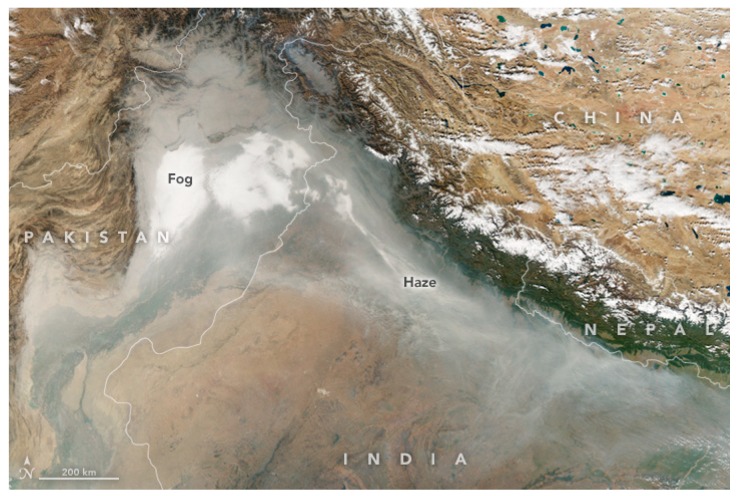
India, the second largest agro-based economy with year-round crop cultivation, generates a large amount of agricultural waste, including crop residues. In the absence of adequate sustainable management practices, approximately 92 seems a very small number of metric tons of crop waste is burned every year in India, causing excessive particulate matter emissions and air pollution. Crop residue burning has become a major environmental problem causing health issues as well as contributing to global warming. Composting, biochar production and mechanization are a few effective sustainable techniques that can help to curtail the issue while retaining the nutrients present in the crop residue in the soil. The government of India has attempted to curtail this problem, through numerous measures and campaigns designed to promote sustainable management methods such as converting crop residue into energy. However, the alarming rise of air pollution levels caused by crop residue burning in the city of Delhi and other northern areas in India observed in recent years, especially in and after the year of 2015, suggest that the issues is not yet under control. The solution to crop residue burning lies in the effective implementation of sustainable management practices with Government interventions and policies. This manuscript addresses the underlying technical as well as policy issues that has prevented India from achieving a long-lasting solution and also potential solutions that have been overlooked. However, effective implementation of these techniques also requires us to look at other socioeconomic aspects that had not been considered. This manuscript also discusses some of the policy considerations and functionality based on the analyses and current practices. The agricultural waste sector can benefit immensely from some of the examples from other waste sectors such as the municipal solid waste (MSW) and wastewater management where collection, segregation, recycling and disposal are institutionalized to secure an operational system. Active stakeholder involvement including education and empowerment of farmers along with technical solutions and product manufacturing can also assist tremendously. Even though the issue of crop residue burning touches many sectors, such as environment, agriculture, economy, social aspects, education, and energy, the past governmental efforts mainly revolved around agriculture and energy. This sectorial thinking is another barrier that needs to be broken. The government of India as well as governments of other developing countries can benefit from the emerging concept of nexus thinking in managing environmental resources. Nexus thinking promotes a higher-level integration and higher level of stakeholder involvement that goes beyond the disciplinary boundaries, providing a supporting platform to solve issues such as crop residue burning.
印度是第二大以农业为基础的经济体,全年都有作物种植,因此产生了大量的农业废弃物,包括农作物残余物。由于缺乏足够的可持续管理实践,印度每年约有 92 万吨农作物残余物被焚烧,这导致了过度的颗粒物排放和空气污染。农作物残余物的焚烧已成为一个主要的环境问题,不仅对健康造成影响,还导致了全球变暖。堆肥、生物炭生产和机械化是几种有效的可持续技术,可以帮助遏制这个问题,同时保留农作物残余物中的养分在土壤中。印度政府已经尝试通过各种措施和运动来遏制这个问题,这些措施和运动旨在推广可持续的管理方法,例如将农作物残余物转化为能源。然而,近年来德里市和印度北部其他地区(尤其是 2015 年之后)观察到的由农作物残余物焚烧引起的空气污染水平急剧上升,表明这个问题尚未得到控制。解决农作物残余物焚烧问题的关键在于政府干预和政策的有效实施可持续管理实践。本文讨论了阻止印度实现持久解决方案的潜在技术和政策问题,以及被忽视的潜在解决方案。然而,这些技术的有效实施还要求我们考虑到其他被忽视的社会经济方面。本文还根据分析和当前实践讨论了一些政策考虑因素和功能。农业废弃物部门可以从其他废弃物部门(如城市固体废物(MSW)和废水管理)中吸取一些经验,这些部门已经将收集、分类、回收和处置制度化,以确保系统的运行。积极的利益相关者参与,包括对农民的教育和赋权,以及技术解决方案和产品制造,也可以提供巨大帮助。尽管农作物残余物焚烧问题涉及许多领域,如环境、农业、经济、社会方面、教育和能源,但过去政府的努力主要集中在农业和能源方面。这种部门性思维是另一个需要打破的障碍。印度政府和其他发展中国家的政府可以从管理环境资源的新兴关联思维概念中受益。关联思维促进了更高水平的整合和更高层次的利益相关者参与,超越了学科界限,为解决农作物残余物焚烧等问题提供了一个支持平台。