Singh Ashok K
Department of Veterinary Population Medicine, College of Veterinary Medicine, University of Minnesota, St. Paul, MN 55108, USA.
Biomedicines. 2019 Mar 7;7(1):16. doi: 10.3390/biomedicines7010016.
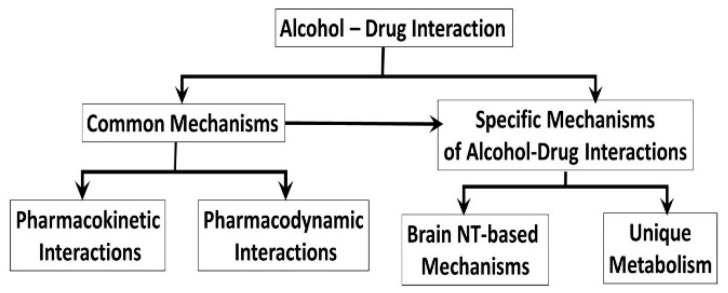
Millions of people around the world drink alcoholic beverages to cope with the stress of modern lifestyle. Although moderate alcohol drinking may have some relaxing and euphoric effects, uncontrolled drinking exacerbates the problems associated with alcohol abuse that are exploding in quantity and intensity in the United States and around the world. Recently, mixing of alcohol with other drugs of abuse (such as opioids, cocaine, methamphetamine, nicotine, cannabis, and γ-hydroxybutyric acid) and medications has become an emerging trend, exacerbating the public health concerns. Mixing of alcohol with other drugs may additively or synergistically augment the seriousness of the adverse effects such as the withdrawal symptoms, cardiovascular disorders, liver damage, reproductive abnormalities, and behavioral abnormalities. Despite the seriousness of the situation, possible mechanisms underlying the interactions is not yet understood. This has been one of the key hindrances in developing effective treatments. Therefore, the aim of this article is to review the consequences of alcohol's interaction with other drugs and decipher the underlying mechanisms.
世界各地数以百万计的人饮用酒精饮料以应对现代生活方式带来的压力。虽然适度饮酒可能会有一些放松和欣快的效果,但无节制饮酒会加剧与酒精滥用相关的问题,这些问题在美国和世界各地的数量和严重程度都在激增。最近,酒精与其他滥用药物(如阿片类药物、可卡因、甲基苯丙胺、尼古丁、大麻和γ-羟基丁酸)以及药物混合使用已成为一种新兴趋势,加剧了公众对健康问题的担忧。酒精与其他药物混合使用可能会相加或协同增强诸如戒断症状、心血管疾病、肝损伤、生殖异常和行为异常等不良反应的严重性。尽管情况严峻,但尚未了解相互作用背后的可能机制。这一直是开发有效治疗方法的关键障碍之一。因此,本文的目的是综述酒精与其他药物相互作用的后果,并解读其潜在机制。