a Virology Department, Centre Pasteur du Cameroun , Institut Pasteur International Network , Yaoundé , Cameroon.
b Virology Unit , Institut Pasteur du Cambodge, Institut Pasteur International Network , Phnom Penh , Cambodia.
Emerg Microbes Infect. 2019;8(1):186-196. doi: 10.1080/22221751.2018.1564631.
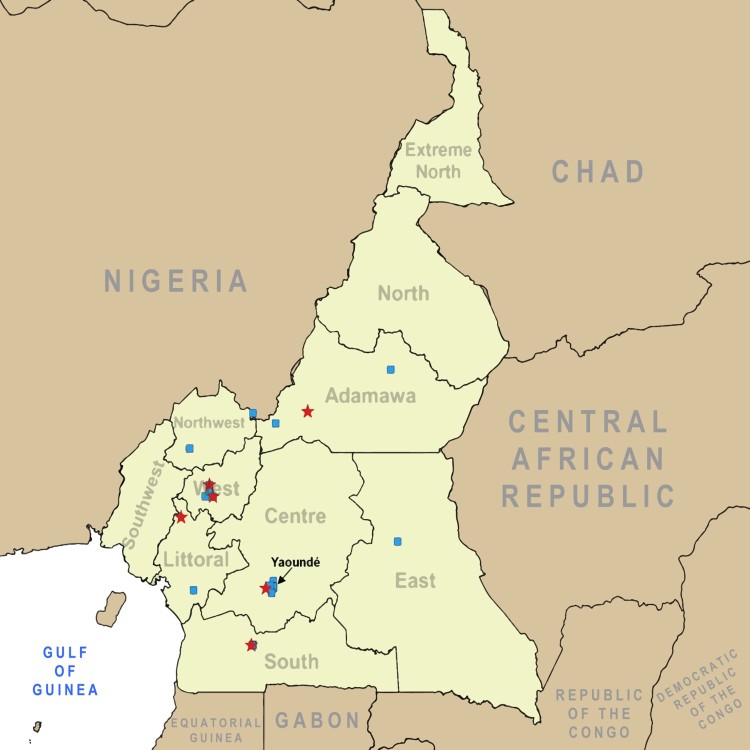
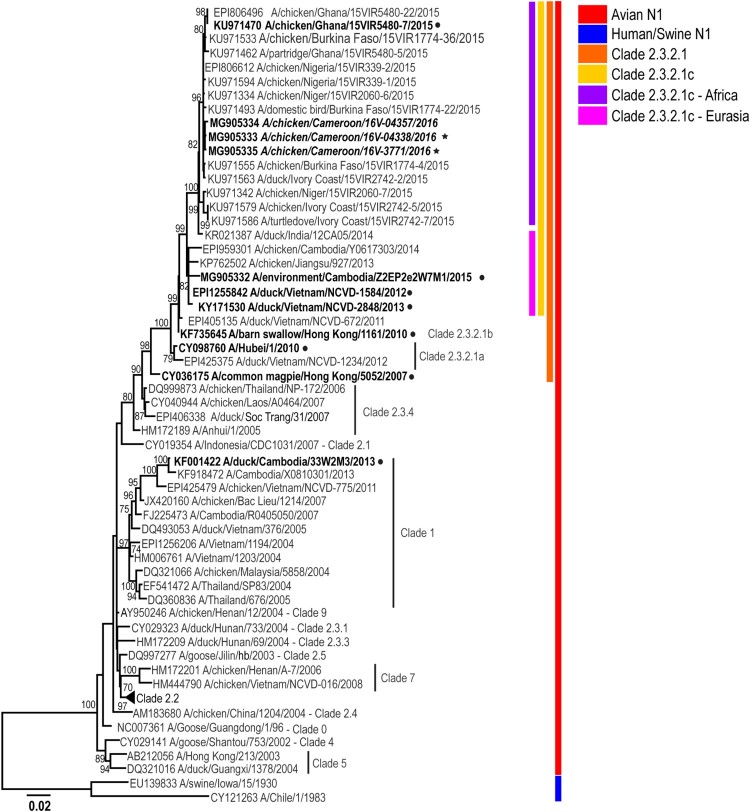
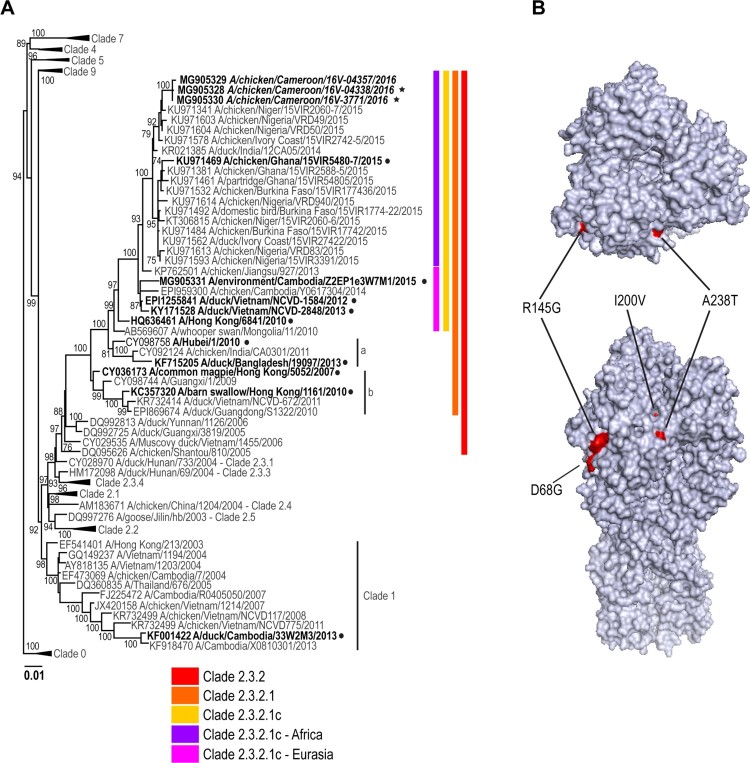
From May 2016 to March 2017, 22 poultry outbreaks of avian influenza A(H5N1) were reported in Cameroon, mainly in poultry farms and live bird markets. No human cases were reported. In this study, we sought to describe the 2016 A(H5N1) outbreak strain and to investigate the risk of infection in exposed individuals. We find that highly pathogenic influenza subtype A(H5N1), clade 2.3.2.1c from Cameroon is closely related phylogenetically and antigenically to strains isolated in central and western Africa at the time. No molecular markers of increased human transmissibility were noted; however, seroconversion was detected in two poultry workers (1.5% of total screened). Therefore, the continued outbreaks of avian influenza in poultry and the risk of zoonotic human infection highlight the crucial need for continued and vigilant influenza surveillance and research in Africa, especially in areas of high poultry trade, such as Cameroon.
从 2016 年 5 月到 2017 年 3 月,喀麦隆报告了 22 起禽流感 H5N1 疫情,主要发生在养殖场和活禽市场。没有报告人间病例。在这项研究中,我们试图描述 2016 年 H5N1 疫情毒株,并调查暴露人群的感染风险。我们发现,来自喀麦隆的高致病性流感 A(H5N1)亚型,2.3.2.1c 分支在进化和抗原性上与当时在中非和西非分离的毒株密切相关。没有发现增加人际传播能力的分子标记;然而,在两名家禽工人中检测到血清转换(占总筛查人数的 1.5%)。因此,禽流感在禽类中的持续爆发以及人畜共患感染的风险突出表明,非洲尤其在高禽类贸易地区(如喀麦隆),迫切需要继续进行和警惕流感监测和研究。