Center for Molecular Medicine and Stem Cell Research, Faculty of Medical Sciences, University of Kragujevac, 69 Svetozar Markovic Street, Kragujevac, 34000, Serbia.
Department of Genetics, Faculty of Medical Sciences, University of Kragujevac, Kragujevac, Serbia.
J Biomed Sci. 2019 Mar 13;26(1):25. doi: 10.1186/s12929-019-0518-9.
Cisplatin (cis-diamminedichloroplatinum II, CDDP) is one of the most effective chemotherapeutic agents. However, its clinical use is limited due to the severe side effects, including nephrotoxicity and acute kidney injury (AKI) which develop due to renal accumulation and biotransformation of CDDP. The alleviation or prevention of CDDP-caused nephrotoxicity is currently accomplished by hydration, magnesium supplementation or mannitol-induced forced diuresis which is considered for high-dose CDDP-treated patients. However, mannitol treatment causes over-diuresis and consequent dehydration in CDDP-treated patients, indicating an urgent need for the clinical use of safe and efficacious renoprotective drug as an additive therapy for high dose CDDP-treated patients.
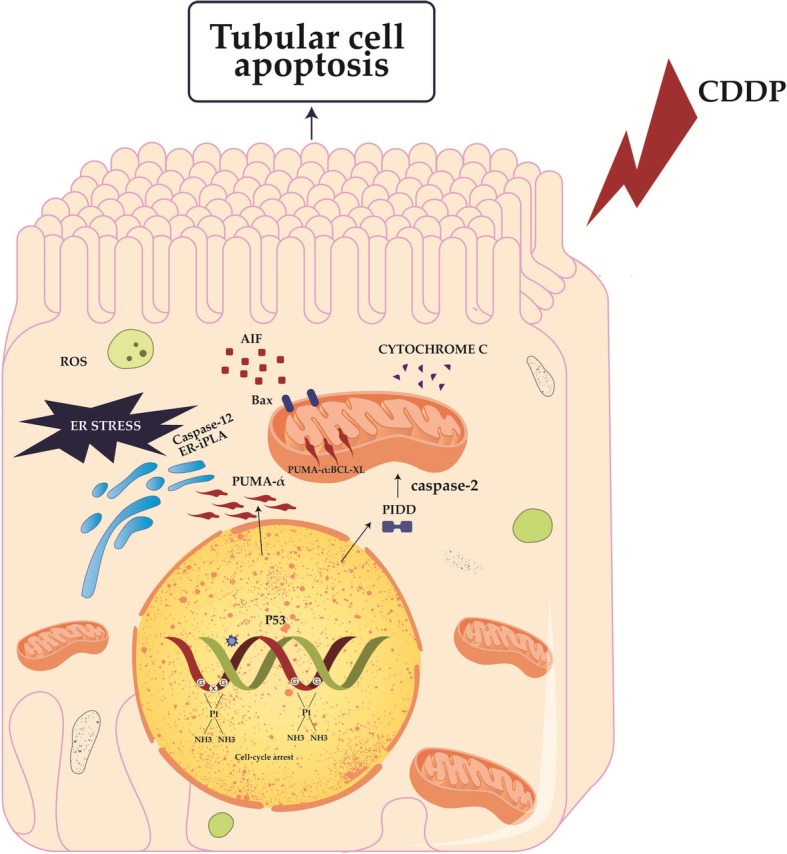
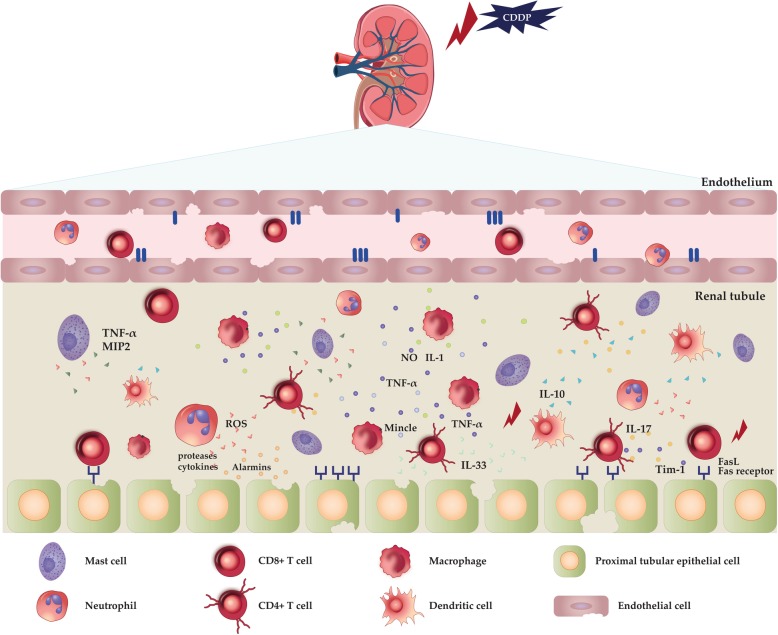
In this review article we describe in detail signaling pathways involved in CDDP-induced apoptosis of renal tubular cells, oxidative stress and inflammatory response in injured kidneys in order to pave the way for the design of new therapeutic approaches that can minimize CDDP-induced nephrotoxicity. Most of these molecular pathways are, at the same time, crucially involved in cytotoxic activity of CDDP against tumor cells and potential alterations in their function might mitigate CDDP-induced anti-tumor effects.
Despite the fact that many molecules were designated as potential therapeutic targets for renoprotection against CDDP, modulation of CDDP-induced nephrotoxicity still represents a balance on the knife edge between renoprotection and tumor toxicity.
顺铂(顺式二氨二氯铂 II,CDDP)是最有效的化疗药物之一。然而,由于其严重的副作用,包括肾毒性和急性肾损伤(AKI),其临床应用受到限制,这些副作用是由于 CDDP 在肾脏中的积累和生物转化引起的。目前,通过水化、镁补充或甘露醇诱导的强制利尿来缓解或预防 CDDP 引起的肾毒性,这被认为是高剂量 CDDP 治疗患者的治疗方法。然而,甘露醇治疗会导致 CDDP 治疗患者过度利尿和随后的脱水,这表明迫切需要将安全有效的肾保护药物作为高剂量 CDDP 治疗患者的附加治疗方法在临床上使用。
在这篇综述文章中,我们详细描述了 CDDP 诱导肾小管细胞凋亡、氧化应激和损伤肾脏炎症反应的信号通路,为设计新的治疗方法铺平了道路,这些方法可以最大限度地减少 CDDP 引起的肾毒性。这些分子途径中的大多数同时也与 CDDP 对肿瘤细胞的细胞毒性活性密切相关,其功能的潜在改变可能会减轻 CDDP 引起的抗肿瘤作用。
尽管许多分子被指定为预防 CDDP 引起的肾毒性的潜在治疗靶点,但 CDDP 诱导的肾毒性的调节仍然代表着在肾保护和肿瘤毒性之间的平衡。