Xu Bin, Lan John Chiwei, Sun Qingjiang, Hsueh Chungchuan, Chen Bor-Yann
1State Key Laboratory of Bioelectronics, School of Biological Science & Medical Engineering, and Research Center for Learning Science, Southeast University, Nanjing, 210096 People's Republic of China.
2Department of Chemical and Materials Engineering, National I-Lan University, Yilan, 26047 Taiwan.
Biotechnol Biofuels. 2019 Mar 1;12:46. doi: 10.1186/s13068-019-1385-z. eCollection 2019.
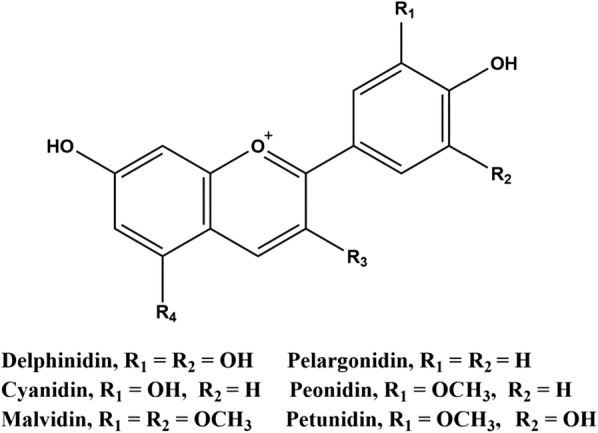
Microbial fuel cells (MFCs) are effective biofuel devices that use indigenous microbes to directly convert chemical energy from organics oxidation into bioelectric energy. To maximize energy-converting efficiency for bioelectricity generation in MFCs, redox mediators (RMs) (e.g., extracts obtained from plant resource- green tea) have been explored for optimal stimulation upon electron transfer (ET) capabilities. Anthocyanins are natural antioxidants widely used in food science and medicinal industry. This first-attempt study revealed optimal strategies to augment extracts of anthocyanin-rich herbs ( Murr., Linn. and Spp.) as biofuel sources of catalytic RMs for stimulating bioenergy extraction in MFCs.
This work showed that extracts of anthocyanin-rich herbs were promising electroactive RMs. The maximal power density of MFCs supplemented with extract of Murr. was achieved, suggesting that extract of Murr. would be the most electrochemically appropriate RMs. Compared to Linn. and Spp., Murr. evidently owned the most significant redox-mediating capability to stimulate bioenergy extraction likely due to significantly high contents of polyphenols (e.g., anthocyanin). Evidently, increases in adenosine triphosphate (ATP) content directly responded to supplementation of anthocyanin-rich herbal extracts. It strongly suggested that the electron-shuttling characteristics of RMs upon electroactive microorganisms could effectively promote the electron transfer capability to maximize bioenergy extraction in MFCs.
Anthocyanin as the main water-soluble vacuolar pigments in plant products were very electroactive for not only excellent antioxidant activities, but also promising electron-shuttling capabilities for renewable biofuel applications. This work also suggested the electron-shuttling mechanism of RMs that could possibly promote electron transport phenomena through microbial cell membrane, further influencing the electron transport chain for efficient bioenergy generation.
微生物燃料电池(MFCs)是一种有效的生物燃料装置,它利用本地微生物将有机物氧化产生的化学能直接转化为生物电能。为了使MFCs中生物电生成的能量转换效率最大化,人们探索了氧化还原介质(RMs)(例如从植物资源——绿茶中提取的物质),以对电子转移(ET)能力进行最佳刺激。花青素是广泛应用于食品科学和医药行业的天然抗氧化剂。这项首次尝试的研究揭示了增强富含花青素的草药(Murr.、Linn.和Spp.)提取物作为催化RMs生物燃料源以刺激MFCs中生物能源提取的最佳策略。
这项工作表明,富含花青素的草药提取物是有前景的电活性RMs。补充Murr.提取物的MFCs实现了最大功率密度,这表明Murr.提取物将是电化学上最合适的RMs。与Linn.和Spp.相比,Murr.显然具有最显著的氧化还原介导能力来刺激生物能源提取,这可能是由于其多酚(如花青素)含量显著较高。显然,三磷酸腺苷(ATP)含量的增加直接响应了富含花青素的草药提取物的补充。这有力地表明,RMs对电活性微生物的电子穿梭特性可以有效促进电子转移能力,从而在MFCs中最大化生物能源提取。
花青素作为植物产品中主要的水溶性液泡色素,不仅具有出色的抗氧化活性,而且具有用于可再生生物燃料应用的有前景的电子穿梭能力,因而具有很强的电活性。这项工作还提出了RMs的电子穿梭机制,该机制可能通过微生物细胞膜促进电子传输现象,进而影响电子传输链以实现高效生物能源生成。