Instituto de Ciências Ambientais, Químicas e Farmacêuticas (ICAQF), Laboratório de Economia, Saúde e Poluição Ambiental, Universidade Federal de São Paulo - UNIFESP,São Paulo,Brazil.
Instituto de Matemática e Estatística, Universidade de São Paulo - USP,São Paulo,Brazil.
Epidemiol Infect. 2019 Jan;147:e116. doi: 10.1017/S0950268819000311.
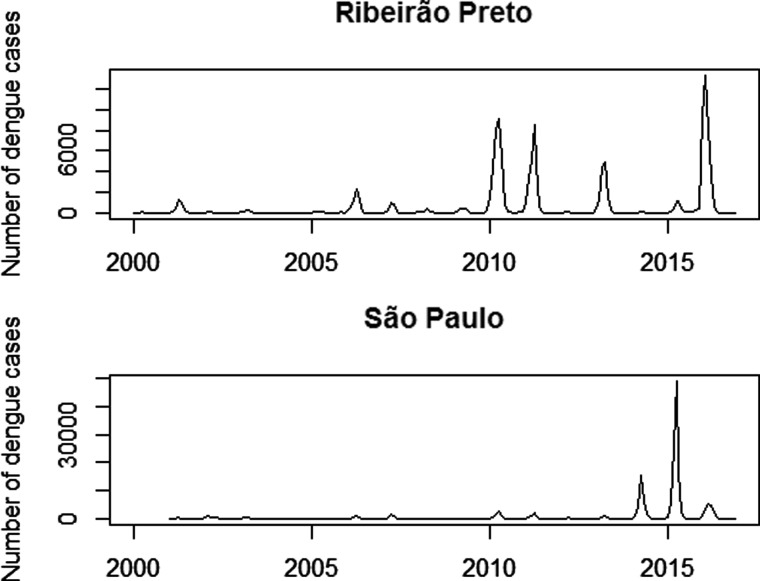
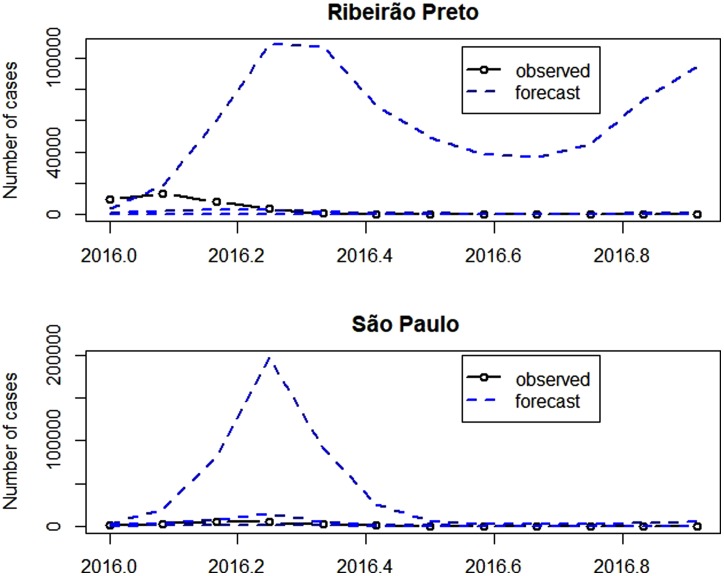
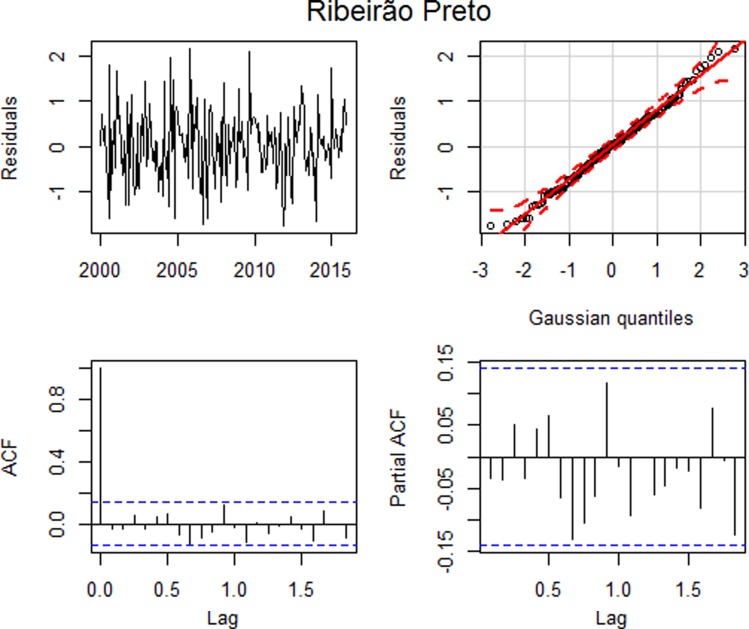
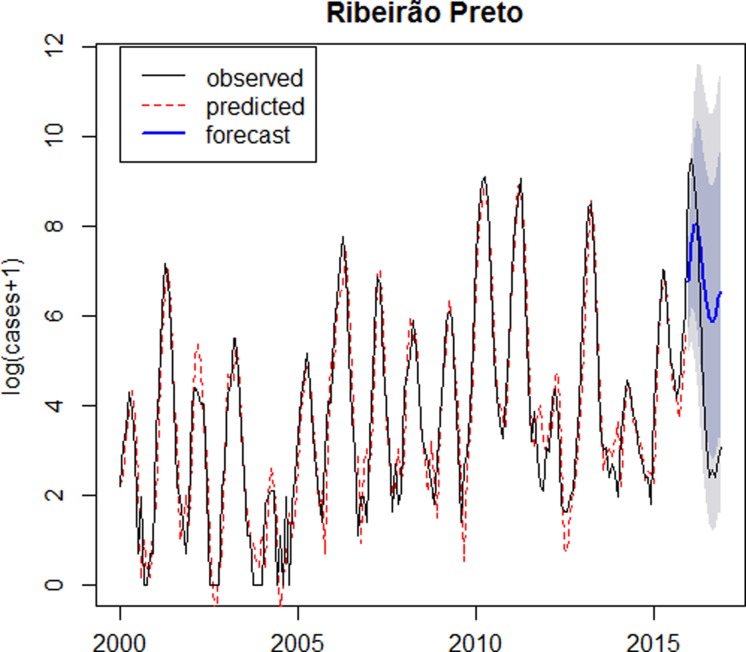
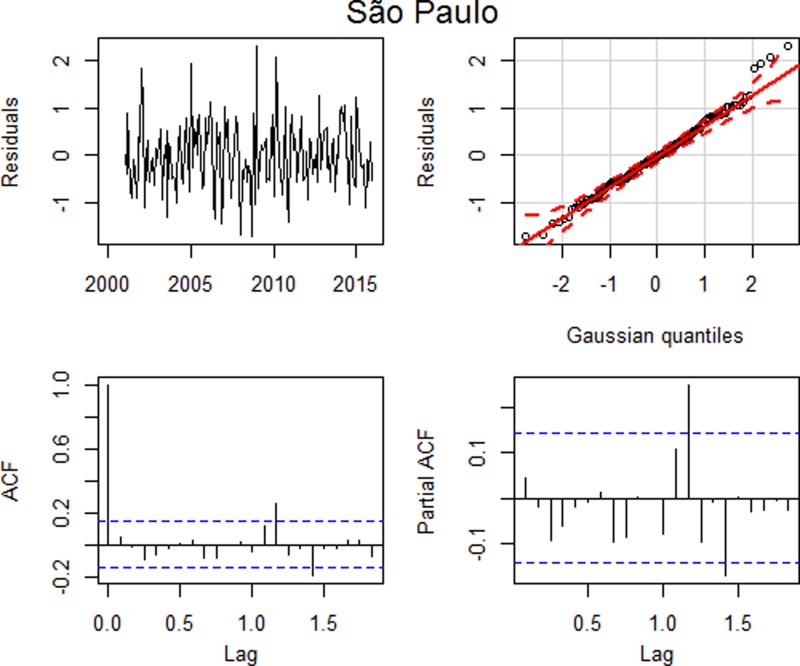
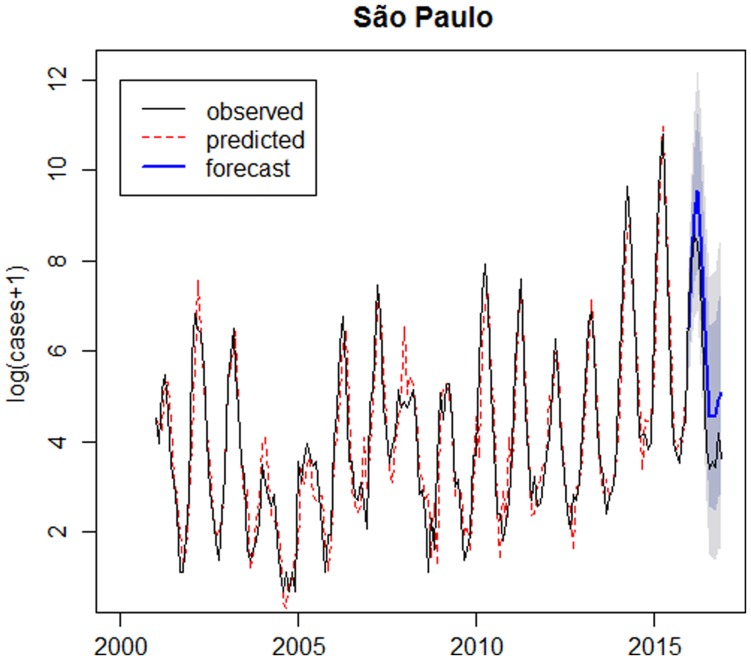
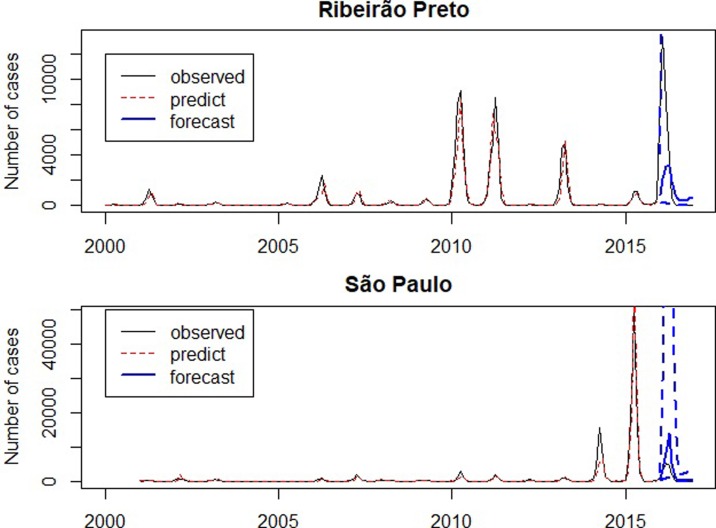
Dengue fever is a disease with increasing incidence, now occurring in some regions which were not previously affected. Ribeirão Preto and São Paulo, municipalities in São Paulo state, Brazil, have been highlighted due to the high dengue incidences especially after 2009 and 2013. Therefore, the current study aims to analyse the temporal behaviour of dengue cases in the both municipalities and forecast the number of disease cases in the out-of-sample period, using time series models, especially SARIMA model. We fitted SARIMA models, which satisfactorily meet the dengue incidence data collected in the municipalities of Ribeirão Preto and São Paulo. However, the out-of-sample forecast confidence intervals are very wide and this fact is usually omitted in several papers. Despite the high variability, health services can use these models in order to anticipate disease scenarios, however, one should interpret with prudence since the magnitude of the epidemic may be underestimated.
登革热是一种发病率不断上升的疾病,现在发生在一些以前没有受到影响的地区。巴西圣保罗州的里贝朗普雷托和圣保罗市由于 2009 年和 2013 年后登革热发病率较高而受到关注。因此,本研究旨在分析这两个城市的登革热病例的时间变化规律,并使用时间序列模型,特别是 SARIMA 模型,预测样本外时期的疾病病例数。我们拟合了 SARIMA 模型,这些模型很好地满足了在里贝朗普雷托和圣保罗市收集的登革热发病率数据。然而,样本外预测置信区间非常宽,这一事实在许多论文中通常被忽略。尽管存在高度的可变性,但卫生服务部门可以使用这些模型来预测疾病情况,但应该谨慎解释,因为疫情的严重程度可能被低估。