Department of Psychology, Northwestern University.
Department of Psychology, University of Georgia.
J Abnorm Psychol. 2019 May;128(4):341-351. doi: 10.1037/abn0000413. Epub 2019 Mar 14.
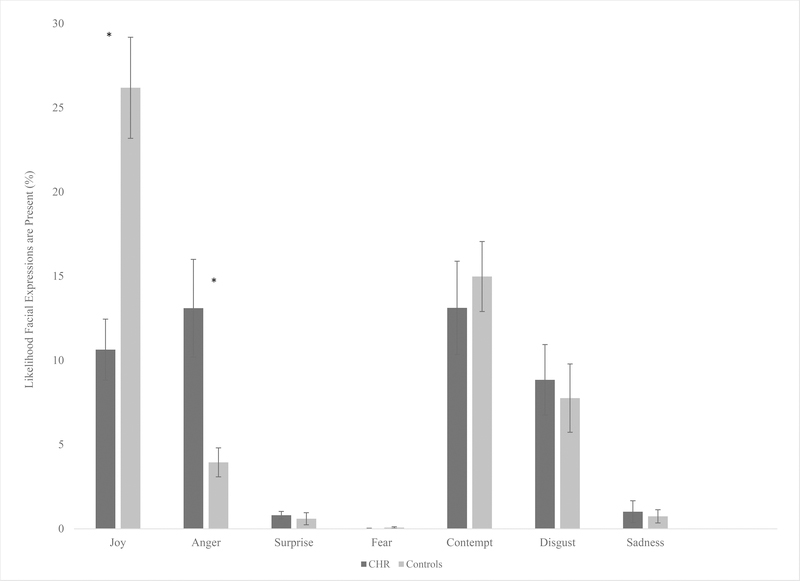
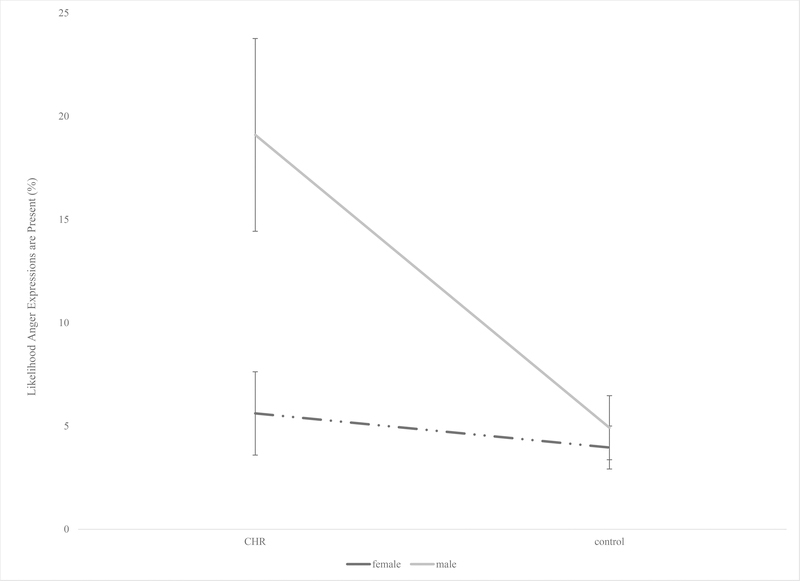
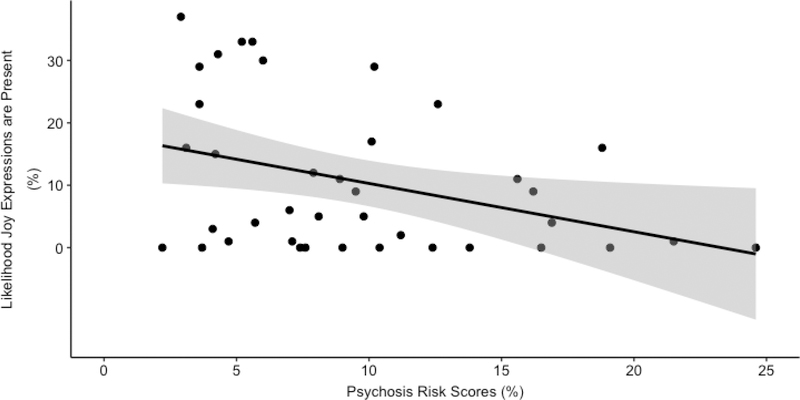
Negative symptoms, such as blunted facial affect, are core features of psychotic disorders that predict poor functional outcome. However, it is unknown whether these impairments occur prior to the onset of psychosis. Understanding this phenomenon in the psychosis risk period has significant relevance for elucidating pathogenic processes, as well as potential for informing a viable new behavioral marker for broader social dysfunction and clinical course. The current study sought to determine the nature of facial expression deficits among individuals at clinical high-risk (CHR) for developing psychosis using a comprehensive approach, incorporating clinical interview ratings and automated facial expression coding analysis. A total of 42 CHR and 42 control participants completed clinical interviews and digitally taped segments were submitted into an automated, computerized tool to assess for 7 facial expressions (joy, anger, surprise, fear, contempt, disgust, sadness). Furthermore, relationships between facial expressions and social functioning and available scores on a psychosis conversion risk calculator from a total of 78 participants (39 CHR and 39 controls) were examined. Relationships between measures were also investigated (data was available for the Prodromal Inventory of Negative Symptoms among 33 CHR and 25 controls). Findings from clinical interview indicated that the CHR group exhibited elevated blunting. Furthermore, automated analyses showed that the CHR group displayed blunting in expressions of joy but surprisingly, increased anger facial expressions. Lastly, irregularities in facial expressions were related to decreased social functioning and increased psychosis conversion risk calculator scores, signaling heightened likelihood of conversion to psychosis. These findings suggest that alterations in facial expressivity occur early in the pathogenesis of psychosis and provide evidence for the efficacy of higher resolution measures of facial expressivity in psychosis research. (PsycINFO Database Record (c) 2019 APA, all rights reserved).
阴性症状,如面部表情迟钝,是精神分裂症的核心特征,可预测不良的功能结局。然而,目前尚不清楚这些损伤是否发生在精神病发作之前。了解精神病高危期(CHR)的这种现象对于阐明发病机制具有重要意义,也有可能为更广泛的社会功能障碍和临床病程提供可行的新行为标志物。本研究旨在使用综合方法确定处于精神病发展高危期(CHR)的个体的面部表情缺陷的性质,该方法包括临床访谈评估和自动面部表情编码分析。共有 42 名 CHR 和 42 名对照参与者完成了临床访谈,将数字化录制的片段提交到一个自动化的计算机工具中,以评估 7 种面部表情(喜悦、愤怒、惊讶、恐惧、轻蔑、厌恶、悲伤)。此外,还检查了面部表情与社会功能的关系,以及来自总共 78 名参与者(39 名 CHR 和 39 名对照)的精神病转化风险计算器的可用分数。还研究了测量之间的关系(在 33 名 CHR 和 25 名对照中,可获得精神病前驱症状清单的测量值)。临床访谈的结果表明,CHR 组表现出明显的迟钝。此外,自动分析显示,CHR 组在喜悦表情上表现出迟钝,但令人惊讶的是,愤怒表情增加。最后,面部表情不规则与社会功能下降和精神病转化风险计算器分数增加有关,这表明向精神病转化的可能性更高。这些发现表明,面部表情的改变发生在精神病发病机制的早期,为精神病研究中更高分辨率的面部表情测量提供了证据。(APA 版权所有,2019)。