Symbiosis Center of Medical Image Analysis, Symbiosis International (Deemed) University, Pune, India.
Department of Neurology, National Institute of Mental Health and Neurosciences, Bangalore, India; Department of Clinical Neurosciences, National Institute of Mental Health and Neurosciences, Bangalore, India.
Neuroimage Clin. 2019;22:101748. doi: 10.1016/j.nicl.2019.101748. Epub 2019 Mar 6.
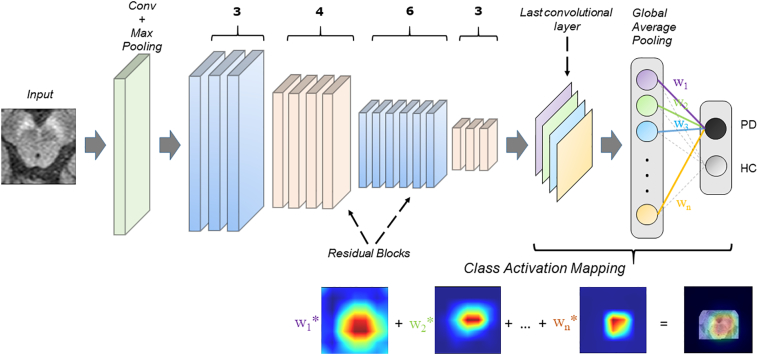
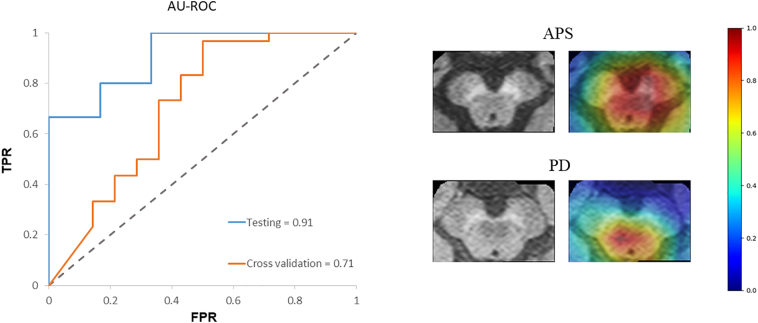
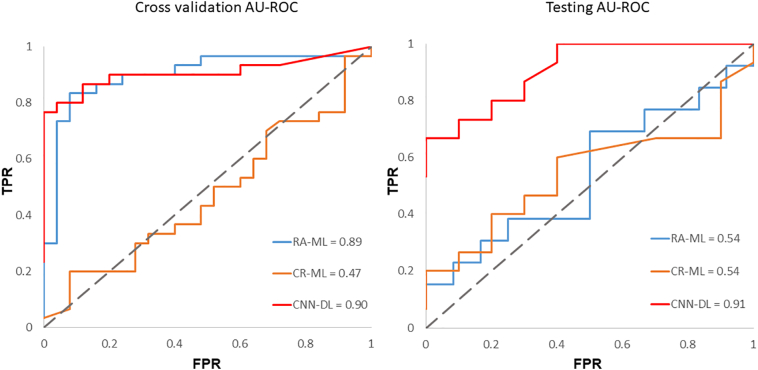
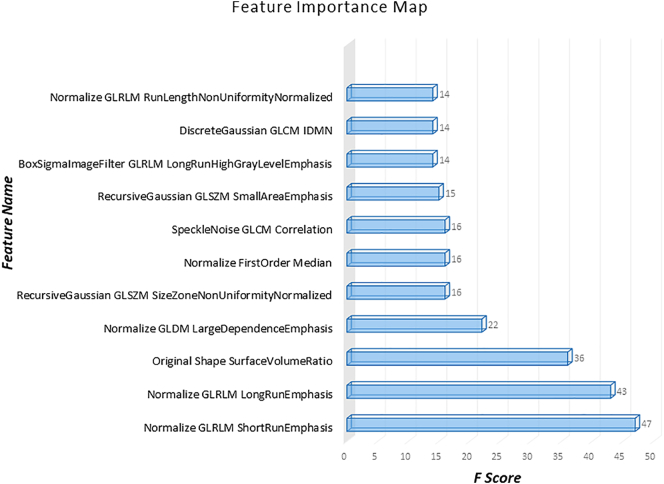
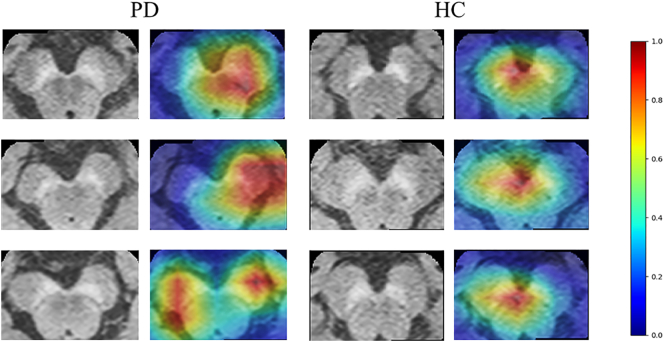
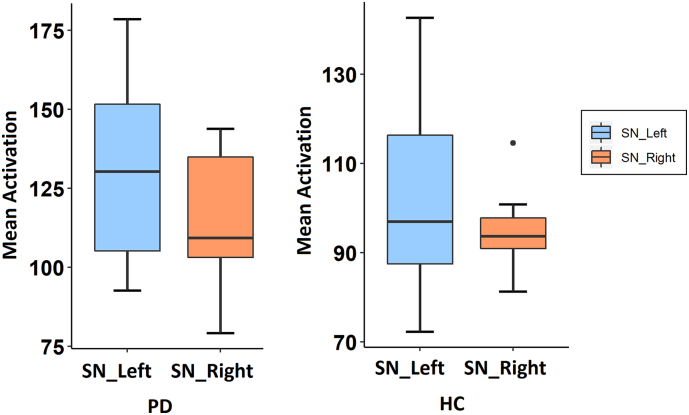
Neuromelanin sensitive magnetic resonance imaging (NMS-MRI) has been crucial in identifying abnormalities in the substantia nigra pars compacta (SNc) in Parkinson's disease (PD) as PD is characterized by loss of dopaminergic neurons in the SNc. Current techniques employ estimation of contrast ratios of the SNc, visualized on NMS-MRI, to discern PD patients from the healthy controls. However, the extraction of these features is time-consuming and laborious and moreover provides lower prediction accuracies. Furthermore, these do not account for patterns of subtle changes in PD in the SNc. To mitigate this, our work establishes a computer-based analysis technique that uses convolutional neural networks (CNNs) to create prognostic and diagnostic biomarkers of PD from NMS-MRI. Our technique not only performs with a superior testing accuracy (80%) as compared to contrast ratio-based classification (56.5% testing accuracy) and radiomics classifier (60.3% testing accuracy), but also supports discriminating PD from atypical parkinsonian syndromes (85.7% test accuracy). Moreover, it has the capability to locate the most discriminative regions on the neuromelanin contrast images. These discriminative activations demonstrate that the left SNc plays a key role in the classification in comparison to the right SNc, and are in agreement with the concept of asymmetry in PD. Overall, the proposed technique has the potential to support radiological diagnosis of PD while facilitating deeper understanding into the abnormalities in SNc.
神经黑色素敏感磁共振成像(NMS-MRI)在识别帕金森病(PD)中黑质致密部(SNc)的异常方面至关重要,因为 PD 的特征是 SNc 中的多巴胺能神经元丧失。目前的技术采用估计 NMS-MRI 上 SNc 的对比度比来区分 PD 患者和健康对照者。然而,这些特征的提取既耗时又费力,而且预测准确性较低。此外,这些方法并不能说明 SNc 中 PD 细微变化的模式。为了解决这个问题,我们的工作建立了一种基于计算机的分析技术,该技术使用卷积神经网络(CNN)从 NMS-MRI 中创建 PD 的预后和诊断生物标志物。我们的技术不仅比基于对比度比的分类(56.5%的测试准确性)和放射组学分类器(60.3%的测试准确性)具有更高的测试准确性(80%),而且还支持区分 PD 和非典型帕金森综合征(85.7%的测试准确性)。此外,它还有能力在神经黑色素对比图像上定位最具判别力的区域。这些判别激活表明,与右侧 SNc 相比,左侧 SNc 在分类中起着关键作用,这与 PD 中的不对称概念一致。总的来说,该技术有可能支持 PD 的放射学诊断,同时深入了解 SNc 的异常。