Laboratory of Virology and Chemotherapy, Department of Microbiology and Immunology, Rega Institute for Medical Research, KU Leuven, 3000 Leuven, Belgium.
Molecules. 2019 Mar 12;24(5):997. doi: 10.3390/molecules24050997.
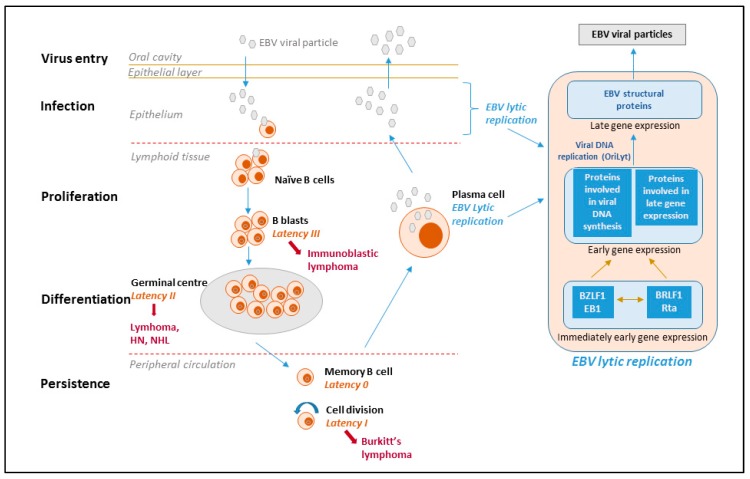
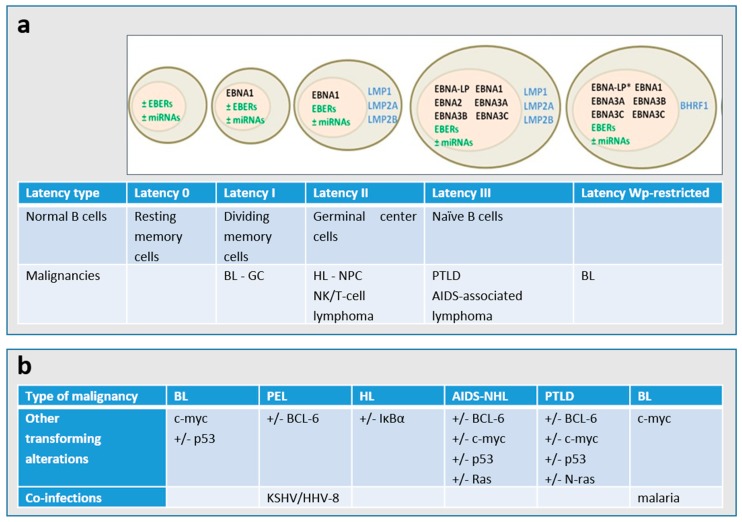
Epstein⁻Barr virus (EBV) is a human γ-herpesvirus that infects up to 95% of the adult population. Primary EBV infection usually occurs during childhood and is generally asymptomatic, though the virus can cause infectious mononucleosis in 35⁻50% of the cases when infection occurs later in life. EBV infects mainly B-cells and epithelial cells, establishing latency in resting memory B-cells and possibly also in epithelial cells. EBV is recognized as an oncogenic virus but in immunocompetent hosts, EBV reactivation is controlled by the immune response preventing transformation in vivo. Under immunosuppression, regardless of the cause, the immune system can lose control of EBV replication, which may result in the appearance of neoplasms. The primary malignancies related to EBV are B-cell lymphomas and nasopharyngeal carcinoma, which reflects the primary cell targets of viral infection in vivo. Although a number of antivirals were proven to inhibit EBV replication in vitro, they had limited success in the clinic and to date no antiviral drug has been approved for the treatment of EBV infections. We review here the antiviral drugs that have been evaluated in the clinic to treat EBV infections and discuss novel molecules with anti-EBV activity under investigation as well as new strategies to treat EBV-related diseases.
爱泼斯坦-巴尔病毒(EBV)是一种人类 γ 疱疹病毒,感染了高达 95%的成年人。原发性 EBV 感染通常发生在儿童时期,通常无症状,但当感染发生在生命后期时,病毒可导致 35%-50%的病例发生传染性单核细胞增多症。EBV 主要感染 B 细胞和上皮细胞,在静止记忆 B 细胞中建立潜伏感染,在某些情况下也可能在上皮细胞中建立潜伏感染。EBV 被认为是一种致癌病毒,但在免疫功能正常的宿主中,EBV 的再激活被免疫反应所控制,防止体内转化。在免疫抑制的情况下,无论病因如何,免疫系统可能会失去对 EBV 复制的控制,从而可能导致肿瘤的出现。与 EBV 相关的主要恶性肿瘤是 B 细胞淋巴瘤和鼻咽癌,这反映了病毒在体内的主要细胞靶标。尽管一些抗病毒药物已被证明可在体外抑制 EBV 复制,但它们在临床上的效果有限,迄今为止,尚无抗病毒药物被批准用于治疗 EBV 感染。我们在此回顾了已在临床上评估用于治疗 EBV 感染的抗病毒药物,并讨论了正在研究的具有抗 EBV 活性的新型分子以及治疗 EBV 相关疾病的新策略。