Division of Infection and Immunity, University College London, London, UK
Immunobiology Laboratory, The Francis Crick Institute, London, UK.
EMBO J. 2019 Apr 15;38(8). doi: 10.15252/embj.2018100941. Epub 2019 Mar 14.
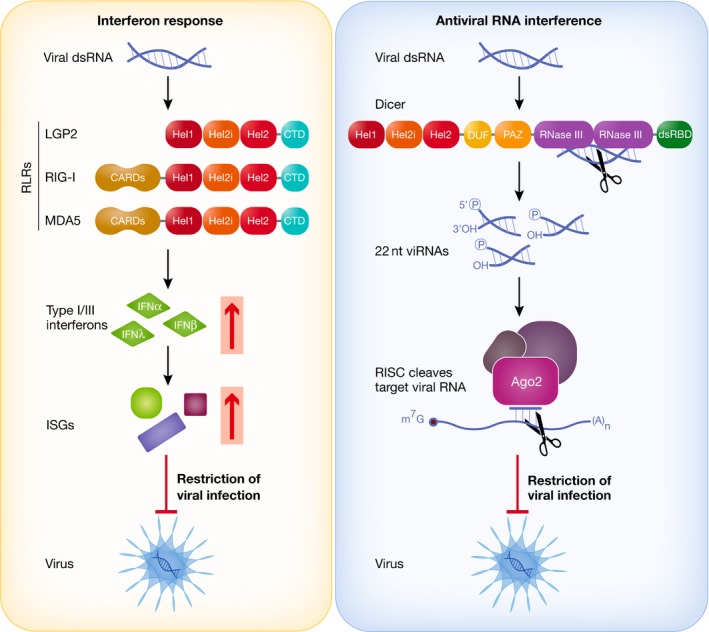
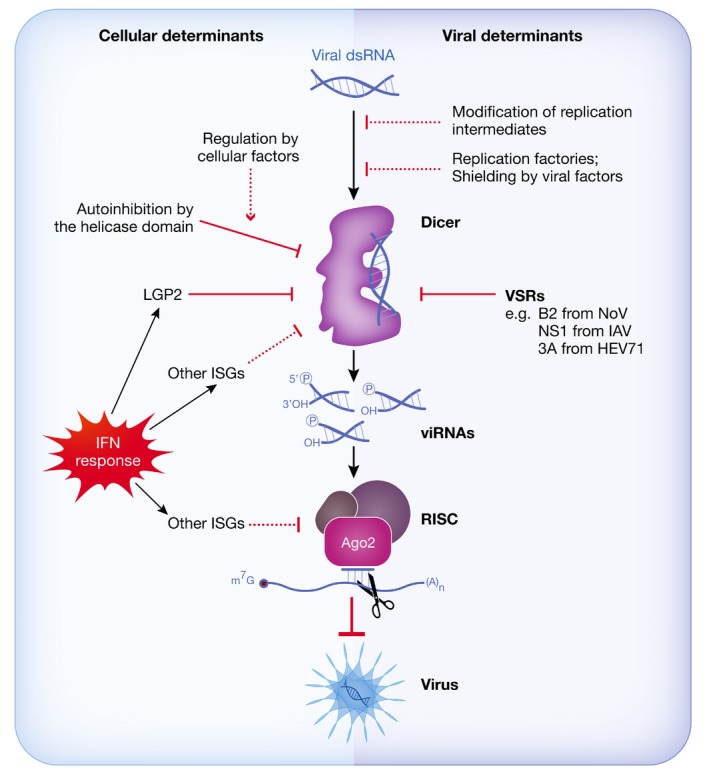
To protect against the harmful consequences of viral infections, organisms are equipped with sophisticated antiviral mechanisms, including cell-intrinsic means to restrict viral replication and propagation. Plant and invertebrate cells utilise mostly RNA interference (RNAi), an RNA-based mechanism, for cell-intrinsic immunity to viruses while vertebrates rely on the protein-based interferon (IFN)-driven innate immune system for the same purpose. The RNAi machinery is conserved in vertebrate cells, yet whether antiviral RNAi is still active in mammals and functionally relevant to mammalian antiviral defence is intensely debated. Here, we discuss cellular and viral factors that impact on antiviral RNAi and the contexts in which this system might be at play in mammalian resistance to viral infection.
为了防止病毒感染的有害后果,生物体配备了复杂的抗病毒机制,包括限制病毒复制和传播的细胞固有手段。植物和无脊椎动物细胞主要利用 RNA 干扰 (RNAi),一种基于 RNA 的机制,来实现细胞固有抗病毒免疫,而脊椎动物则依赖基于蛋白质的干扰素 (IFN) 驱动的先天免疫系统来达到同样的目的。RNAi 机制在脊椎动物细胞中是保守的,但抗病毒 RNAi 是否仍然在哺乳动物中活跃,以及它对哺乳动物抗病毒防御是否具有功能相关性,这在很大程度上存在争议。在这里,我们讨论了影响抗病毒 RNAi 的细胞和病毒因素,以及在这些情况下,该系统可能在哺乳动物抵抗病毒感染方面发挥作用。