Department of Microbial and Biochemical Pharmacy, School of Pharmaceutical Sciences, Sun Yat-sen University, Guangzhou, China.
Department of Pharmacology, School of Pharmaceutical Sciences, Jinan University, Guangzhou, China.
Int J Cancer. 2019 Oct 1;145(7):1946-1957. doi: 10.1002/ijc.32278. Epub 2019 Apr 6.
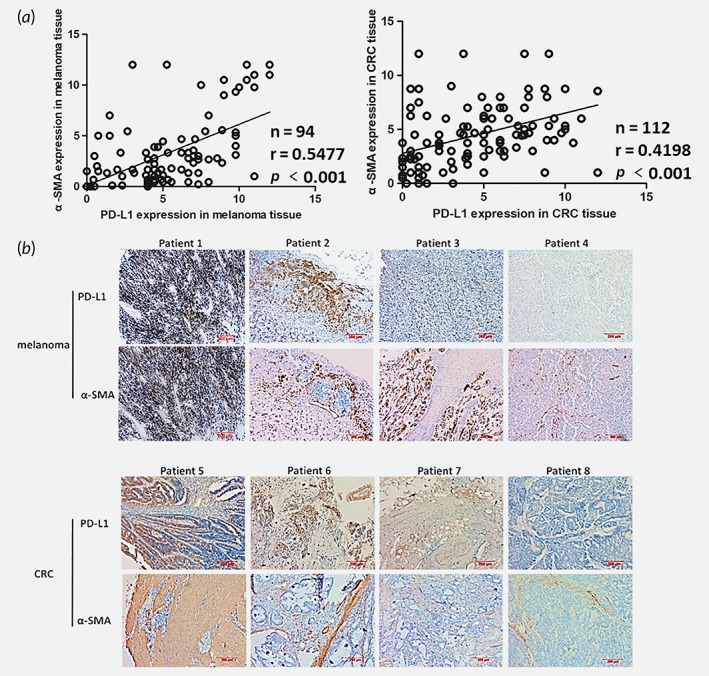
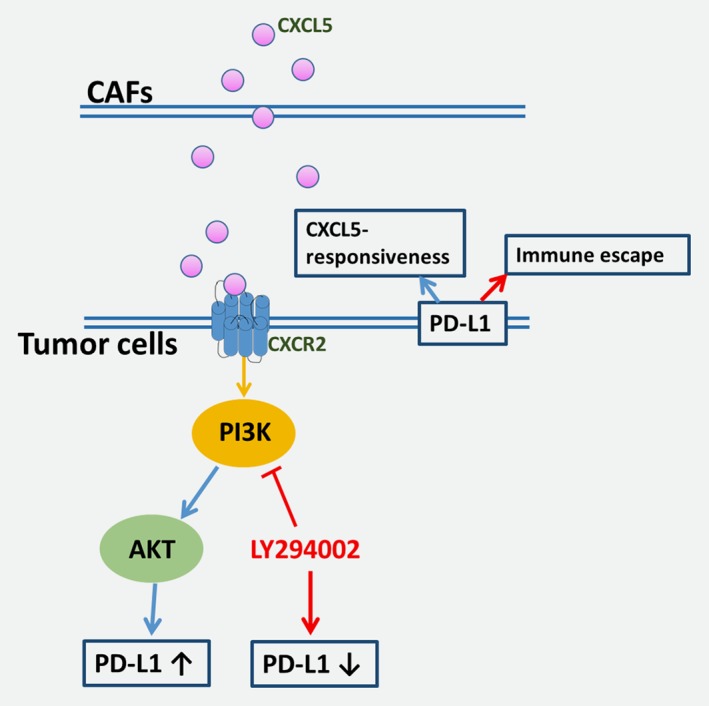
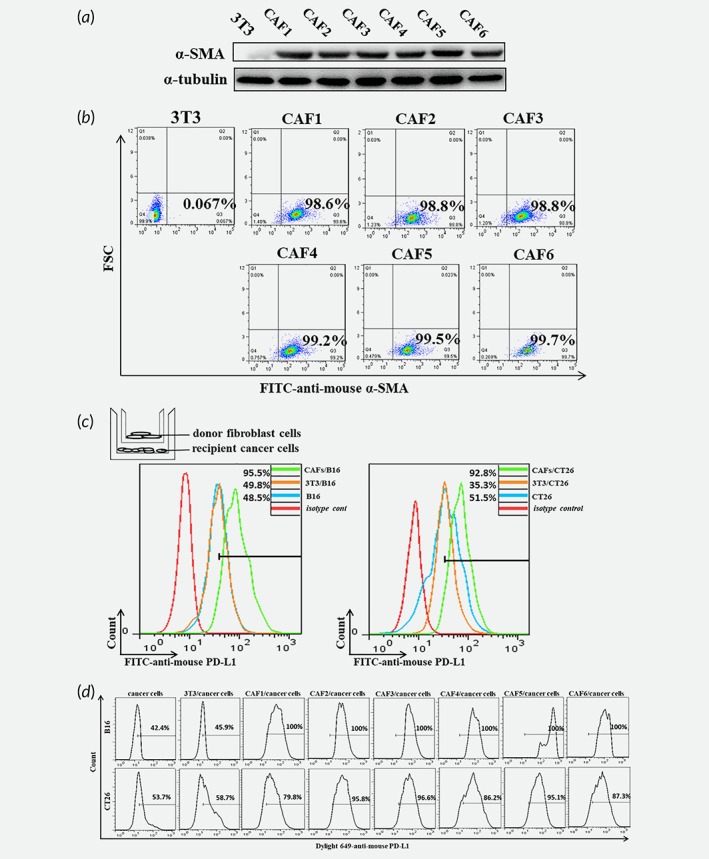
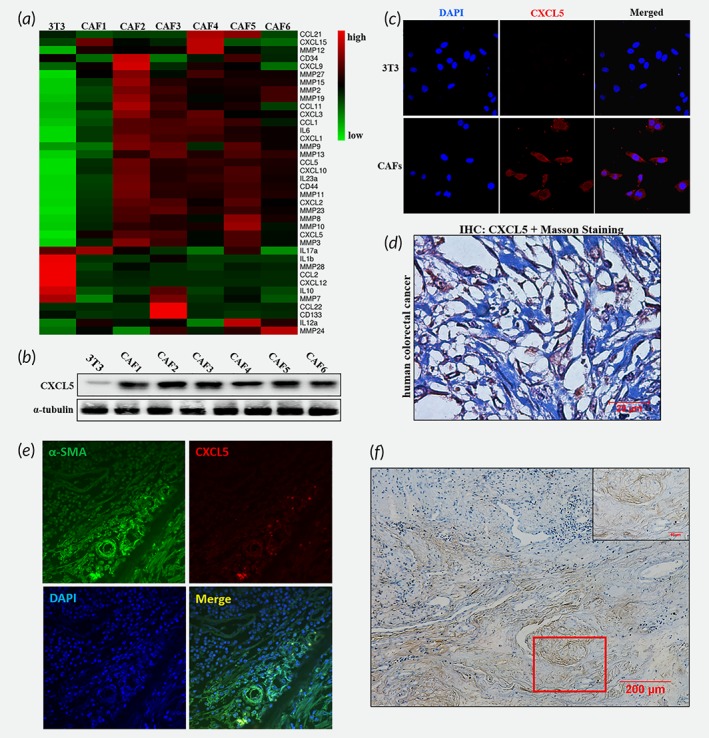
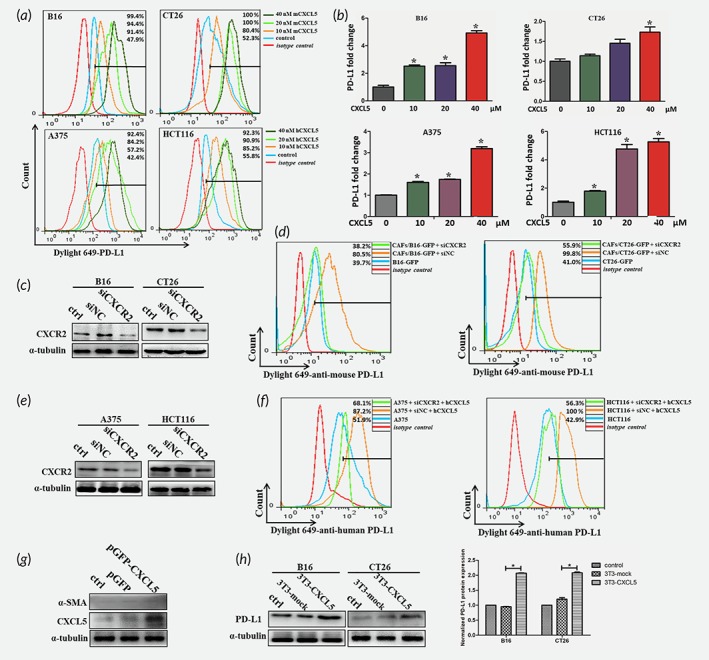
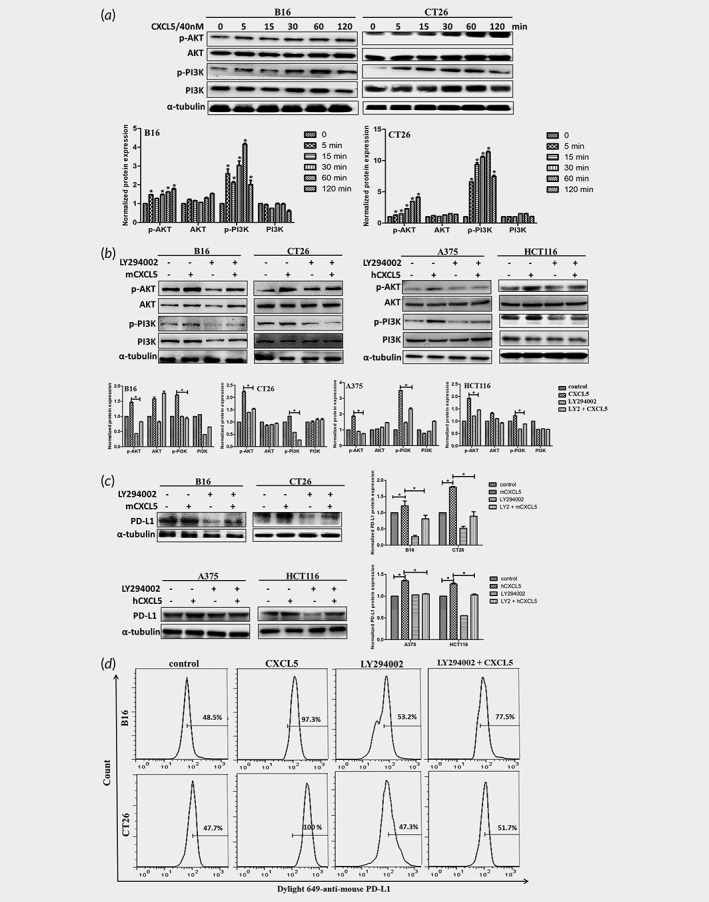
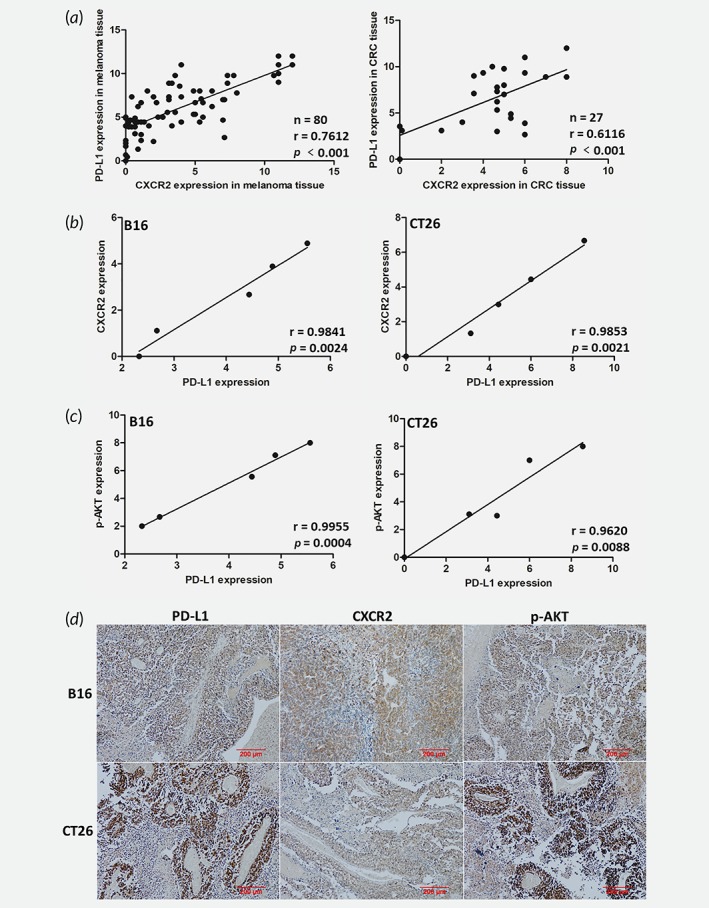
Cancer-associated fibroblasts (CAFs) play a key role in orchestrating the tumor malignant biological properties within tumor microenvironment and evidences demonstrate that CAFs are a critical regulator of tumoral immunosuppression of the T cell response. However, the functions and regulation of CAFs in the expression of programmed death-ligand 1 (PD-L1) in melanoma and colorectal carcinoma (CRC) are not completely understood. Herein, by scrutinizing the expression of α-SMA and PD-L1 in melanoma and CRC tissues, we found that CAFs was positive correlated with PD-L1 expression. Further analyses showed that CAFs promoted PD-L1 expression in mice tumor cells. By detecting a majority of cytokines expression in normal mice fibroblasts and CAFs, we determined that CXCL5 was abnormal high expression in CAFs and the immunohistochemistry and in situ hybridization confirmed that were CAFs which were expressing CXCL5. In addition, CXCL5 promoted PD-L1 expression in B16, CT26, A375 and HCT116. The silencing of CXCR2, the receptor of CXCL5, inhibited the PD-L1 expression induced by CAFs in turn. Functionally, CXCL5 derived by CAFs promoted PD-L1 expression in mice tumor cells through activating PI3K/AKT signaling. LY294002, the inhibitor of PI3K, confirmed that CXCL5 forested an immunosuppression microenvironment by promoting PD-L1 expression via PI3K/AKT signaling. Meanwhile, the B16/CT26 xenograft tumor models were used and both CXCR2 and p-AKT were found to be positively correlated with PD-L1 in the xenograft tumor tissues. The immunosuppressive action of CAFs on tumor cells is probably reflective of them being a potential therapeutic biomarker for melanoma and CRC.
癌症相关成纤维细胞(CAFs)在肿瘤微环境中协调肿瘤恶性生物学特性方面发挥着关键作用,有证据表明 CAFs 是肿瘤对 T 细胞反应免疫抑制的关键调节因子。然而,CAFs 在黑色素瘤和结直肠癌(CRC)中程序性死亡配体 1(PD-L1)表达中的功能和调节作用尚不完全清楚。在此,通过仔细检查黑色素瘤和 CRC 组织中 α-SMA 和 PD-L1 的表达,我们发现 CAFs 与 PD-L1 表达呈正相关。进一步分析表明,CAFs 促进了小鼠肿瘤细胞中 PD-L1 的表达。通过检测正常小鼠成纤维细胞和 CAFs 中大多数细胞因子的表达,我们确定 CAFs 中 CXCL5 异常高表达,免疫组织化学和原位杂交证实 CAFs 表达 CXCL5。此外,CXCL5 促进了 B16、CT26、A375 和 HCT116 中 PD-L1 的表达。CXCL5 的受体 CXCR2 的沉默,反过来又抑制了 CAFs 诱导的 PD-L1 表达。功能上,CAFs 衍生的 CXCL5 通过激活 PI3K/AKT 信号通路促进小鼠肿瘤细胞中 PD-L1 的表达。PI3K 的抑制剂 LY294002 证实,CXCL5 通过 PI3K/AKT 信号通路促进 PD-L1 的表达,从而形成免疫抑制微环境。同时,我们使用了 B16/CT26 异种移植肿瘤模型,发现 CXCR2 和 p-AKT 在异种移植肿瘤组织中均与 PD-L1 呈正相关。CAFs 对肿瘤细胞的免疫抑制作用可能反映了它们是黑色素瘤和 CRC 的潜在治疗性生物标志物。