Cancer Epidemiology Unit, Nuffield Department of Population Health, University of Oxford, Oxford, United Kingdom.
Division of Cancer Epidemiology and Genetics, Department of Health and Human Services, National Cancer Institute, National Institutes of Health, Bethesda, MD.
Int J Cancer. 2019 Dec 15;145(12):3244-3256. doi: 10.1002/ijc.32276. Epub 2019 Apr 4.
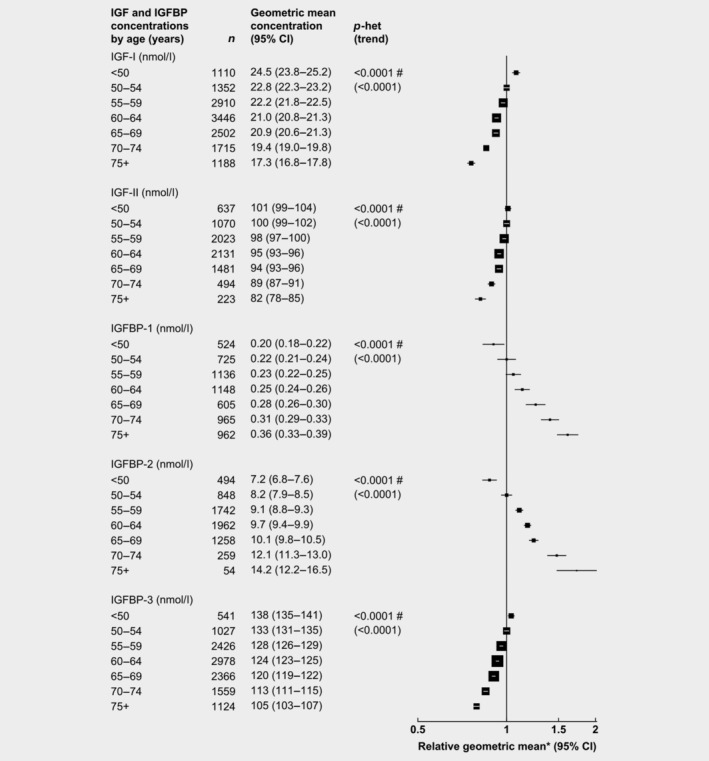
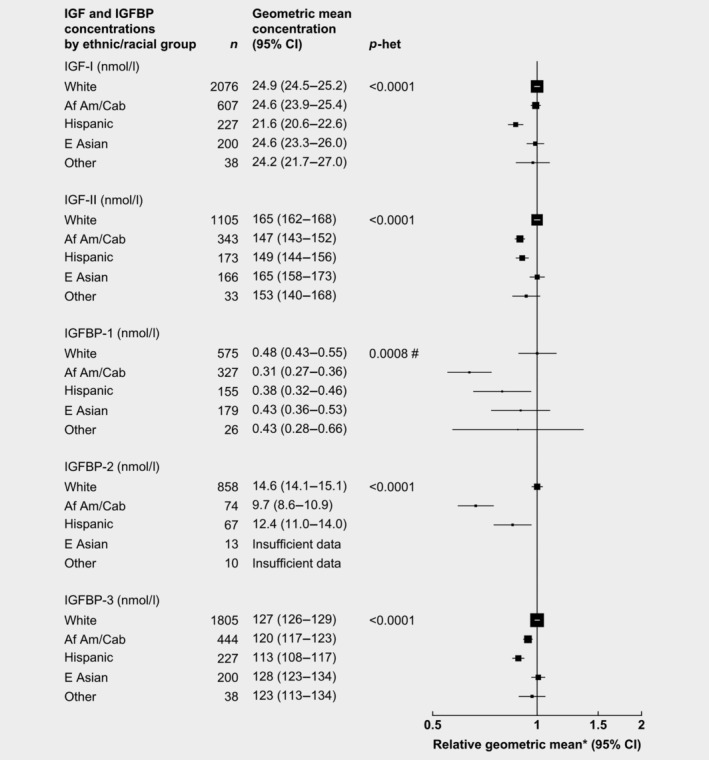
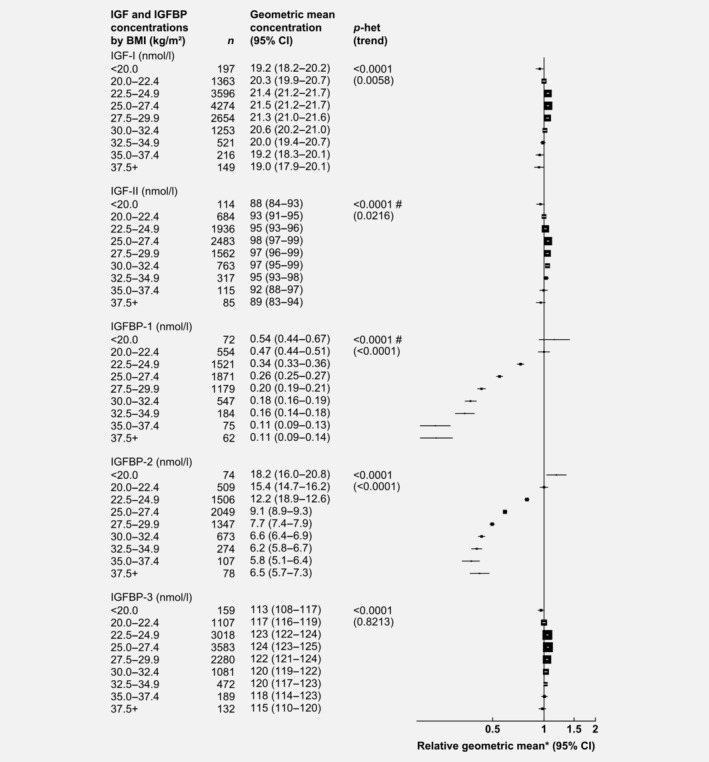
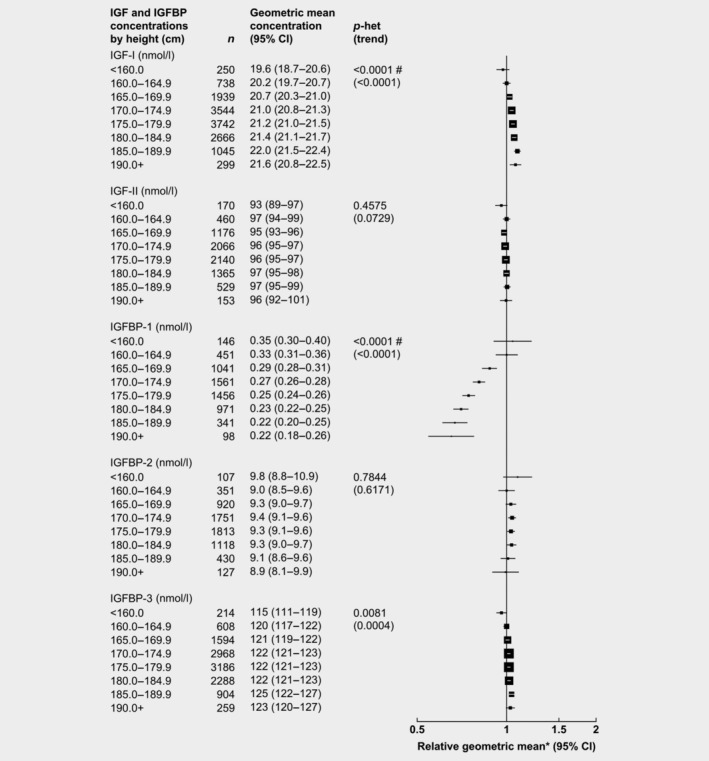
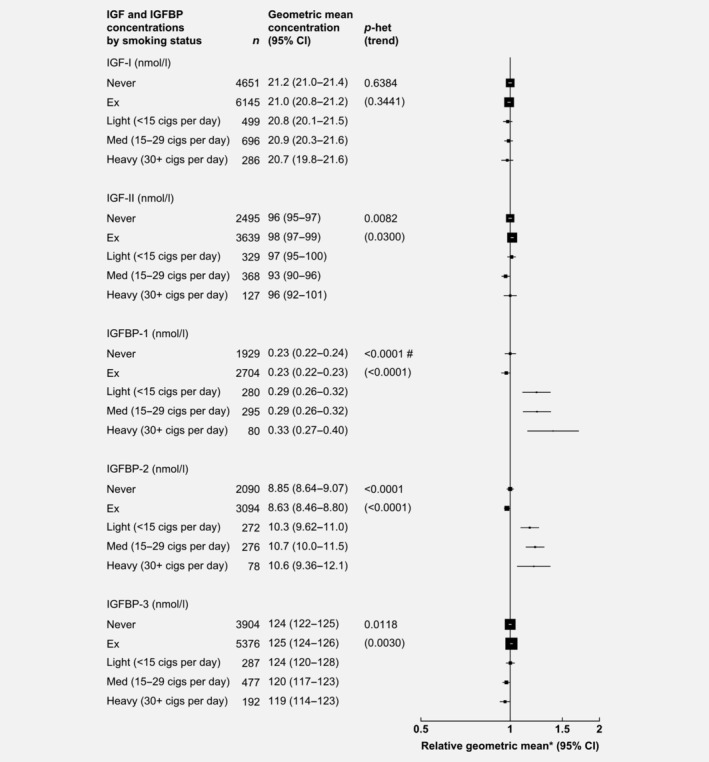
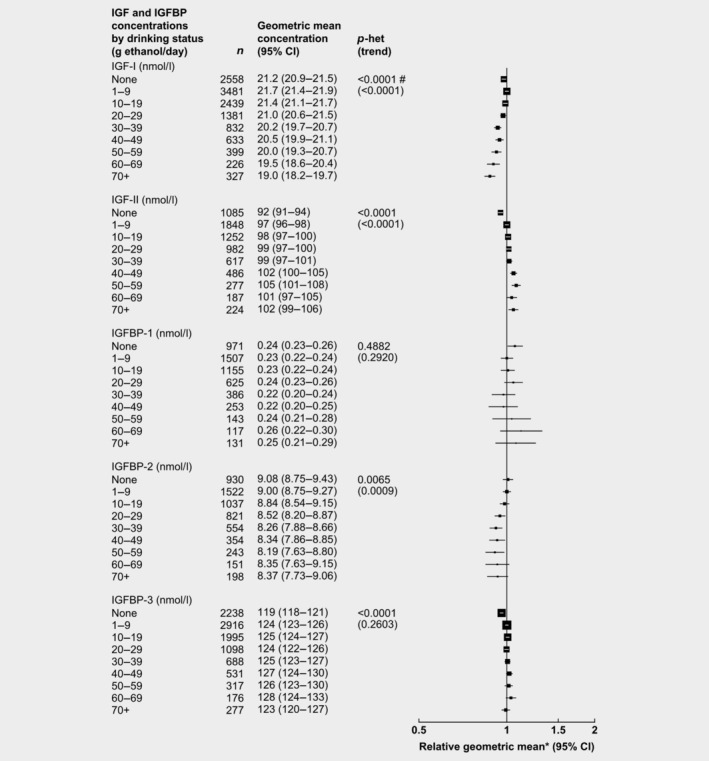
Insulin-like growth factors (IGFs) and insulin-like growth factor binding proteins (IGFBPs) have been implicated in the aetiology of several cancers. To better understand whether anthropometric, behavioural and sociodemographic factors may play a role in cancer risk via IGF signalling, we examined the cross-sectional associations of these exposures with circulating concentrations of IGFs (IGF-I and IGF-II) and IGFBPs (IGFBP-1, IGFBP-2 and IGFBP-3). The Endogenous Hormones, Nutritional Biomarkers and Prostate Cancer Collaborative Group dataset includes individual participant data from 16,024 male controls (i.e. without prostate cancer) aged 22-89 years from 22 prospective studies. Geometric means of protein concentrations were estimated using analysis of variance, adjusted for relevant covariates. Older age was associated with higher concentrations of IGFBP-1 and IGFBP-2 and lower concentrations of IGF-I, IGF-II and IGFBP-3. Higher body mass index was associated with lower concentrations of IGFBP-1 and IGFBP-2. Taller height was associated with higher concentrations of IGF-I and IGFBP-3 and lower concentrations of IGFBP-1. Smokers had higher concentrations of IGFBP-1 and IGFBP-2 and lower concentrations of IGFBP-3 than nonsmokers. Higher alcohol consumption was associated with higher concentrations of IGF-II and lower concentrations of IGF-I and IGFBP-2. African Americans had lower concentrations of IGF-II, IGFBP-1, IGFBP-2 and IGFBP-3 and Hispanics had lower IGF-I, IGF-II and IGFBP-3 than non-Hispanic whites. These findings indicate that a range of anthropometric, behavioural and sociodemographic factors are associated with circulating concentrations of IGFs and IGFBPs in men, which will lead to a greater understanding of the mechanisms through which these factors influence cancer risk.
胰岛素样生长因子(IGFs)和胰岛素样生长因子结合蛋白(IGFBPs)与多种癌症的病因有关。为了更好地了解人体测量、行为和社会人口统计学因素是否通过 IGF 信号在癌症风险中发挥作用,我们研究了这些暴露因素与循环 IGF(IGF-I 和 IGF-II)和 IGFBP(IGFBP-1、IGFBP-2 和 IGFBP-3)浓度之间的横断面关联。内源性激素、营养生物标志物和前列腺癌合作组数据集包括来自 22 项前瞻性研究的 16024 名年龄在 22-89 岁之间、无前列腺癌的男性对照者(即无前列腺癌)的个体参与者数据。使用方差分析估计蛋白质浓度的几何平均值,并根据相关协变量进行调整。年龄较大与 IGFBP-1 和 IGFBP-2 浓度较高和 IGF-I、IGF-II 和 IGFBP-3 浓度较低相关。较高的体重指数与 IGFBP-1 和 IGFBP-2 浓度较低相关。较高的身高与 IGF-I 和 IGFBP-3 浓度较高和 IGFBP-1 浓度较低相关。吸烟者 IGFBP-1 和 IGFBP-2 浓度较高,IGFBP-3 浓度较低,而非吸烟者则相反。较高的酒精摄入量与 IGF-II 浓度较高和 IGF-I 和 IGFBP-2 浓度较低相关。非裔美国人 IGF-II、IGFBP-1、IGFBP-2 和 IGFBP-3 浓度较低,西班牙裔 IGF-I、IGF-II 和 IGFBP-3 浓度较低,而非西班牙裔白人则相反。这些发现表明,一系列人体测量、行为和社会人口统计学因素与男性循环 IGF 和 IGFBP 浓度相关,这将有助于更好地了解这些因素影响癌症风险的机制。