Department of Immunobiology, University of Arizona College of Medicine, Tucson, Arizona.
Immunol Rev. 2019 Mar;288(1):161-177. doi: 10.1111/imr.12732.
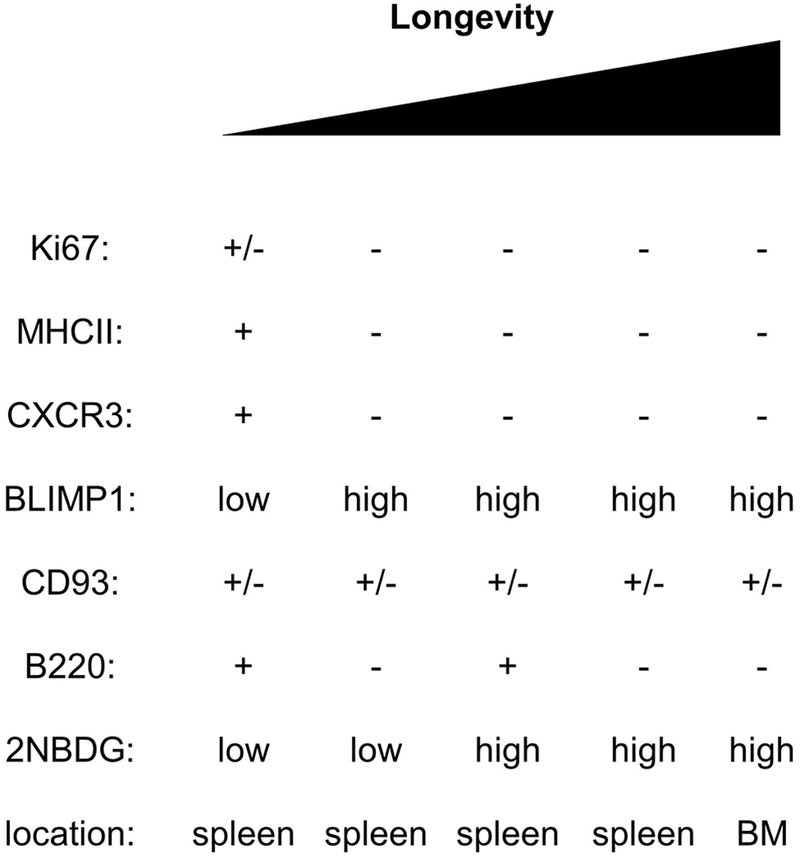
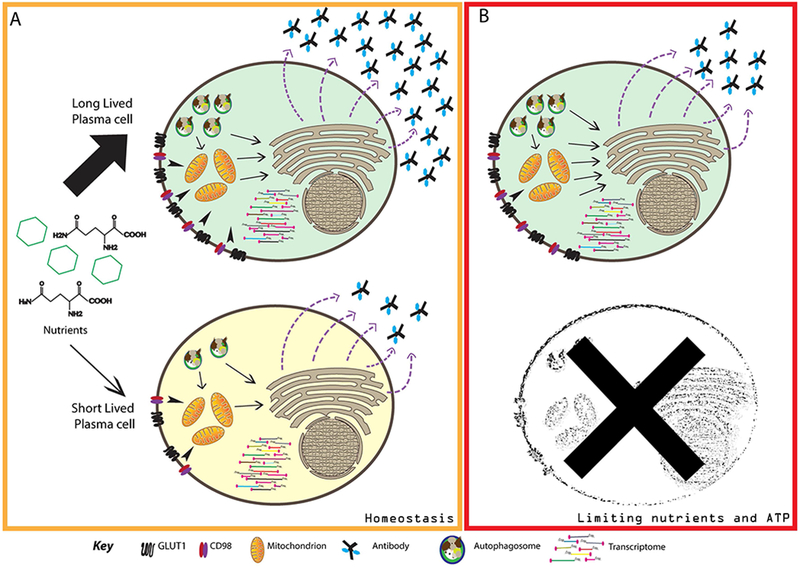
Plasma cells are terminally differentiated B lymphocytes that constitutively secrete antibodies. These antibodies can provide protection against pathogens, and their quantity and quality are the best clinical correlates of vaccine efficacy. As such, plasma cell lifespan is the primary determinant of the duration of humoral immunity. Yet dysregulation of plasma cell function can cause autoimmunity or multiple myeloma. The longevity of plasma cells is primarily dictated by nutrient uptake and non-transcriptionally regulated metabolic pathways. We have previously shown a positive effect of glucose uptake and catabolism on plasma cell longevity and function. In this review, we discuss these findings with an emphasis on nutrient uptake and its effects on respiratory capacity, lifespan, endoplasmic reticulum stress, and antibody secretion in plasma cells. We further discuss how some of these pathways may be dysregulated in multiple myeloma, potentially providing new therapeutic targets. Finally, we speculate on the connection between plasma cell intrinsic metabolism and systemic changes in nutrient availability and metabolic diseases.
浆细胞是终末分化的 B 淋巴细胞,持续分泌抗体。这些抗体可以提供针对病原体的保护,其数量和质量是疫苗疗效的最佳临床相关指标。因此,浆细胞的寿命是体液免疫持续时间的主要决定因素。然而,浆细胞功能的失调会导致自身免疫或多发性骨髓瘤。浆细胞的寿命主要由营养物质摄取和非转录调节的代谢途径决定。我们之前已经证明了葡萄糖摄取和分解代谢对浆细胞寿命和功能的积极影响。在这篇综述中,我们将重点讨论这些发现,强调营养物质摄取及其对浆细胞呼吸能力、寿命、内质网应激和抗体分泌的影响。我们进一步讨论了这些途径中的一些可能在多发性骨髓瘤中失调,从而为新的治疗靶点提供了可能性。最后,我们推测浆细胞内在代谢与营养物质可用性和代谢性疾病的全身变化之间的联系。