Wageningen Bioveterinary Research, Lelystad, the Netherlands.
Transbound Emerg Dis. 2019 May;66(3):1370-1378. doi: 10.1111/tbed.13169. Epub 2019 Apr 5.
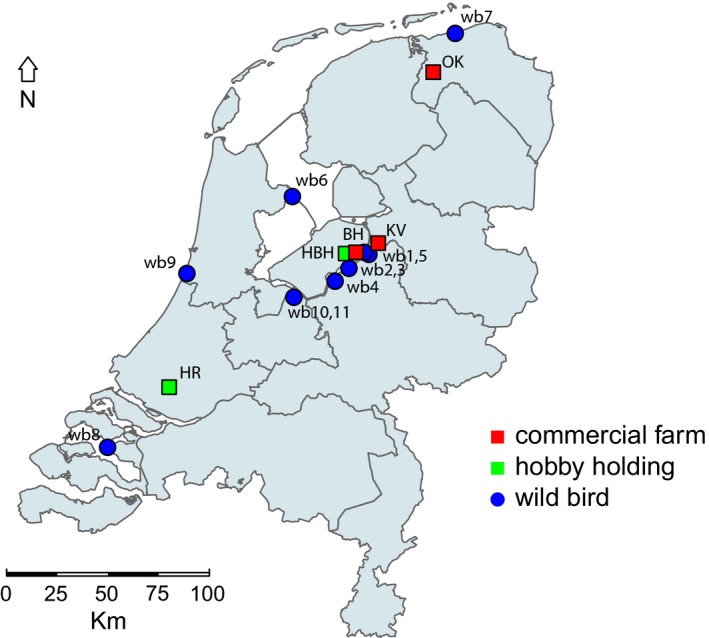
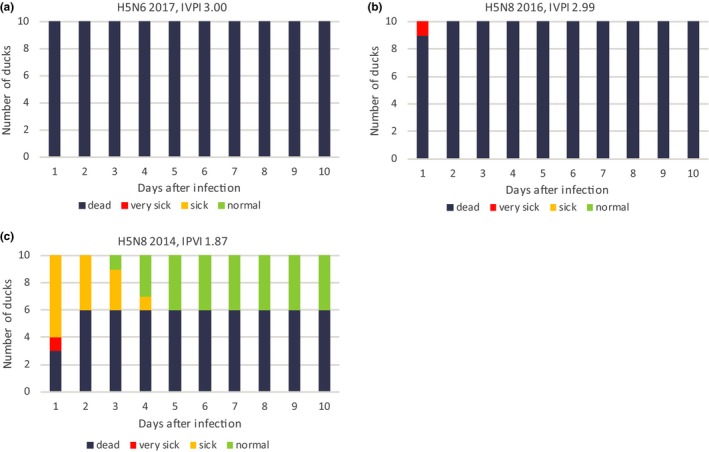
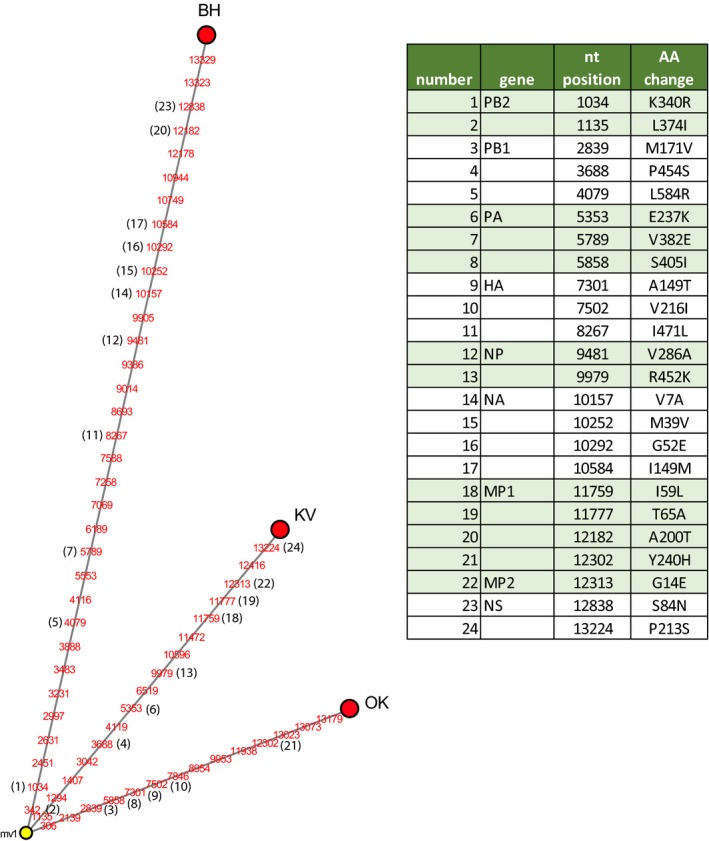
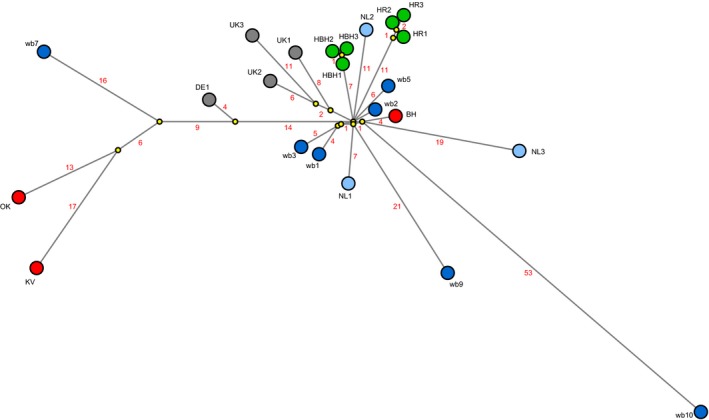
In the Netherlands, three commercial poultry farms and two hobby holdings were infected with highly pathogenic avian influenza (HPAI) H5N6 virus in the winter of 2017-2018. This H5N6 virus is a reassortant of HPAI H5N8 clade 2.3.4.4 group B viruses detected in Eurasia in 2016. H5N6 viruses were also detected in several dead wild birds during the winter. However, wild bird mortality was limited compared to the caused by the H5N8 group B virus in 2016-2017. H5N6 virus was not detected in wild birds after March, but in late summer infected wild birds were found again. In this study, the complete genome sequences of poultry and wild bird viruses were determined to study their genetic relationship. Genetic analysis showed that the outbreaks in poultry were not the result of farm-to-farm transmissions, but rather resulted from separate introductions from wild birds. Wild birds infected with viruses related to the first outbreak in poultry were found at short distances from the farm, within a short time frame. However, no wild bird viruses related to outbreaks 2 and 3 were detected. The H5N6 virus isolated in summer shares a common ancestor with the virus detected in outbreak 1. This suggests long-term circulation of H5N6 virus in the local wild bird population. In addition, the pathogenicity of H5N6 virus in ducks was determined, and compared to that of H5N8 viruses detected in 2014 and 2016. A similar high pathogenicity was measured for H5N6 and H5N8 group B viruses, suggesting that biological or ecological factors in the wild bird population may have affected the mortality rates during the H5N6 epidemic. These observations suggest different infection dynamics for the H5N6 and H5N8 group B viruses in the wild bird population.
在荷兰,2017-2018 年冬季,三家商业家禽养殖场和两家业余养殖场感染了高致病性禽流感(HPAI)H5N6 病毒。这种 H5N6 病毒是欧亚大陆 2016 年检测到的 HPAI H5N8 分支 2.3.4.4 组 B 病毒的重组病毒。冬季还检测到了几只死野生鸟类中也检测到了 H5N6 病毒。然而,与 2016-2017 年 H5N8 组 B 病毒引起的野生鸟类死亡率相比,这一数字有限。3 月后未在野生鸟类中检测到 H5N6 病毒,但在夏末再次发现感染野生鸟类。在这项研究中,确定了家禽和野生鸟类病毒的完整基因组序列,以研究它们的遗传关系。遗传分析表明,家禽中的疫情不是农场到农场传播的结果,而是由野生鸟类单独引入的。在距离农场较近的地方,在很短的时间内,发现了与家禽中首次疫情有关的感染病毒的野生鸟类。但是,没有检测到与疫情 2 和 3 相关的野生鸟类病毒。夏季分离的 H5N6 病毒与检测到的 1 号疫情病毒有共同的祖先。这表明 H5N6 病毒在当地野生鸟类种群中已长期循环。此外,还测定了 H5N6 病毒在鸭子中的致病性,并与 2014 年和 2016 年检测到的 H5N8 病毒进行了比较。H5N6 和 H5N8 组 B 病毒的高致病性相似,这表明野生鸟类种群中的生物或生态因素可能影响了 H5N6 疫情期间的死亡率。这些观察结果表明,H5N6 和 H5N8 组 B 病毒在野生鸟类种群中的感染动态不同。