Department of Endocrinology, Shanghai Ninth People's Hospital, Shanghai Jiao Tong University School of Medicine, Shanghai, 201999, China.
Department of Endocrinology, Affiliated Hangzhou First People's Hospital, Zhejiang University School of Medicine, Hangzhou, 310022, China.
Cell Death Dis. 2019 Mar 15;10(4):255. doi: 10.1038/s41419-019-1492-6.
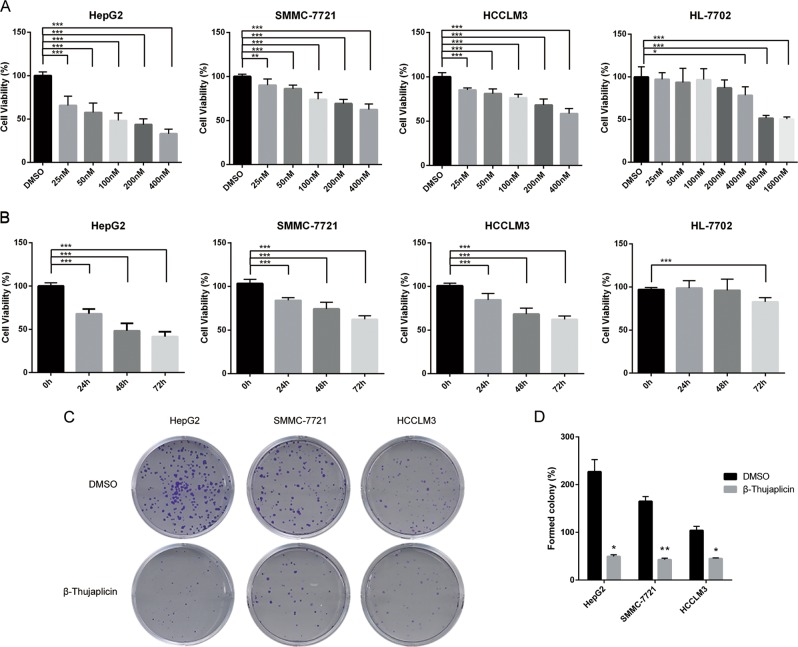
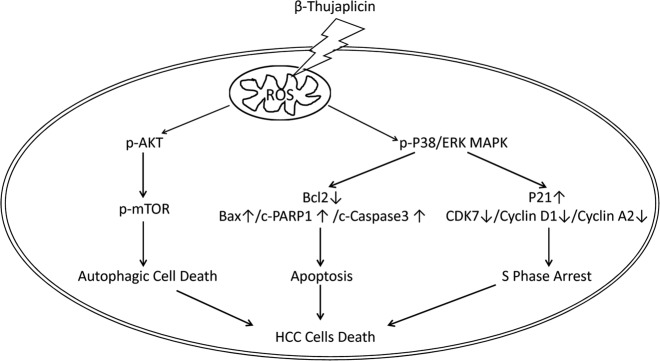
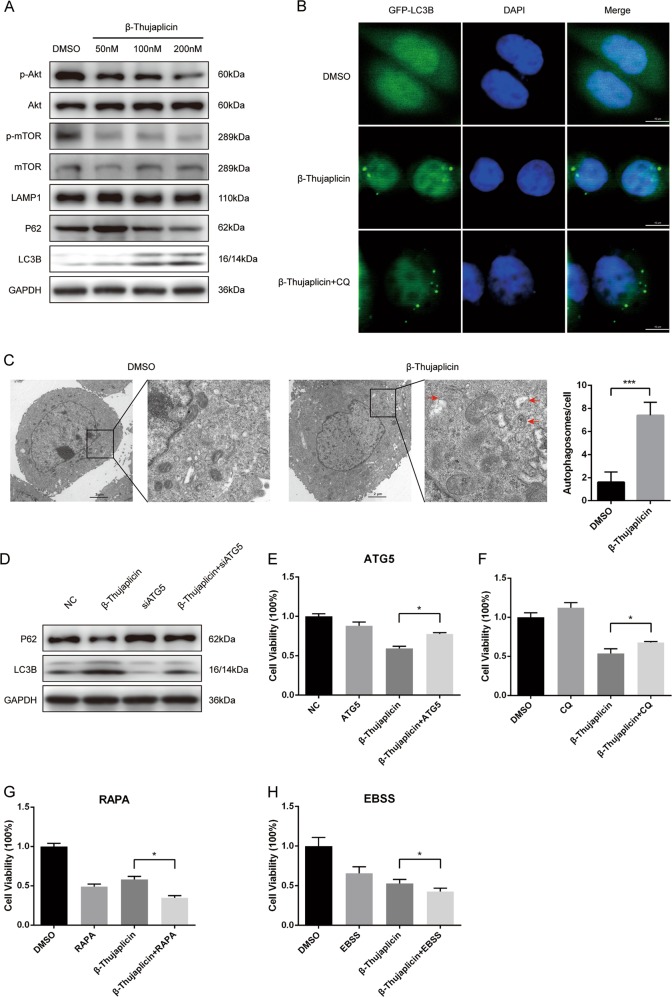
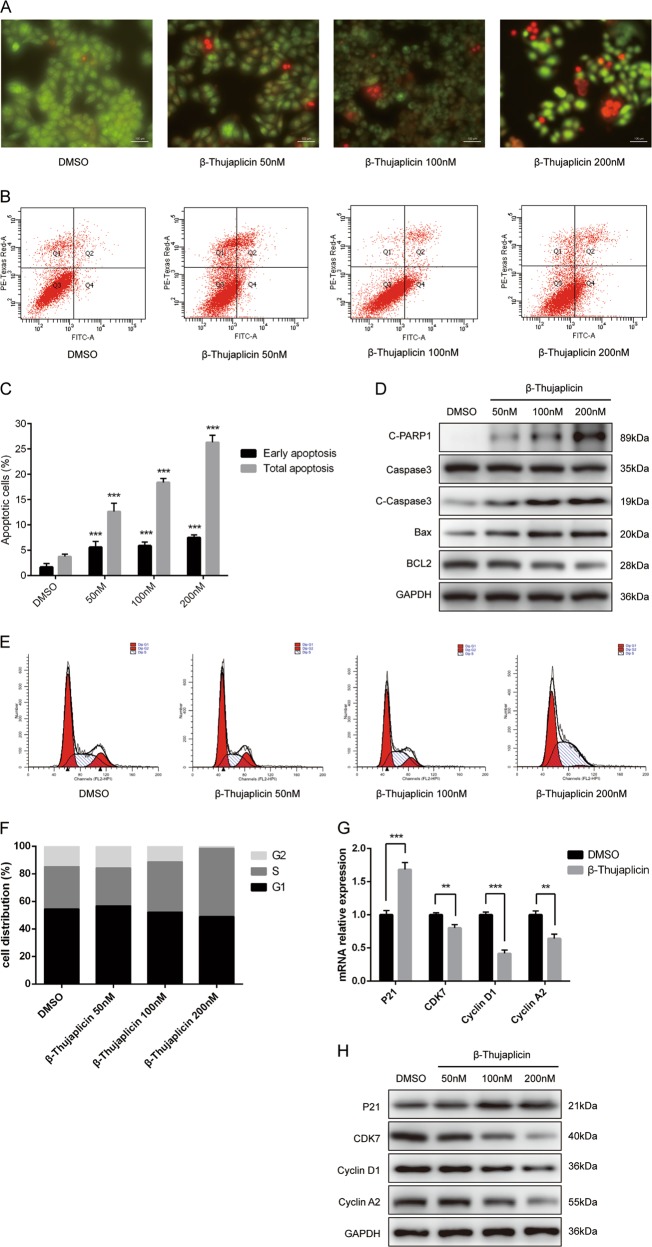
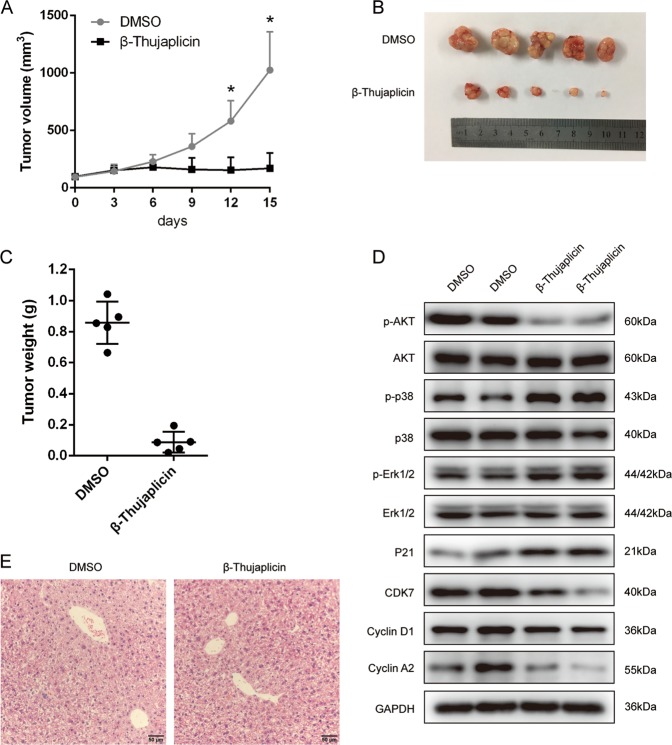
Hepatocellular carcinoma (HCC), a common liver malignancy worldwide, has high morbidity and mortality. β-Thujaplicin, a tropolone derivative, has been used in some health-care products and clinical adjuvant drugs, but its use for HCC is unknown. In this study, we found that β-Thujaplicin inhibits the growth of HCC cells, but not normal liver cells, with nanomolar potency. Mechanistically, we found that β-Thujaplicin could induce autophagy, as judged by western blot, confocal microscopy, and transmission electron microscopy. Further using β-Thujaplicin combined with an autophagy blocker or agonist treatment HepG2 cells, we found that β-Thujaplicin induced autophagic cell death (ACD) mediated by ROS caused inhibition of the Akt-mTOR signaling pathway. Moreover, β-Thujaplicin triggered HepG2 apoptosis and increased cleaved PARP1, cleaved caspase-3, and Bax/Bcl-2 ratio, which indicated that β-Thujaplicin induced apoptosis mediated by the mitochondrial-dependent pathway. We also found that increased expression of p21 and decreased expression of CDK7, Cyclin D1, and Cyclin A2 participating in β-Thujaplicin caused the S-phase arrest. It seems that β-Thujaplicin exerts these functions by ROS-mediated p38/ERK MAPK but not by JNK signaling pathway activation. Consistent with in vitro findings, our in vivo study verified that β-Thujaplicin treatment significantly reduced HepG2 tumor xenograft growth. Taken together these findings suggest that β-Thujaplicin have an ability of anti-HCC cells and may conducively promote the development of novel anti-cancer agents.
肝细胞癌(HCC)是一种常见的肝脏恶性肿瘤,全球发病率和死亡率均较高。β-崖柏素是一种岗松素衍生物,曾被用于一些保健品和临床辅助药物中,但它在 HCC 中的应用尚不清楚。在本研究中,我们发现β-崖柏素以纳摩尔效力抑制 HCC 细胞的生长,但不抑制正常肝细胞的生长。从机制上讲,我们发现β-崖柏素可以诱导自噬,这可以通过 Western blot、共聚焦显微镜和透射电子显微镜来判断。进一步使用β-崖柏素联合自噬抑制剂或激动剂处理 HepG2 细胞,我们发现β-崖柏素通过 ROS 诱导自噬性细胞死亡(ACD),从而抑制 Akt-mTOR 信号通路。此外,β-崖柏素触发 HepG2 细胞凋亡并增加 cleaved PARP1、cleaved caspase-3 和 Bax/Bcl-2 比值,这表明β-崖柏素通过线粒体依赖性途径诱导凋亡。我们还发现,β-崖柏素引起的 S 期阻滞与 p21 表达增加和参与β-崖柏素的 CDK7、Cyclin D1 和 Cyclin A2 表达减少有关。β-崖柏素似乎通过 ROS 介导的 p38/ERK MAPK 而不是 JNK 信号通路激活发挥这些功能。与体外研究结果一致,我们的体内研究证实β-崖柏素治疗可显著抑制 HepG2 肿瘤异种移植的生长。综上所述,这些发现表明β-崖柏素有抗 HCC 细胞的能力,并可能有助于开发新型抗癌药物。