Department of Microbiology, College of Basic Sciences and Humanities; Govind Ballabh Pant University of Agriculture and Technology, Pantnagar, Uttarakhand, India.
National Centre for Microbial Resource, National Centre for Cell Science, Sutarwadi, Pashan, Pune, Maharashtra, India.
PLoS One. 2019 Mar 15;14(3):e0213844. doi: 10.1371/journal.pone.0213844. eCollection 2019.
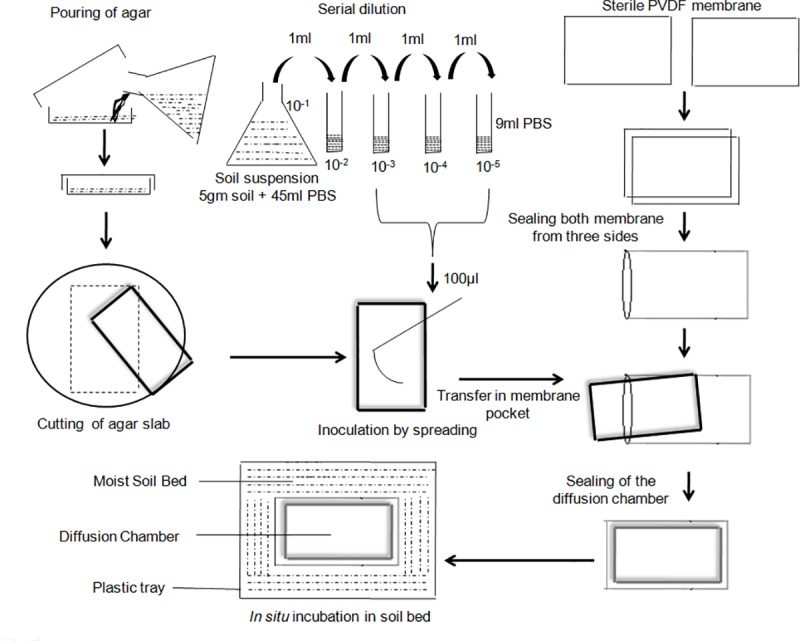
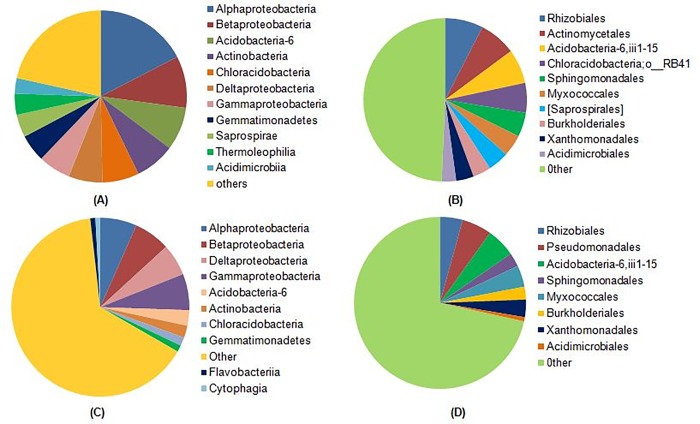
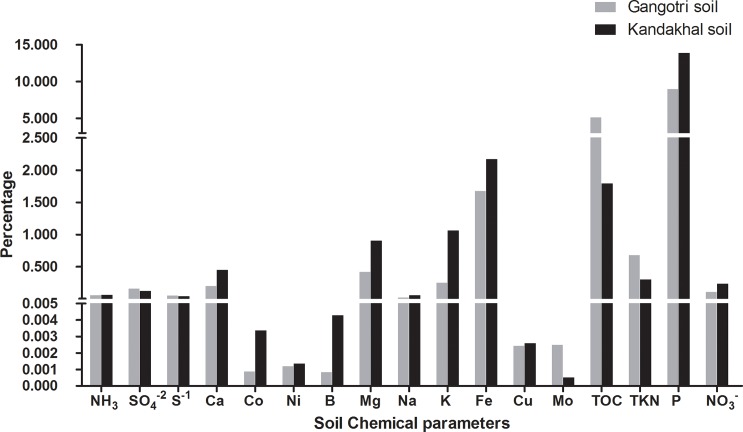
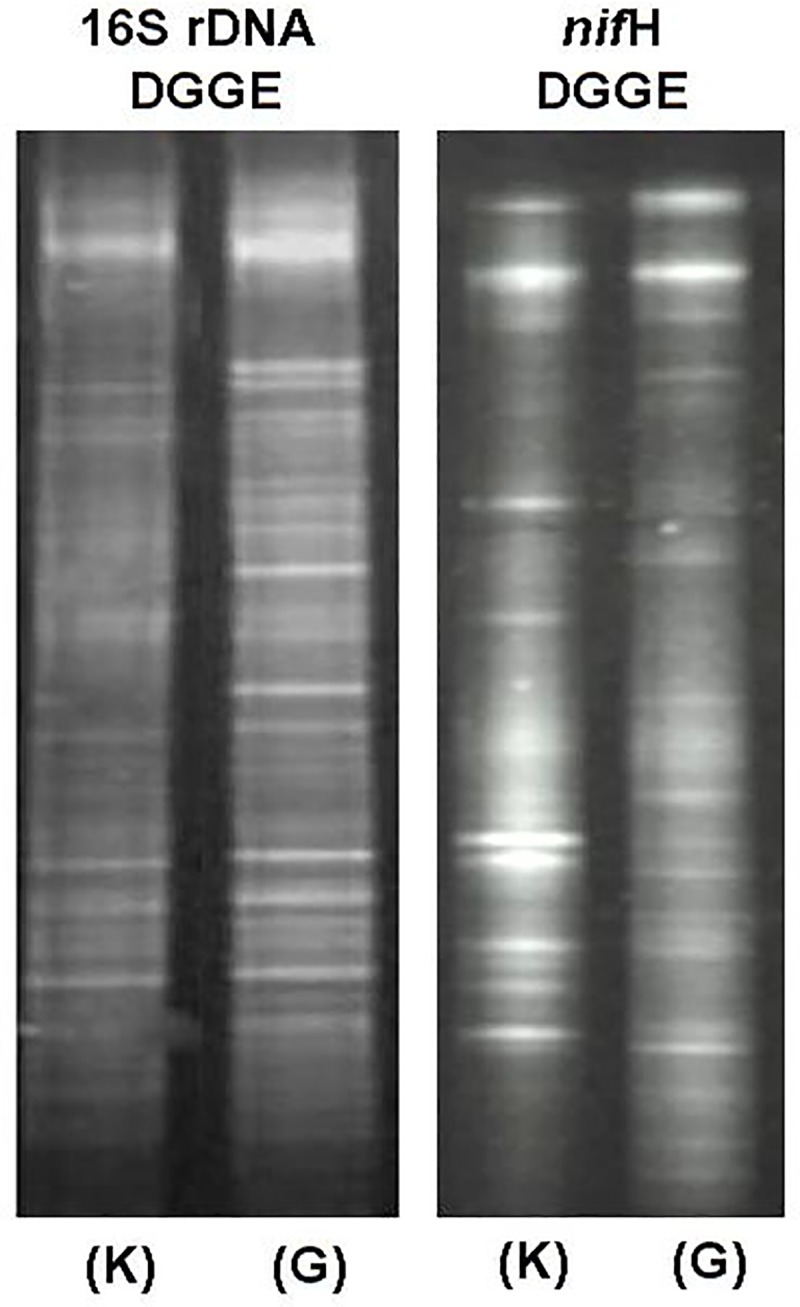
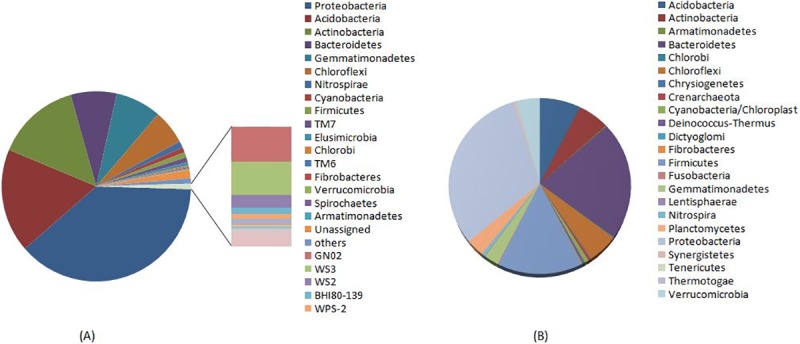
Altitude is the major factor affecting both biodiversity and soil physiochemical properties of soil ecosystems. In order to understand the effect of altitude on soil physiochemical properties and bacterial diversity across the Himalayan cold desert, high altitude Gangotri soil ecosystem was studied and compared with the moderate altitude Kandakhal soil. Soil physiochemical analysis showed that altitude was positively correlated with soil pH, organic matter and total nitrogen content. However soil mineral nutrients and soil phosphorus were negatively correlated to the altitude. RT-PCR based analysis revealed the decreased bacterial and diazotrophic abundance at high altitude. Metagenomic study showed that Proteobacteria, Acidobacteria and Actinobacteria were dominant bacteria phyla at high altitude soil while Bacteroidetes and Fermicutes were found dominant at low altitude. High ratio of Gram-negative to Gram positive bacteria at Gangotri suggests the selective proliferation of Gram negative bacteria at high altitude with decrease in Gram positive bacteria. Moreover, Alphaproteobacteria was found more abundant at high altitude while the opposite was true for Betaproteobacteria. Abundance of Cytophaga, Flavobacterium and Bacteroides (CFB) were also found comparatively high at high altitude. Presence of many taxonomically unclassified sequences in Gangotri soil indicates the presence of novel bacterial diversity at high altitude. Further, isolation of bacteria through indigenously designed diffusion chamber revealed the existence of bacteria which has been documented in unculturable study of WIH (Western Indian Himalaya) but never been cultivated from WIH. Nevertheless, diverse functional free-living psychrotrophic diazotrophs were isolated only from the high altitude Gangotri soil. Molecular characterization revealed them as Arthrobacter humicola, Brevibacillus invocatus, Pseudomonas mandelii and Pseudomonas helmanticensis. Thus, this study documented the bacterial and psychrophilic diazotrophic diversity at high altitude and is an effort for exploration of low temperature bacteria in agricultural productivity with the target for sustainable hill agriculture.
海拔是影响生物多样性和土壤生态系统土壤理化性质的主要因素。为了了解海拔对喜马拉雅高寒荒漠土壤理化性质和细菌多样性的影响,本研究对高海拔的 Gangotri 土壤生态系统进行了研究,并与中海拔的 Kandakhal 土壤进行了比较。土壤理化分析表明,海拔与土壤 pH、有机质和全氮含量呈正相关。然而,土壤矿质养分和土壤磷与海拔呈负相关。基于 RT-PCR 的分析显示,高海拔地区的细菌和固氮生物丰度下降。宏基因组研究表明,高海拔土壤中的优势细菌门为变形菌门、酸杆菌门和放线菌门,而在低海拔土壤中则为拟杆菌门和厚壁菌门。Gangotri 土壤中革兰氏阴性菌与革兰氏阳性菌的比例较高,表明革兰氏阴性菌在高海拔选择性增殖,而革兰氏阳性菌则减少。此外,高海拔地区的α变形菌门丰度较高,而β变形菌门则相反。高海拔地区的噬纤维菌属、黄杆菌属和拟杆菌属(CFB)丰度也较高。Gangotri 土壤中存在许多分类上未分类的序列,表明存在新的细菌多样性。此外,通过自主设计的扩散室分离细菌,发现了一些在 WIH(西印度喜马拉雅山)不可培养研究中已经记录但从未从 WIH 中培养出来的细菌。然而,只有在高海拔的 Gangotri 土壤中才分离到了多种功能型的自由生活嗜冷固氮生物。分子特征表明它们是节杆菌属 humicola、短芽孢杆菌属 invocatus、曼德尔假单胞菌属 mandelii 和假单胞菌属 helmanticensis。因此,本研究记录了高海拔地区的细菌和嗜冷固氮生物多样性,是探索低温细菌在农业生产力中的应用的努力,目标是实现可持续的山地农业。