Department of Internal Medicine, Soonchunhyang University Bucheon Hospital, Gyeonggi-do 14584, Korea.
Department of Internal Medicine and Liver Research Institute, Seoul National University College of Medicine, Seoul National University Hospital, Seoul 03080, Korea.
Int J Mol Sci. 2019 Mar 14;20(6):1292. doi: 10.3390/ijms20061292.
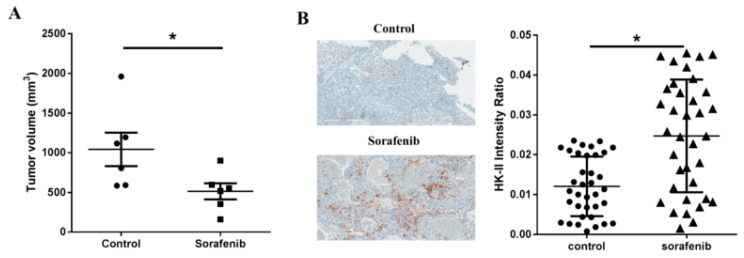
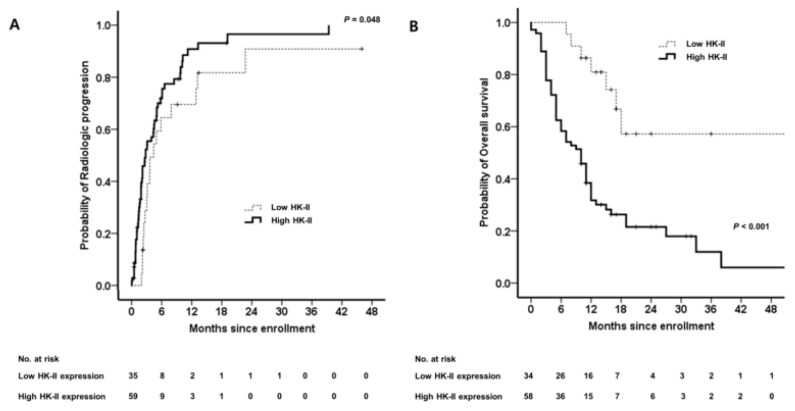
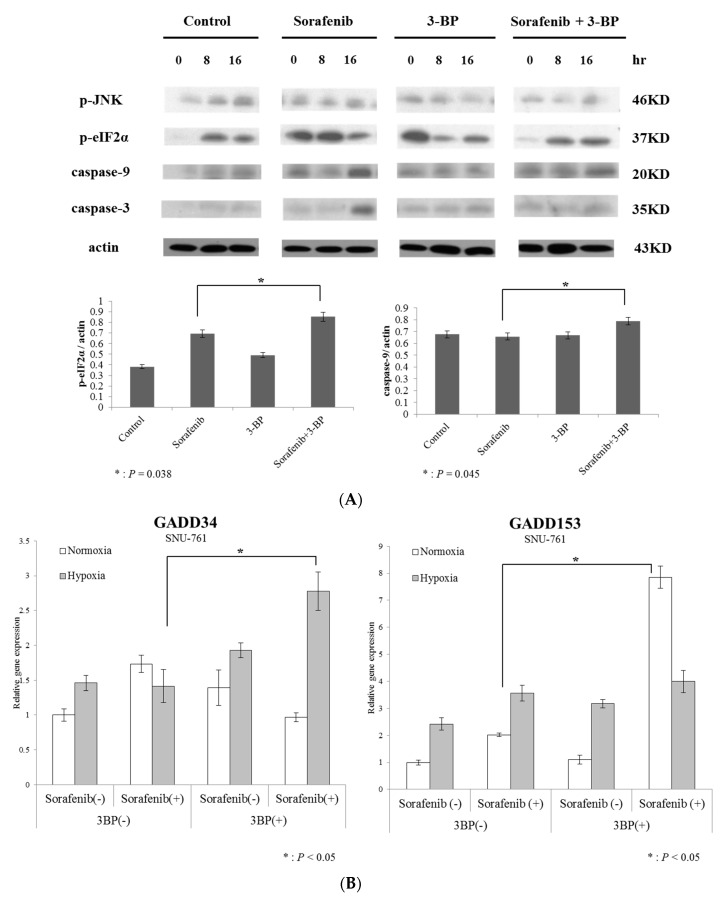
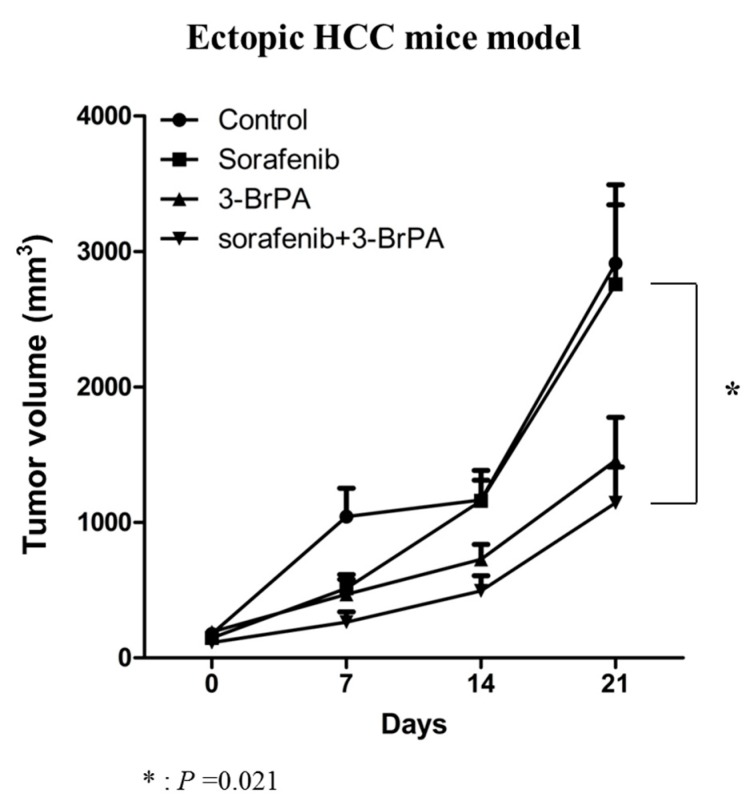
This study aimed to examine whether inhibition of hexokinase (HK)-II activity enhances the efficacy of sorafenib in in-vivo models of hepatocellular carcinoma (HCC), and to evaluate the prognostic implication of HK-II expression in patients with HCC. We used 3-bromopyruvate (3-BP), a HK-II inhibitor to target HK-II. The human HCC cell line was tested as both subcutaneous and orthotopic tumor xenograft models in BALB/c nu/nu mice. The prognostic role of HK-II was evaluated in data from HCC patients in The Cancer Genome Atlas (TCGA) database and validated in patients treated with sorafenib. Quantitative real-time PCR, western blot analysis, and immunohistochemical staining revealed that HK-II expression is upregulated in the presence of sorafenib. Further analysis of the endoplasmic reticulum-stress network model in two different murine HCC models showed that the introduction of additional stress by 3-BP treatment synergistically increased the in vivo/vitro efficacy of sorafenib. We found that HCC patients with increased HK-II expression in the TCGA database showed poor overall survival, and also confirmed similar results for TCGA database HCC patients who had undergone sorafenib treatment. These results suggest that HK-II is a promising therapeutic target to enhance the efficacy of sorafenib and that HK-II expression might be a prognostic factor in HCC.
本研究旨在探讨抑制己糖激酶-II(HK-II)活性是否能增强索拉非尼在肝细胞癌(HCC)体内模型中的疗效,并评估 HK-II 表达在 HCC 患者中的预后意义。我们使用 3-溴丙酮酸(3-BP)作为 HK-II 抑制剂来靶向 HK-II。用人 HCC 细胞系作为皮下和原位肿瘤异种移植模型在 BALB/c nu/nu 小鼠中进行测试。在癌症基因组图谱(TCGA)数据库中对 HK-II 的预后作用进行了评估,并在接受索拉非尼治疗的患者中进行了验证。定量实时 PCR、western blot 分析和免疫组织化学染色显示,在存在索拉非尼的情况下,HK-II 的表达上调。对两种不同的小鼠 HCC 模型中的内质网应激网络模型的进一步分析表明,通过 3-BP 治疗引入额外的应激协同作用,增强了索拉非尼在体内/体外的疗效。我们发现,在 TCGA 数据库中 HK-II 表达增加的 HCC 患者总体生存率较差,并且还证实了接受索拉非尼治疗的 TCGA 数据库 HCC 患者也有类似的结果。这些结果表明,HK-II 是增强索拉非尼疗效的有前途的治疗靶点,并且 HK-II 表达可能是 HCC 的一个预后因素。