Vascular Biology Section, Whitaker Cardiovascular Institute, Boston University School of Medicine, Boston, MA, USA.
Vascular Biology Section, Whitaker Cardiovascular Institute, Boston University School of Medicine, Boston, MA, USA; Cardiovascular Proteomics Center, Boston University School of Medicine, Boston, MA, USA.
Redox Biol. 2019 Apr;22:101150. doi: 10.1016/j.redox.2019.101150. Epub 2019 Mar 5.
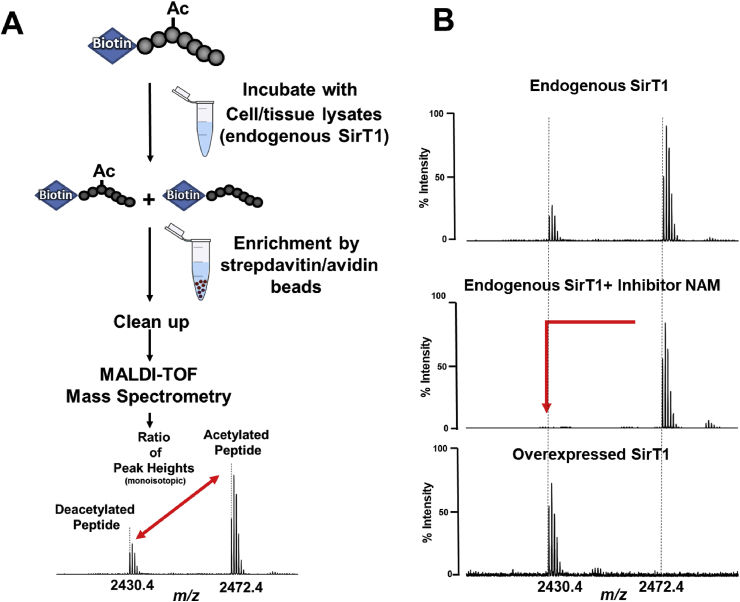
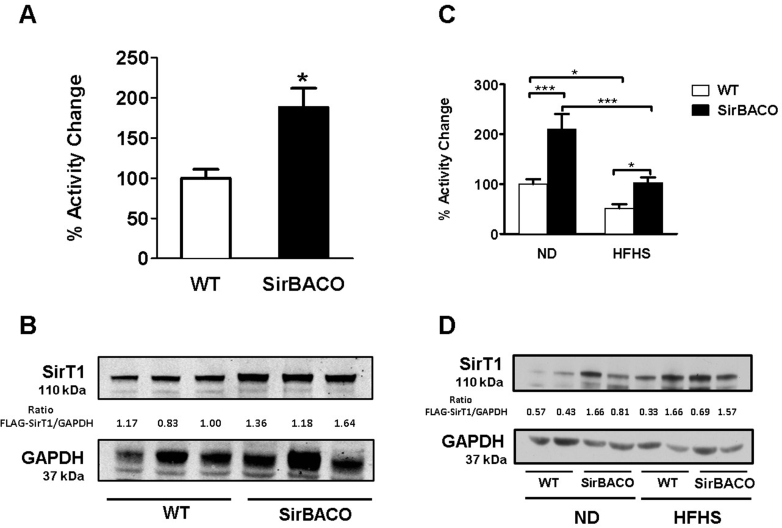
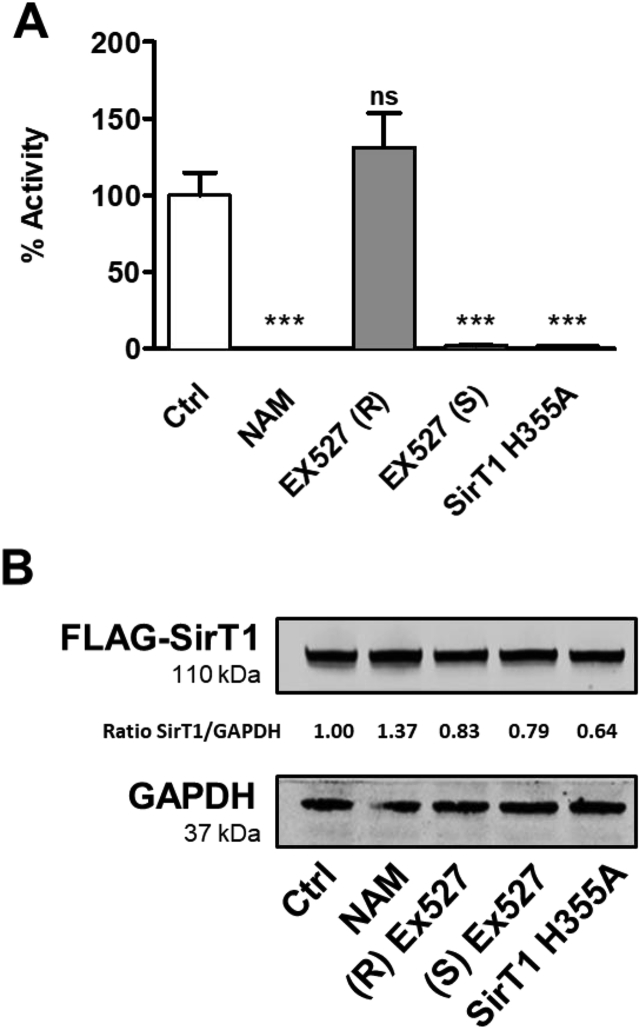
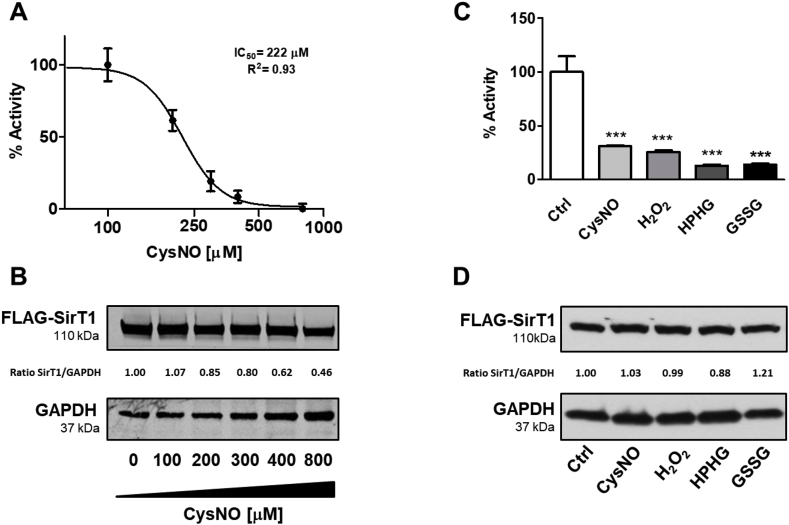
Sirtuin-1 (SirT1) catalyzes NAD-dependent protein lysine deacetylation and is a critical regulator of energy and lipid metabolism, mitochondrial biogenesis, apoptosis, and senescence. Activation of SirT1 mitigates metabolic perturbations associated with diabetes and obesity. Pharmacologic molecules, cellular redox, and nutritional states can regulate SirT1 activity. Technical barriers against measuring endogenous SirT1 activity have limited characterization of SirT1 in disease and its activation by small molecules. Herein, we developed a relative quantitative mass spectrometry-based technique for measuring endogenous SirT1 activity (RAMSSAY/RelAtive Mass Spectrometry Sirt1 Activity assaY) in cell and tissue homogenates using a biotin-labeled, acetylated p53-derived peptide as a substrate. We demonstrate that oxidative and metabolic stress diminish SirT1 activity in the hepatic cell line HepG2. Moreover, pharmacologic molecules including nicotinamide and EX-527 attenuate SirT1 activity; purported activators of SirT1, the polyphenol S17834, the polyphenol resveratrol, or the non-polyphenolic Sirtris compound SRT1720, failed to activate endogenous SirT1 significantly. Furthermore, we provide evidence that feeding a high fat high sucrose diet (HFHS) to mice inhibits endogenous SirT1 activity in mouse liver. In summary, we introduce a robust, specific and sensitive mass spectrometry-based assay for detecting and quantifying endogenous SirT1 activity using a biotin-labeled peptide in cell and tissue lysates. With this assay, we determine how pharmacologic molecules and metabolic and oxidative stress regulate endogenous SirT1 activity. The assay may also be adapted for other sirtuin isoforms.
Sirtuin-1(SirT1)催化 NAD 依赖性蛋白赖氨酸去乙酰化,是能量和脂质代谢、线粒体生物发生、细胞凋亡和衰老的关键调节因子。SirT1 的激活减轻了与糖尿病和肥胖相关的代谢紊乱。药理学分子、细胞氧化还原和营养状态可以调节 SirT1 的活性。测量内源性 SirT1 活性的技术障碍限制了其在疾病中的特征描述及其被小分子激活。在此,我们开发了一种基于相对定量质谱的技术,用于测量细胞和组织匀浆中内源性 SirT1 活性(RAMSSAY/Relative Mass Spectrometry Sirt1 Activity assaY),使用生物素标记的乙酰化 p53 衍生肽作为底物。我们证明,氧化和代谢应激会降低 HepG2 肝细胞系中的 SirT1 活性。此外,药理学分子,包括烟酰胺和 EX-527,可减弱 SirT1 活性;被认为是 SirT1 激活剂的多酚 S17834、多酚白藜芦醇或非多酚类 Sirtris 化合物 SRT1720 并没有显著激活内源性 SirT1。此外,我们提供的证据表明,高脂高蔗糖饮食(HFHS)喂养小鼠会抑制小鼠肝脏内源性 SirT1 活性。总之,我们引入了一种强大、特异和敏感的基于质谱的测定方法,用于检测和定量细胞和组织裂解物中内源性 SirT1 活性,使用生物素标记的肽。通过该测定法,我们确定了药理学分子和代谢及氧化应激如何调节内源性 SirT1 活性。该测定法也可以适应于其他 Sirtuin 同工型。