National Centre for Epidemiology and Population Health, Australian National University, Canberra, Australia.
Centre for International Health, University of Otago, Dunedin, New Zealand.
PLoS Negl Trop Dis. 2019 Mar 18;13(3):e0007187. doi: 10.1371/journal.pntd.0007187. eCollection 2019 Mar.
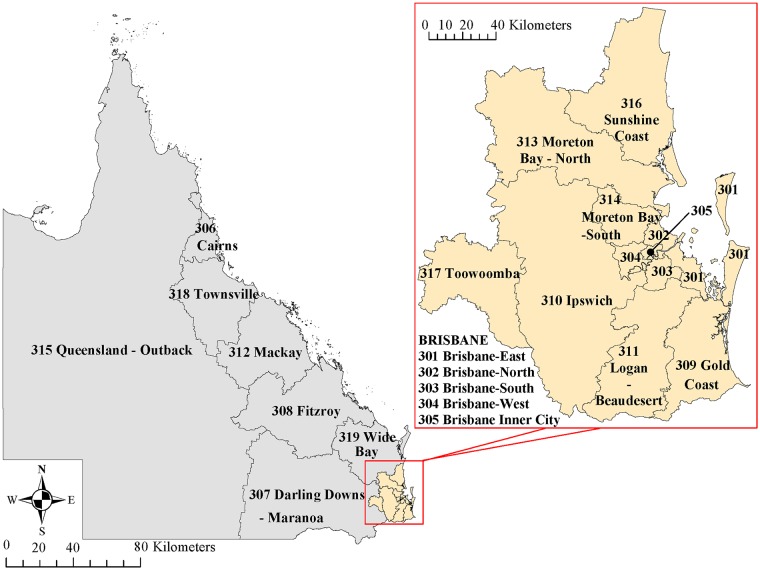
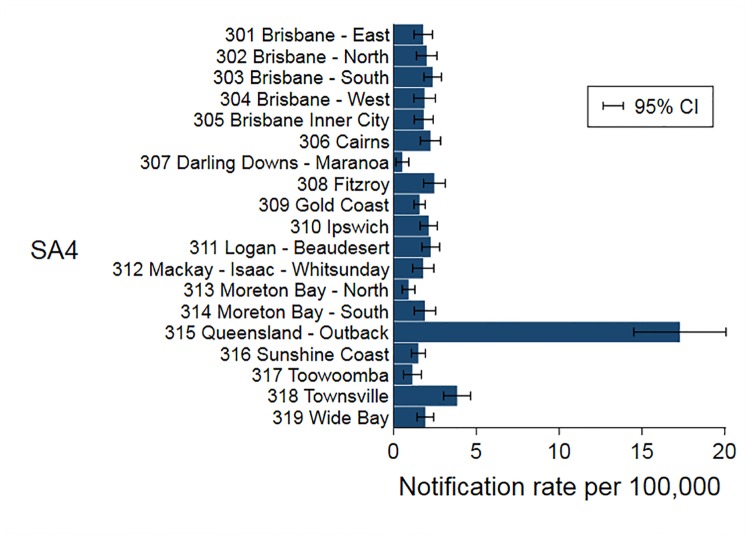
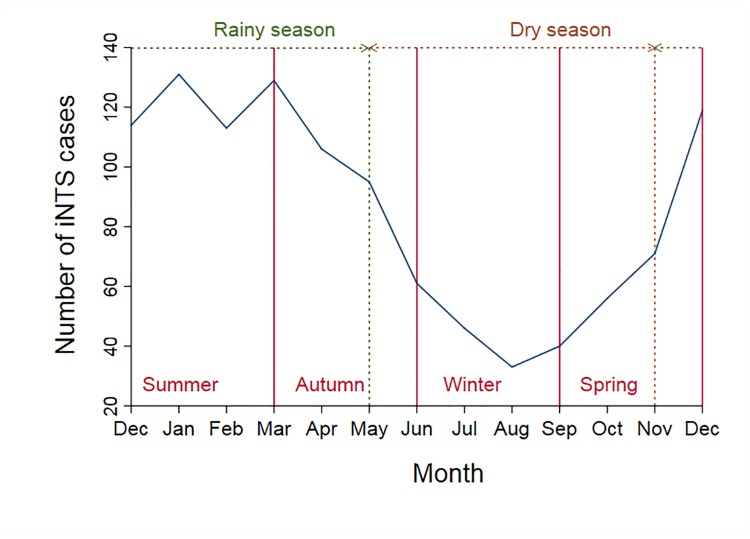
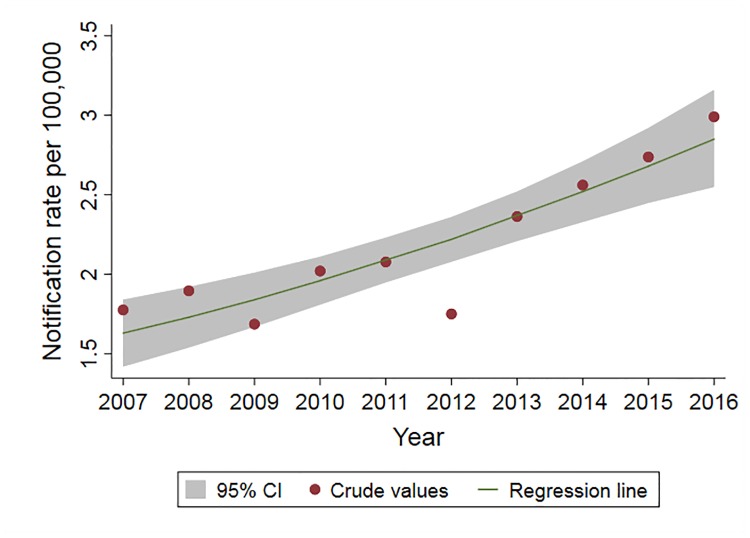
Nontyphoidal Salmonella is a major contributor to the global burden of foodborne disease, with invasive infections contributing substantially to illnesses and deaths. We analyzed notifiable disease surveillance data for invasive nontyphoidal Salmonella disease (iNTS) in Queensland, Australia. We used Poisson regression to estimate incidence rate ratios by gender, age group, and geographical area over 2007-2016. There were 995 iNTS cases, with 945 (92%) confirmed by blood culture. Salmonella Virchow accounted for 254 (25%) of 1,001 unique iNTS isolates. Invasive NTS disease notification rates peaked among infants, during the summer months, and in outback Queensland where the notification rate (95% CI) was 17.3 (14.5-20.1) cases per 100,000 population. Overall, there was a 6,5% annual increase (p<0.001) in iNTS disease incidence. In conclusion, high iNTS rates among males, infants, and the elderly require investigation of household level risk factors for NTS infection. Controlling Salmonella Virchow infections is a public health priority.
非伤寒沙门氏菌是全球食源性疾病负担的主要原因,其侵袭性感染对疾病和死亡的贡献很大。我们分析了澳大利亚昆士兰州可报告疾病监测数据中侵袭性非伤寒沙门氏菌病(iNTS)的数据。我们使用泊松回归分析了 2007-2016 年间按性别、年龄组和地理区域划分的发病率比值。共发现了 995 例 iNTS 病例,其中 945 例(92%)通过血培养确诊。在 1001 株独特的 iNTS 分离株中,沙门氏菌·维尔肖占 254 株(25%)。侵袭性 NTS 疾病的通报率在婴儿中、夏季和内陆昆士兰州达到高峰,通报率(95%CI)为每 10 万人中有 17.3(14.5-20.1)例。总体而言,iNTS 疾病的发病率每年增加 6.5%(p<0.001)。总之,男性、婴儿和老年人中 iNTS 发病率较高,需要调查家庭层面 NTS 感染的危险因素。控制沙门氏菌·维尔肖的感染是公共卫生的重点。