College of Agriculture, Northeast Agricultural University, No. 600, Changjiang Street, Xiangfang District, Harbin, China.
Maize Research Institute, Heilongjiang Academy of Agricultural Sciences, No. 368, Xuefu Street, Nangang District, Harbin, China.
BMC Plant Biol. 2019 Mar 19;19(1):107. doi: 10.1186/s12870-019-1710-5.
Nitrogen (N) metabolism plays an important role in plant drought tolerance. 2-(3,4-Dichlorophenoxy) triethylamine (DCPTA) regulates many aspects of plant development; however, the effects of DCPTA on soil drought tolerance are poorly understood, and the possible role of DCPTA on nitrogen metabolism has not yet been explored.
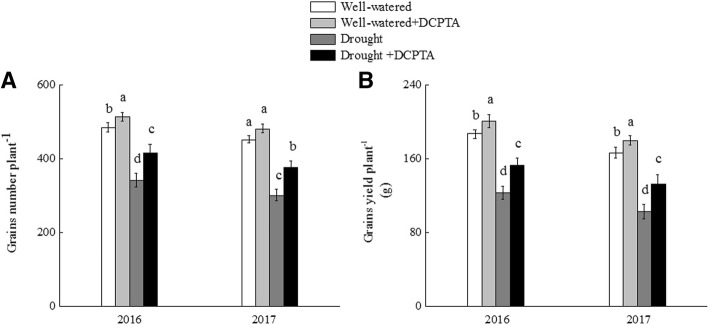
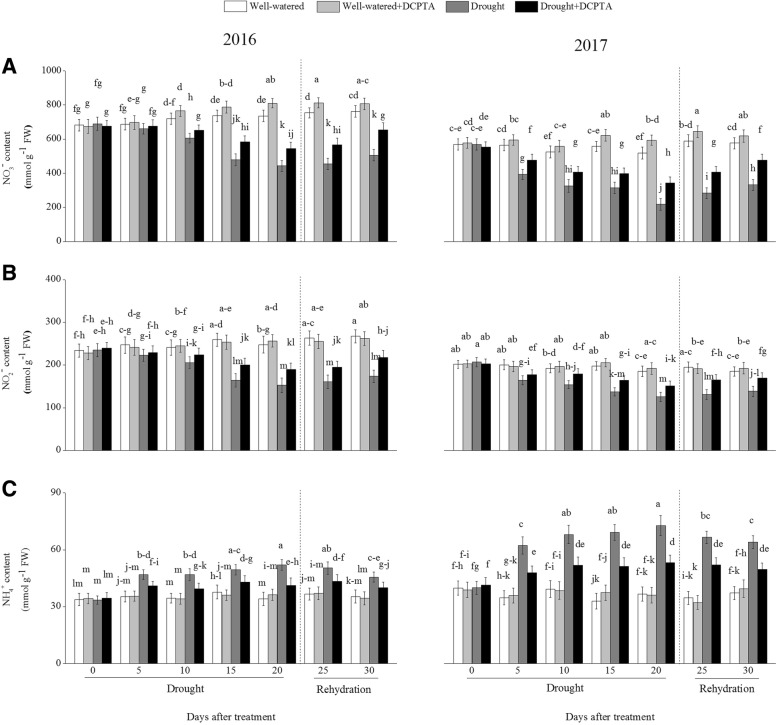
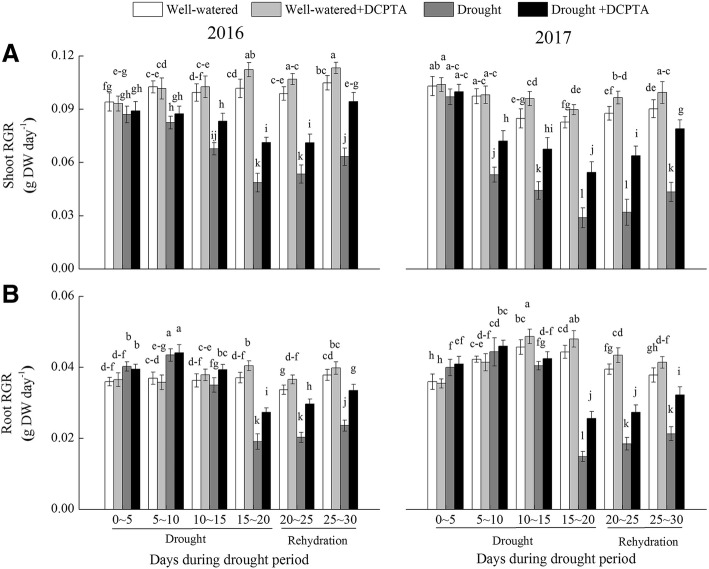
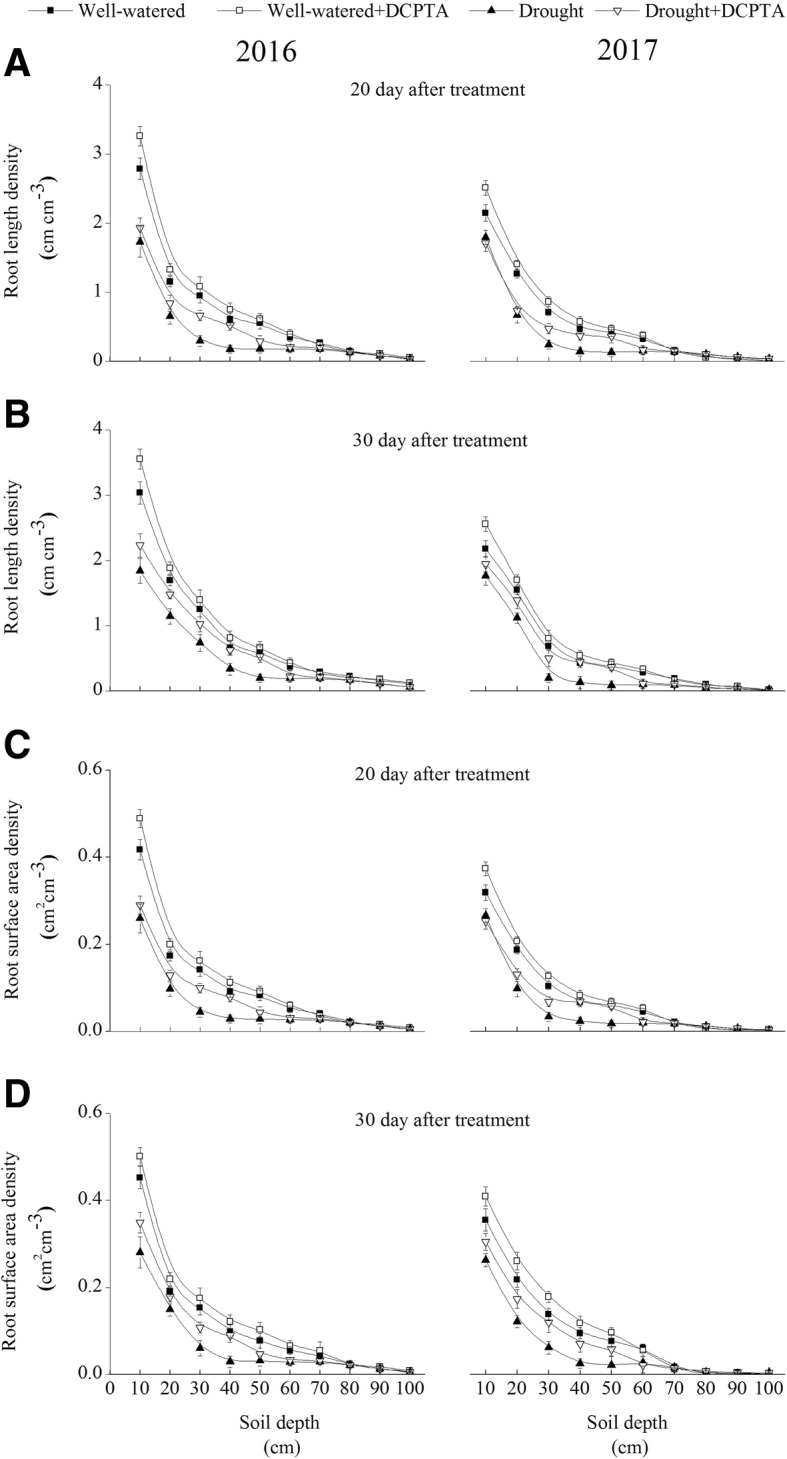
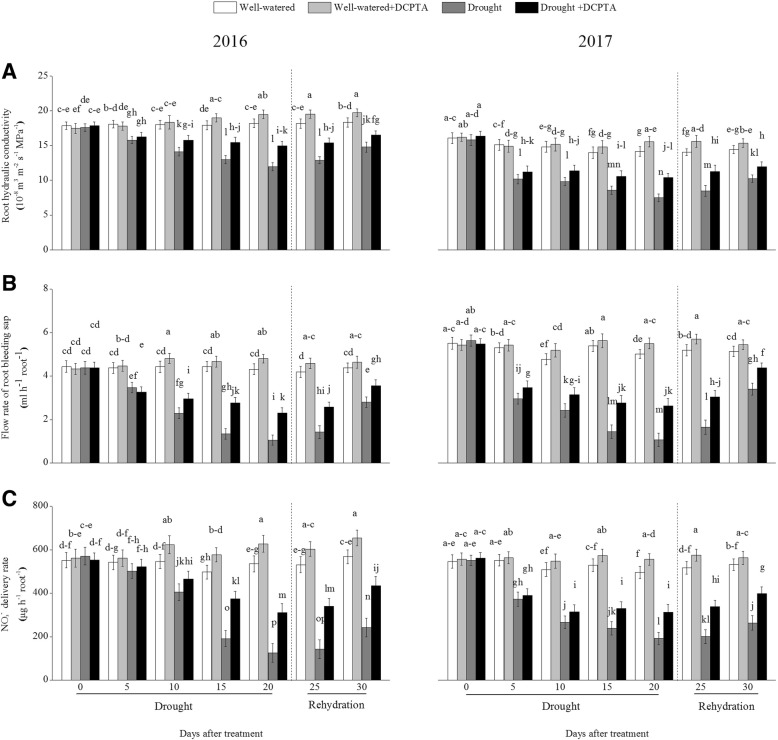
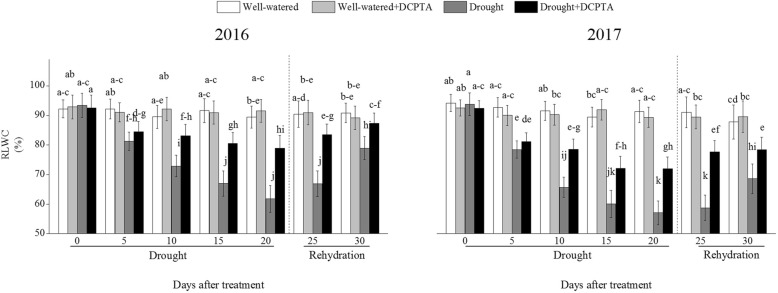
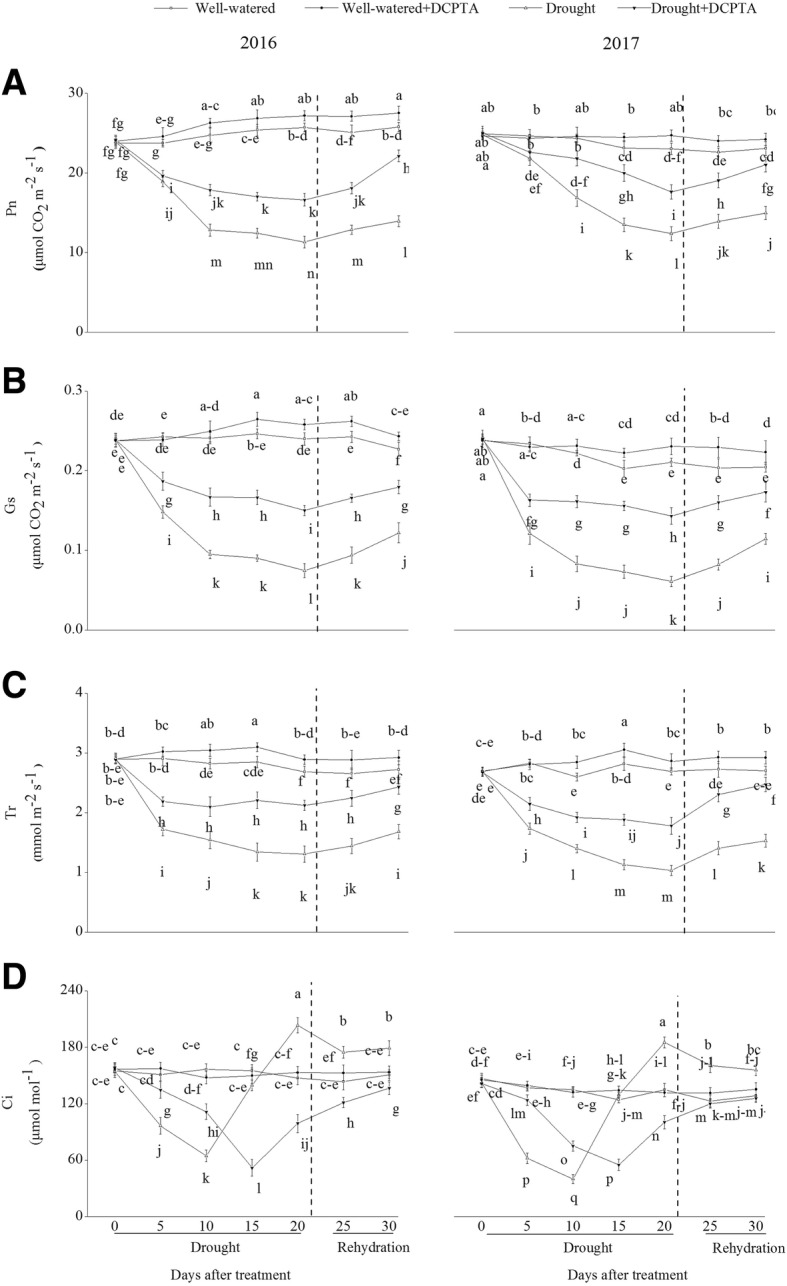
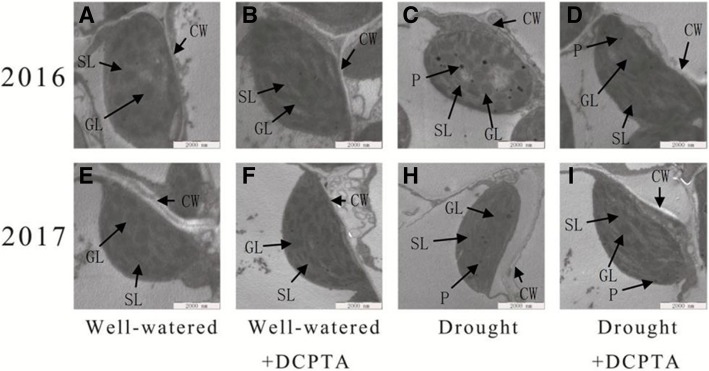
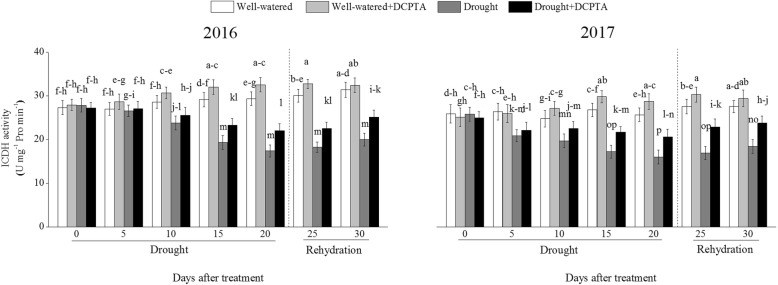
In the present study, the effects of DCPTA on N metabolism in maize (Zea mays L.) under soil drought and rewatering conditions during the pre-female inflorescence emergence stage were investigated in 2016 and 2017. The results demonstrated that the foliar application of DCPTA (25 mg/L) significantly alleviated drought-induced decreases in maize yield, shoot and root relative growth rate (RGR), leaf relative water content (RWC), net photosynthetic rate (Pn), stomatal conductance (Gs) and transpiration rate (Tr), and nitrate (NO), nitrite (NO), soluble protein contents, and nitrate reductase (NR), nitrite reductase (NiR), isocitrate dehydrogenase (ICDH), alanine aminotransferase (AlaAT) and aspartate aminotransferase (AspAT) activities. In addition, the foliar application of DCPTA suppressed the increases of intercellular CO concentration (Ci), ammonium (NH) and free amino acid contents, and the glutamate dehydrogenase (GDH) and protease activities of the maize. Simultaneously, under drought conditions, the DCPTA application improved the spatial and temporal distribution of roots, increased the root hydraulic conductivity (Lp), flow rate of root-bleeding sap and NO delivery rates of the maize. Moreover, the DCPTA application protected the chloroplast structure from drought injury.
The data show, exogenous DCPTA mitigates the repressive effects of drought on N metabolism by maintained a stabilized supply of 2-oxoglutarate (2-OG) and reducing equivalents provided by photosynthesis via favorable leaf water status and chloroplast structure, and NO uptake and long-distance transportation from the roots to the leaves via the production of excess roots, as a result, DCPTA application enhances drought tolerance during the pre-female inflorescence emergence stage of maize.
氮(N)代谢在植物抗旱性中起着重要作用。2-(3,4-二氯苯氧基)三乙胺(DCPTA)调节植物发育的许多方面;然而,DCPTA 对土壤干旱耐受性的影响知之甚少,并且 DCPTA 对氮代谢的可能作用尚未得到探索。
本研究于 2016 年和 2017 年在雌花序出现前阶段,研究了叶面喷施 DCPTA(25mg/L)对土壤干旱和复水条件下玉米(Zea mays L.)氮代谢的影响。结果表明,叶面喷施 DCPTA(25mg/L)显著缓解了干旱对玉米产量、地上部和根相对生长率(RGR)、叶片相对含水量(RWC)、净光合速率(Pn)、气孔导度(Gs)和蒸腾速率(Tr)、硝酸盐(NO)、亚硝酸盐(NO)、可溶性蛋白含量以及硝酸还原酶(NR)、亚硝酸还原酶(NiR)、异柠檬酸脱氢酶(ICDH)、丙氨酸氨基转移酶(AlaAT)和天冬氨酸氨基转移酶(AspAT)活性的降低。此外,叶面喷施 DCPTA 抑制了胞间 CO 浓度(Ci)、铵(NH)和游离氨基酸含量的增加,以及谷氨酸脱氢酶(GDH)和蛋白酶活性的增加。同时,在干旱条件下,DCPTA 的应用改善了根系的时空分布,增加了根水力传导率(Lp)、根溢泌液流速和玉米的 NO 输送速率。此外,DCPTA 的应用保护了叶绿体结构免受干旱损伤。
数据表明,外源 DCPTA 通过维持光合作用提供的 2-氧戊二酸(2-OG)和还原当量的稳定供应,以及通过有利的叶片水分状况和叶绿体结构、NO 摄取和从根部到叶片的长距离运输,缓解了干旱对氮代谢的抑制作用,从而增强了玉米雌花序出现前阶段的抗旱性。