German Center for Neurodegenerative Diseases (DZNE), Bonn, Germany.
Preclinical and Translational Pharmacology, Department of Pharmacy, Health and Nutritional Sciences, University of Calabria, Arcavacata di Rende (Cosenza), Italy.
Sci Rep. 2019 Mar 19;9(1):4881. doi: 10.1038/s41598-019-40887-x.
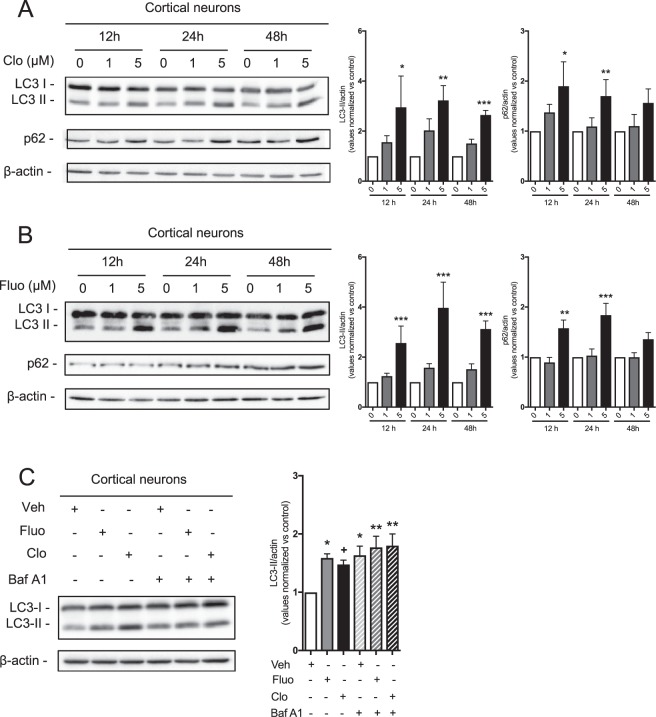
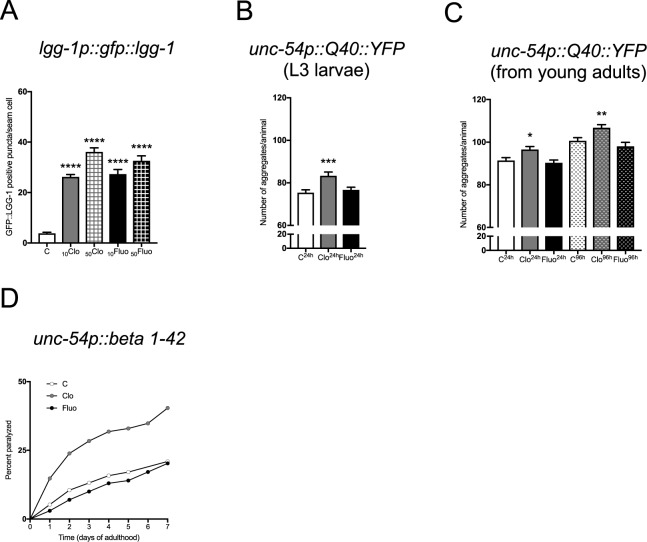
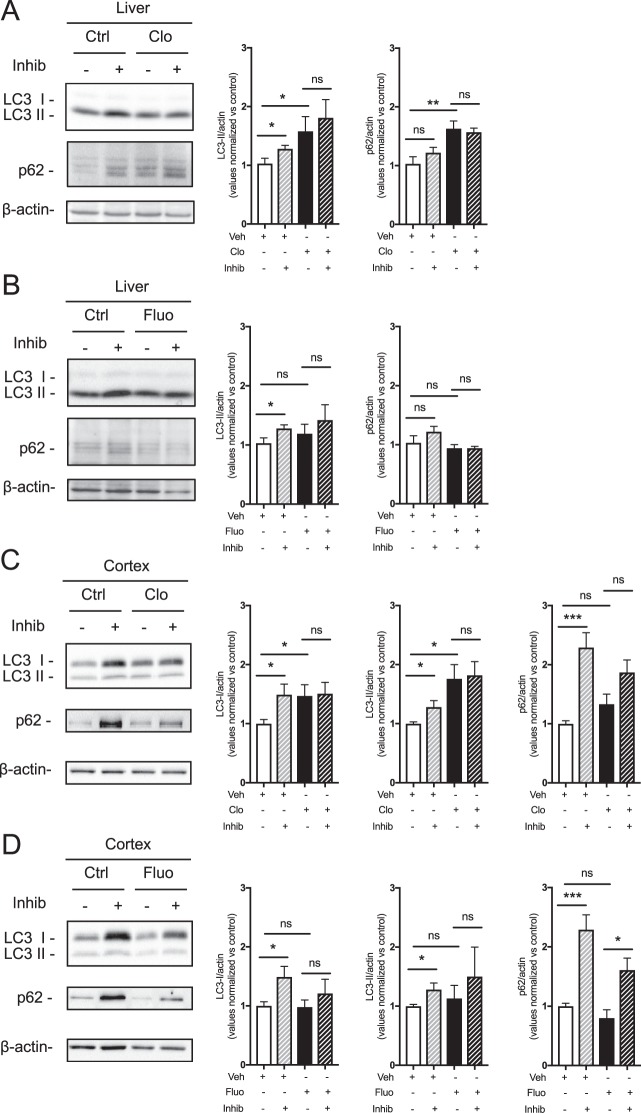
Antidepressants are commonly prescribed psychotropic substances for the symptomatic treatment of mood disorders. Their primary mechanism of action is the modulation of neurotransmission and the consequent accumulation of monoamines, such as serotonin and noradrenaline. However, antidepressants have additional molecular targets that, through multiple signaling cascades, may ultimately alter essential cellular processes. In this regard, it was previously demonstrated that clomipramine, a widely used FDA-approved tricyclic antidepressant, interferes with the autophagic flux and severely compromises the viability of tumorigenic cells upon cytotoxic stress. Consistent with this line of evidence, we report here that clomipramine undermines autophagosome formation and cargo degradation in primary dissociated neurons. A similar pattern was observed in the frontal cortex and liver of treated mice, as well as in the nematode Caenorhabditis elegans exposed to clomipramine. Together, our findings indicate that clomipramine may negatively regulate the autophagic flux in various tissues, with potential metabolic and functional implications for the homeostatic maintenance of differentiated cells.
抗抑郁药是常用于治疗心境障碍的精神类处方药物。它们的主要作用机制是调节神经递质传递,从而导致单胺类物质(如血清素和去甲肾上腺素)的积累。然而,抗抑郁药还有其他分子靶点,通过多种信号级联反应,最终可能改变基本的细胞过程。在这方面,先前已经证明,氯米帕明是一种广泛使用的获得 FDA 批准的三环类抗抑郁药,它会干扰自噬流,并在细胞毒性应激下严重损害致瘤细胞的活力。与这一证据一致的是,我们在这里报告说,氯米帕明会破坏原代分离神经元中的自噬体形成和货物降解。在接受氯米帕明治疗的小鼠的前额叶皮层和肝脏中以及线虫秀丽隐杆线虫中也观察到了类似的模式。总之,我们的研究结果表明,氯米帕明可能会在各种组织中负调控自噬流,这对分化细胞的体内平衡维持具有潜在的代谢和功能意义。