He Jinzhao, Sun Yi, Jia Yingli, Geng Xiaoqiang, Chen Ruoyun, Zhou Hong, Yang Baoxue
Key Laboratory of Molecular Cardiovascular Sciences, State Key Laboratory of Natural and Biomimetic Drugs, Department of Pharmacology, School of Basic Medical Sciences, Peking University, Beijing, China.
State Key Laboratory of Bioactive Substance and Function of Natural Medicines, Chinese Academy of Medical Sciences, Institute of Materia Medica, Peking Union Medical College, Beijing, China.
Front Physiol. 2019 Mar 5;10:192. doi: 10.3389/fphys.2019.00192. eCollection 2019.
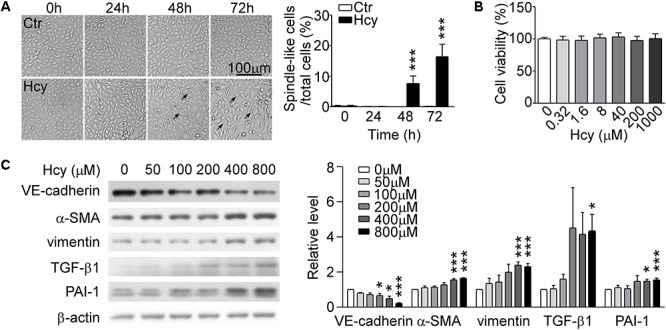
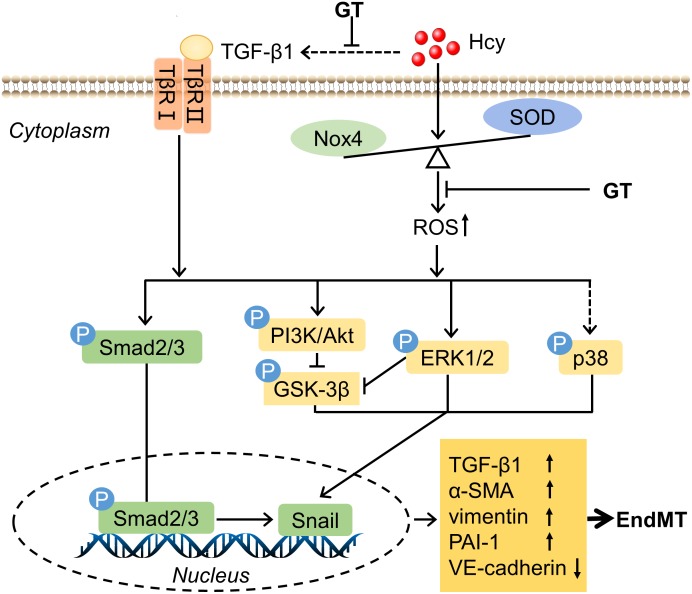
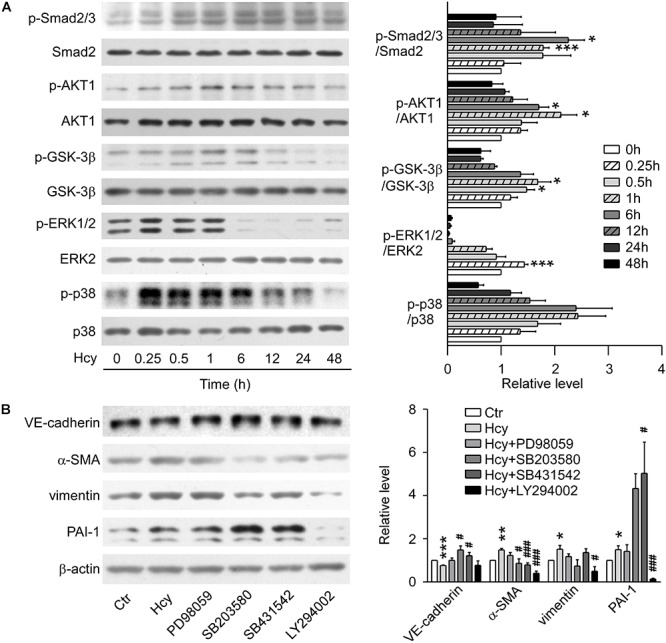
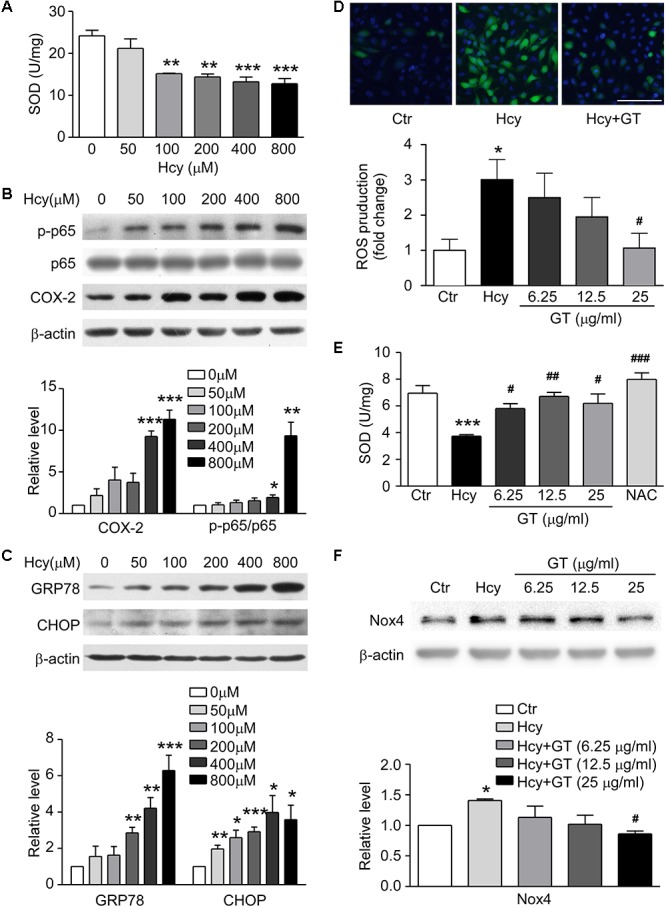
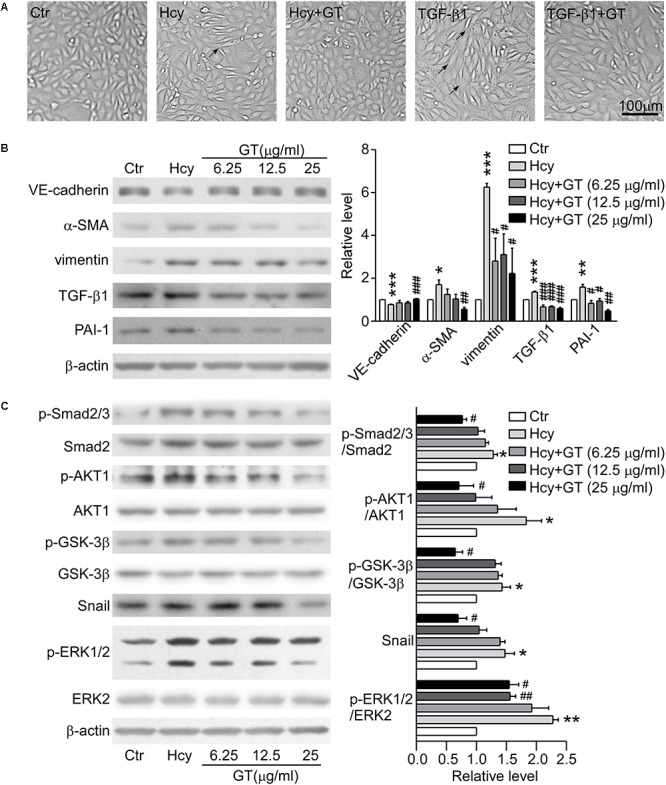
Endothelial dysfunction is one of the most important pathological status in hyperhomocysteinemia (HHcy) related cardiovascular diseases. Whereas, the underlying mechanisms have not been fully elucidated yet, concomitant with the absence of effective treatment. The purpose of this study was to explore the main mechanisms involved in HHcy-induced endothelial injury and identify the protective effect of (GT). Bovine aortic endothelial cells (BAECs) were applied as experimental model. The small molecular inhibitors were used to explore the signalings involved in HHcy-induced endothelial injury. The experimental results provided initial evidence that HHcy led to endothelial-mesenchymal transition (EndMT). Meanwhile, TGF-β/Smad, PI3K/AKT and MAPK pathways were activated in this process, which was demonstrated by pretreatment with TGF-β RI kinase inhibitor VI SB431542, PI3K inhibitor LY294002, p38 inhibitor SB203580, and ERK inhibitor PD98059. Furthermore, it was found that GT restrained the process of HHcy-induced EndMT via reducing oxidative stress and suppressing fore mentioned pathways with further inhibiting the activity of Snail. These results implicate that there is an untapped potential for GT as a novel therapeutic candidate for HHcy-induced EndMT through alleviating oxidative stress and canonical TGF-β/Smad and non-Smad dependent signaling pathways.
内皮功能障碍是高同型半胱氨酸血症(HHcy)相关心血管疾病中最重要的病理状态之一。然而,其潜在机制尚未完全阐明,同时也缺乏有效的治疗方法。本研究的目的是探讨HHcy诱导内皮损伤的主要机制,并确定(GT)的保护作用。以牛主动脉内皮细胞(BAECs)作为实验模型。使用小分子抑制剂来探究HHcy诱导内皮损伤所涉及的信号通路。实验结果提供了初步证据,表明HHcy导致内皮-间充质转化(EndMT)。同时,在此过程中TGF-β/Smad、PI3K/AKT和MAPK信号通路被激活,这通过用TGF-β RI激酶抑制剂VI SB431542、PI3K抑制剂LY294002、p38抑制剂SB203580和ERK抑制剂PD98059进行预处理得到证实。此外,发现GT通过降低氧化应激、抑制上述信号通路以及进一步抑制Snail的活性来抑制HHcy诱导的EndMT过程。这些结果表明,GT作为一种新型治疗候选物,通过减轻氧化应激以及经典的TGF-β/Smad和非Smad依赖性信号通路,在治疗HHcy诱导的EndMT方面具有尚未开发的潜力。