
利用高光谱成像和卷积神经网络进行头颈部癌症的光学活检。
Optical biopsy of head and neck cancer using hyperspectral imaging and convolutional neural networks.
机构信息
University of Texas at Dallas, Department of Bioengineering, Richardson, Texas, United States.
Emory University and Georgia Institute of Technology, Department of Biomedical Engineering, Atlanta,, United States.
出版信息
J Biomed Opt. 2019 Mar;24(3):1-9. doi: 10.1117/1.JBO.24.3.036007.
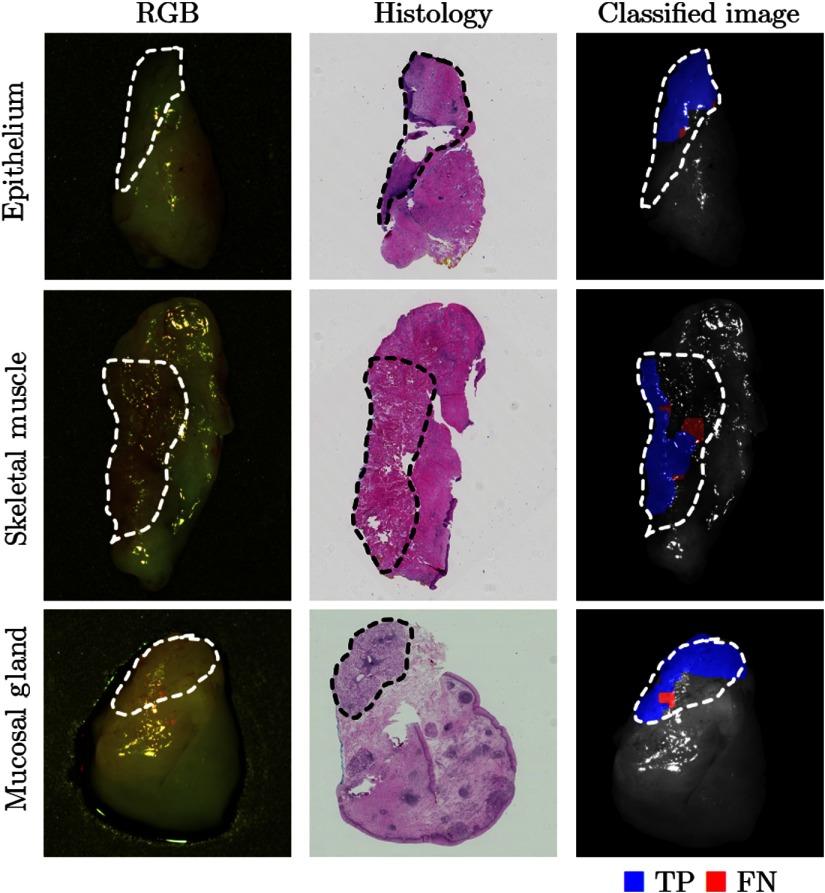
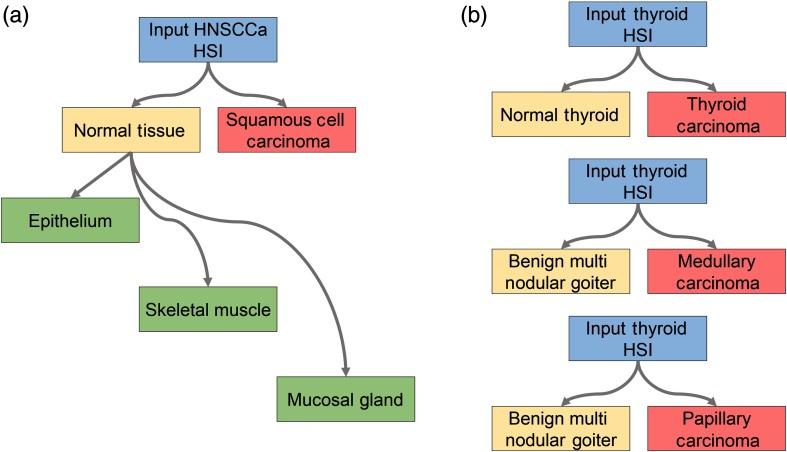
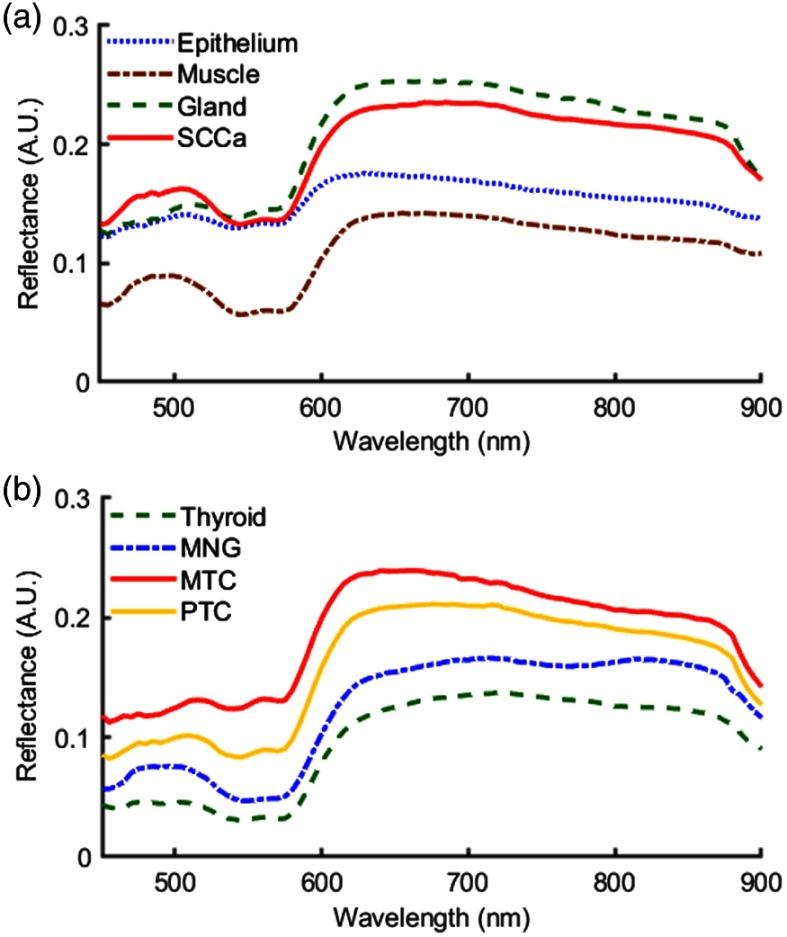
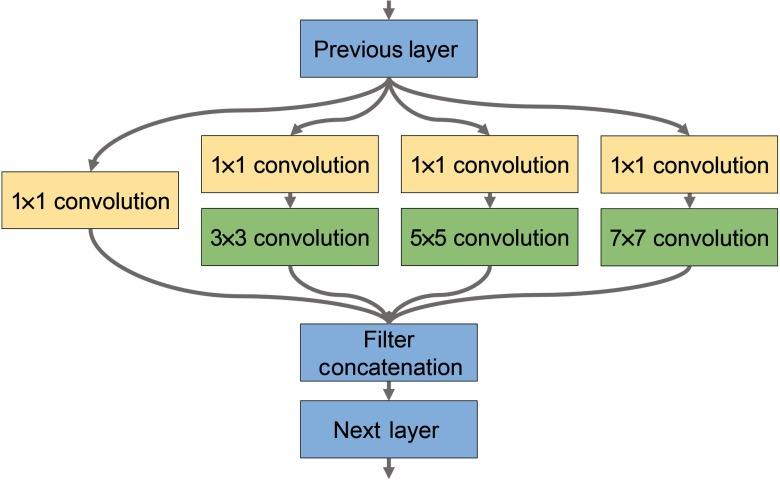
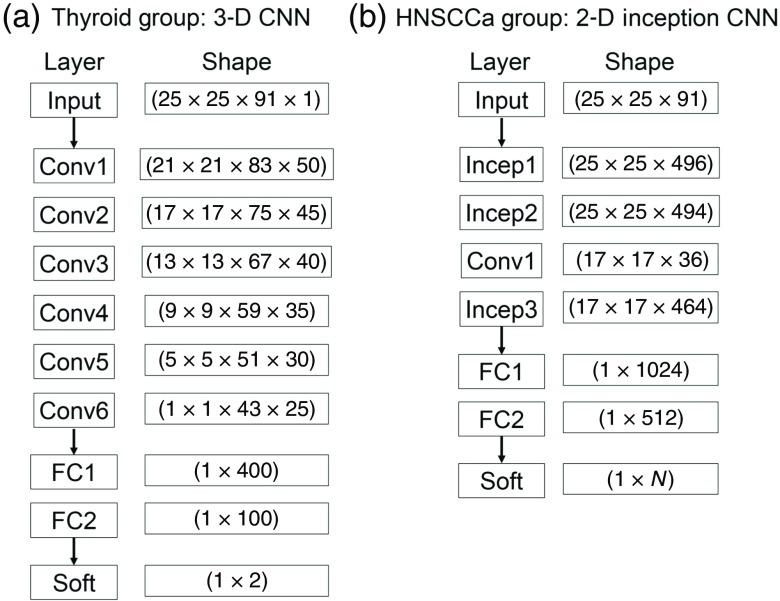
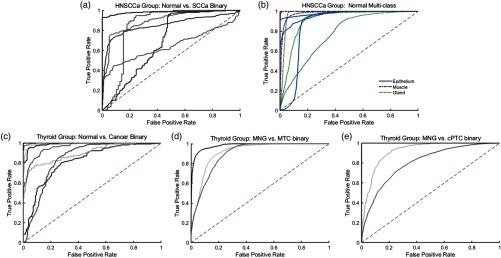
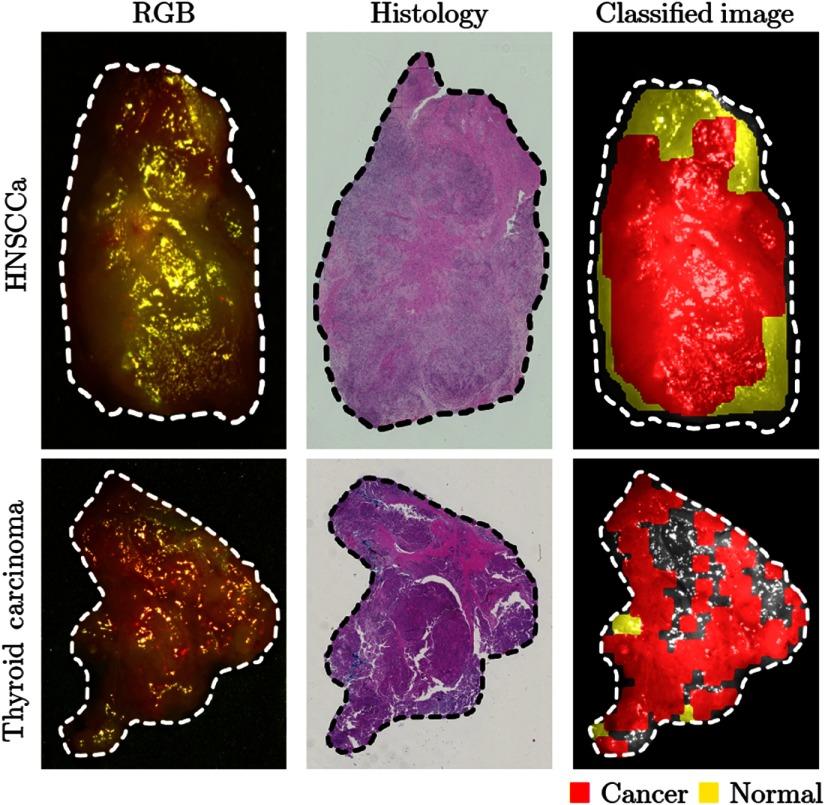
For patients undergoing surgical cancer resection of squamous cell carcinoma (SCCa), cancer-free surgical margins are essential for good prognosis. We developed a method to use hyperspectral imaging (HSI), a noncontact optical imaging modality, and convolutional neural networks (CNNs) to perform an optical biopsy of ex-vivo, surgical gross-tissue specimens, collected from 21 patients undergoing surgical cancer resection. Using a cross-validation paradigm with data from different patients, the CNN can distinguish SCCa from normal aerodigestive tract tissues with an area under the receiver operator curve (AUC) of 0.82. Additionally, normal tissue from the upper aerodigestive tract can be subclassified into squamous epithelium, muscle, and gland with an average AUC of 0.94. After separately training on thyroid tissue, the CNN can differentiate between thyroid carcinoma and normal thyroid with an AUC of 0.95, 92% accuracy, 92% sensitivity, and 92% specificity. Moreover, the CNN can discriminate medullary thyroid carcinoma from benign multinodular goiter (MNG) with an AUC of 0.93. Classical-type papillary thyroid carcinoma is differentiated from MNG with an AUC of 0.91. Our preliminary results demonstrate that an HSI-based optical biopsy method using CNNs can provide multicategory diagnostic information for normal and cancerous head-and-neck tissue, and more patient data are needed to fully investigate the potential and reliability of the proposed technique.
对于接受鳞状细胞癌 (SCCa) 手术切除的患者,无肿瘤切缘是良好预后的关键。我们开发了一种使用高光谱成像 (HSI) 和卷积神经网络 (CNN) 的方法,对来自 21 名接受手术癌症切除的患者的离体手术大体组织标本进行光学活检。使用来自不同患者的数据的交叉验证范例,CNN 可以以 0.82 的接收器工作特征曲线 (AUC) 区分 SCCa 与正常的呼吸道组织。此外,上呼吸道的正常组织可以进一步细分为鳞状上皮、肌肉和腺体,平均 AUC 为 0.94。在分别对甲状腺组织进行训练后,CNN 可以以 0.95 的 AUC、92%的准确率、92%的敏感度和 92%的特异性区分甲状腺癌和正常甲状腺。此外,CNN 可以以 0.93 的 AUC 区分髓样甲状腺癌和良性多结节性甲状腺肿 (MNG)。经典型乳头状甲状腺癌与 MNG 的 AUC 为 0.91。我们的初步结果表明,基于 HSI 的使用 CNN 的光学活检方法可以为头颈部正常和癌组织提供多类别诊断信息,需要更多患者数据来充分研究所提出技术的潜力和可靠性。
 Zotero 插件