Racine Kathryn C, Lee Andrew H, Wiersema Brian D, Huang Haibo, Lambert Joshua D, Stewart Amanda C, Neilson Andrew P
Department of Food Science and Technology, Virginia Polytechnic Institute and State University, Blacksburg, VA 24060, USA.
Department of Food Science, Pennsylvania State University, University Park, PA 16801, USA.
Foods. 2019 Mar 19;8(3):102. doi: 10.3390/foods8030102.
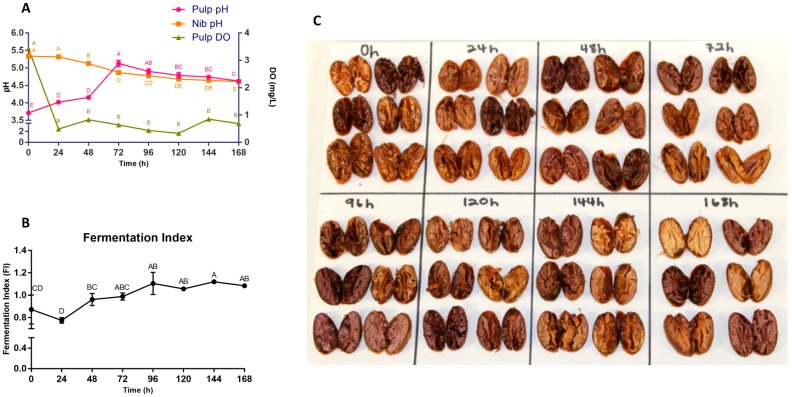
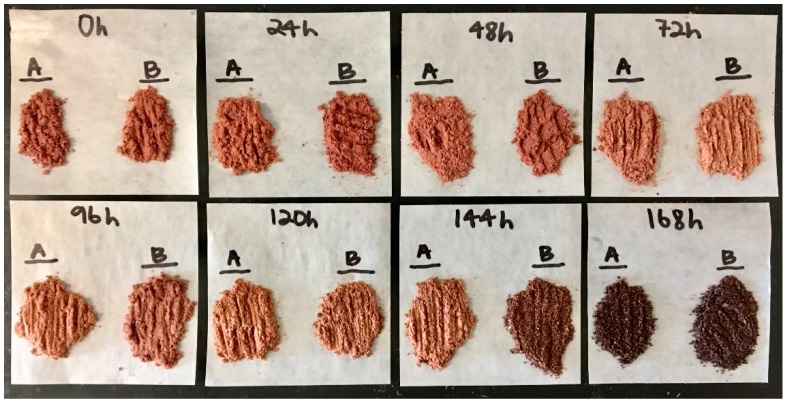
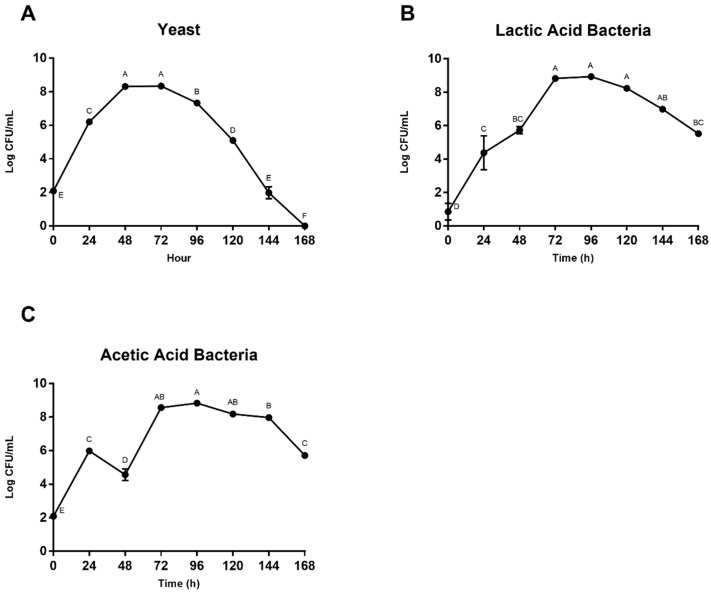
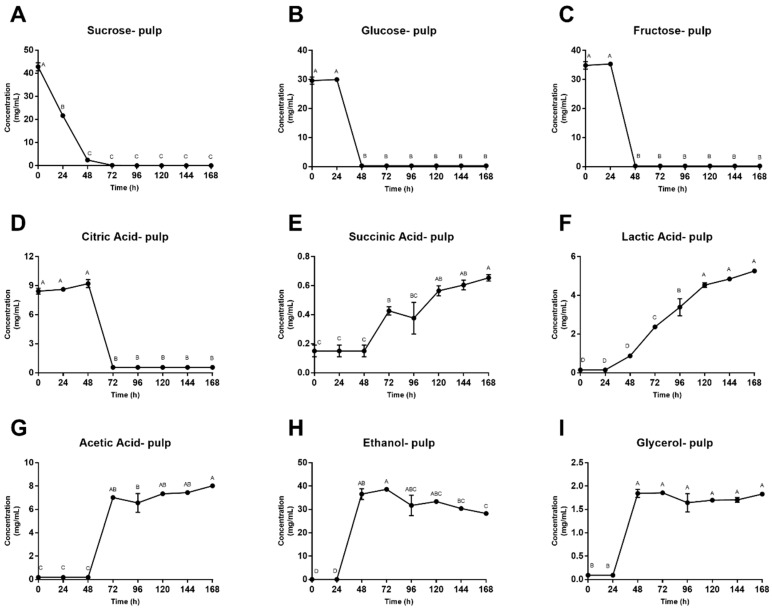
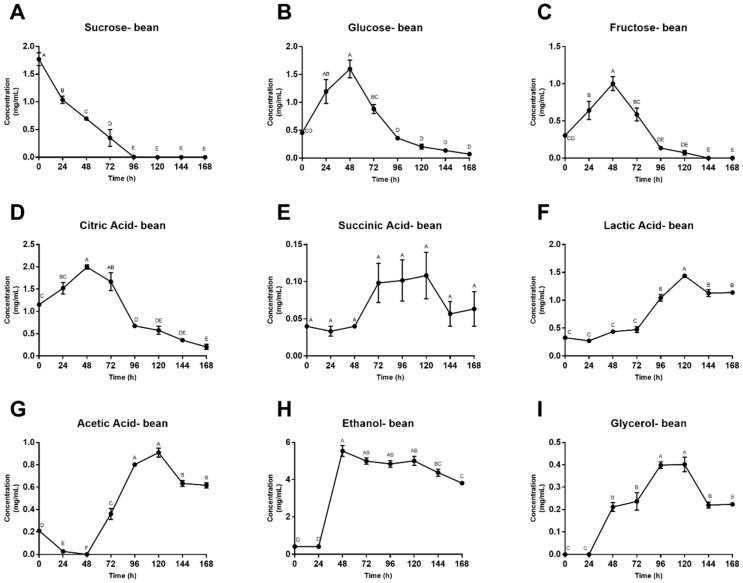
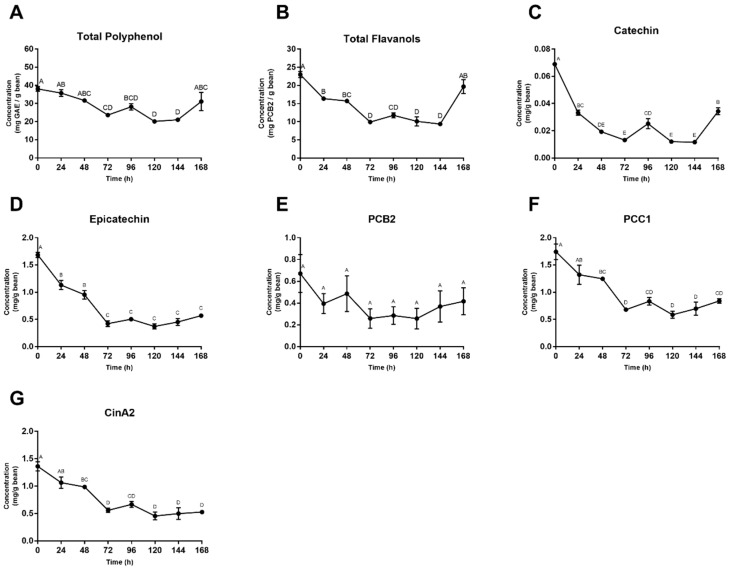
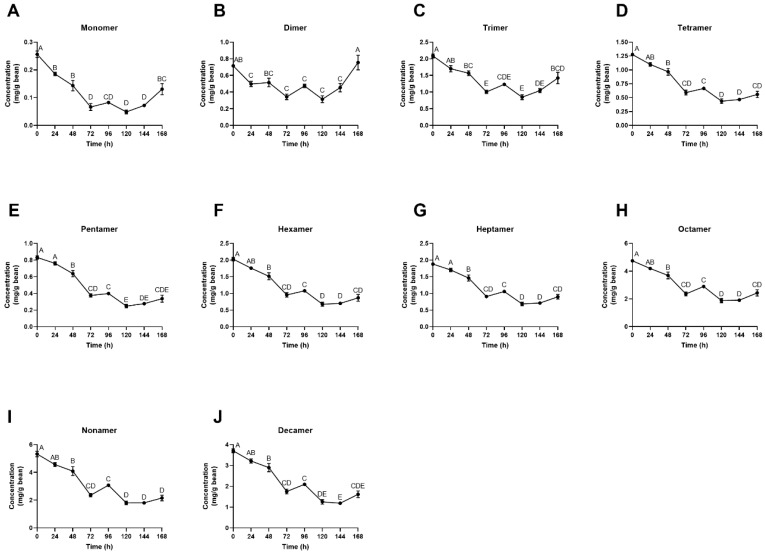
Cocoa is a concentrated source of dietary flavanols-putative bioactive compounds associated with health benefits. It is known that fermentation and roasting reduce levels of native flavonoids in cocoa, and it is generally thought that this loss translates to reduced bioactivity. However, the mechanisms of these losses are poorly understood, and little data exist to support this paradigm that flavonoid loss results in reduced health benefits. To further facilitate large-scale studies of the impact of fermentation on cocoa flavanols, a controlled laboratory fermentation model system was increased in scale to a large (pilot) scale system. Raw cocoa beans (15 kg) were fermented in 16 L of a simulated pulp media in duplicate for 168 h. The temperature of the fermentation was increased from 25⁻55 °C at a rate of 5 °C/24 h. As expected, total polyphenols and flavanol levels decreased as fermentation progressed (a loss of 18.3% total polyphenols and 14.4% loss of total flavanols during fermentation) but some increases were observed in the final timepoints (120⁻168 h). Fermentation substrates, metabolites and putative cocoa bioactive compounds were monitored and found to follow typical trends for on-farm cocoa heap fermentations. For example, sucrose levels in pulp declined from >40 mg/mL to undetectable at 96 h. This model system provides a controlled environment for further investigation into the potential for optimizing fermentation parameters to enhance the flavanol composition and the potential health benefits of the resultant cocoa beans.
可可豆是膳食黄烷醇的浓缩来源,黄烷醇是一种被认为具有生物活性的化合物,对健康有益。众所周知,发酵和烘焙会降低可可豆中天然黄酮类化合物的含量,人们普遍认为这种损失意味着生物活性的降低。然而,这些损失的机制尚不清楚,而且几乎没有数据支持黄酮类化合物损失会导致健康益处降低这一范式。为了进一步推动对发酵对可可黄烷醇影响的大规模研究,一个受控的实验室发酵模型系统扩大到了大型(中试)规模系统。15千克生可可豆在16升模拟果肉培养基中一式两份发酵168小时。发酵温度以5℃/24小时的速率从25℃升至55℃。正如预期的那样,随着发酵的进行,总多酚和黄烷醇水平下降(发酵过程中总多酚损失18.3%,总黄烷醇损失14.4%),但在最后时间点(120 - 168小时)观察到了一些增加。对发酵底物、代谢物和假定的可可生物活性化合物进行了监测,发现其遵循农场可可堆发酵的典型趋势。例如,果肉中的蔗糖水平从>40毫克/毫升降至96小时时无法检测到。该模型系统为进一步研究优化发酵参数以提高黄烷醇组成以及所得可可豆潜在健康益处的可能性提供了一个受控环境。