Policy Research Unit in Maternal Health and Care, National Perinatal Epidemiology Unit, Nuffield Department of Population Health, University of Oxford, Old Road Campus, Oxford, OX3 7LF, UK.
BMC Med Res Methodol. 2019 Mar 20;19(1):65. doi: 10.1186/s12874-019-0702-3.
Surveys are established methods for collecting population data that are unavailable from other sources; however, response rates to surveys are declining. A number of methods have been identified to increase survey returns yet response rates remain low. This paper evaluates the impact of five selected methods on the response rate to pilot surveys, conducted prior to a large-scale National Maternity Survey in England.
The pilot national maternity surveys were cross-sectional population-based questionnaire surveys of women who were three months postpartum selected at random from birth registrations. Women received a postal questionnaire, which they could complete on paper, online or verbally over the telephone. An initial pilot survey was conducted (pilot 1, n = 1000) to which the response rate was lower than expected. Therefore, a further pilot survey was conducted (pilot 2, n = 2000) using additional selected methods with the specific aim of increasing the response rate. The additional selected methods used for all women in pilot 2 were: pre-notification, a shorter questionnaire, more personable survey materials, an additional reminder, and inclusion of quick response (QR) codes to enable faster access to the online version of the survey. To assess the impact of the selected methods, response rates to pilot surveys 1 and 2 were compared.
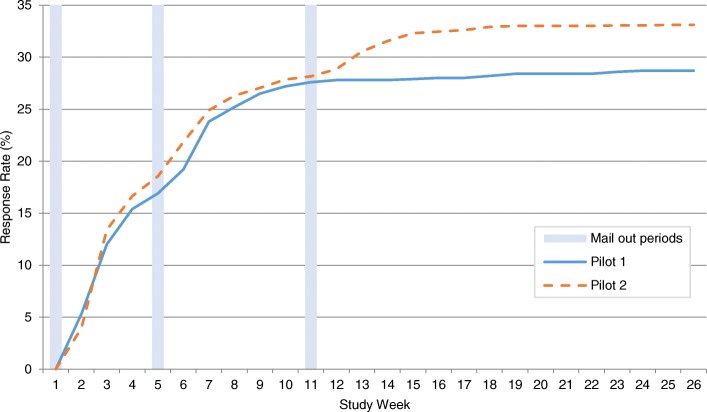
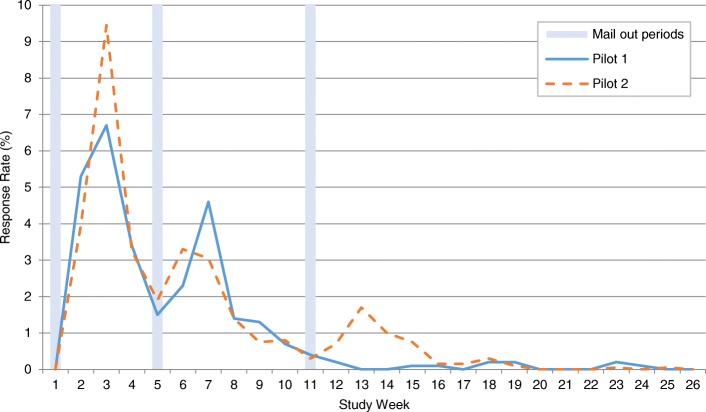
The response rate increased significantly from 28.7% in pilot 1 to 33.1% in pilot 2 (+ 4.4%, 95%CI:0.88-7.83, p = 0.02). Analysis of weekly returns according to time from initial and reminder mail-outs suggests that this increase was largely due to the additional reminder. Most respondents completed the paper questionnaire rather than taking part online or over the telephone in both pilot surveys. However, the overall response to the online questionnaire almost doubled from 1.8% in pilot 1 to 3.5% in pilot 2, corresponding to an absolute difference of 1.7% (95%CI:0.45-2.81, p = 0.01), suggesting that QR codes might have facilitated online participation.
Declining survey response rates may be ameliorated with the use of selected methods. Further studies should evaluate the effectiveness of each of these methods using randomised controlled trials and identify novel strategies for engaging populations in survey research.
调查是收集其他来源无法获得的人口数据的既定方法;然而,调查的回复率正在下降。已经确定了许多方法来提高调查的回复率,但回复率仍然很低。本文评估了在英格兰进行大规模全国产妇调查之前进行的试点调查中,五种选定方法对回复率的影响。
试点全国产妇调查是对三个月大的产后妇女进行的横断面基于人群的问卷调查,这些妇女是从出生登记中随机选择的。妇女收到一份纸质、在线或通过电话口头填写的邮寄问卷。最初的试点调查(试点 1,n=1000)的回复率低于预期。因此,进行了进一步的试点调查(试点 2,n=2000),使用了其他选定的方法,目的是提高回复率。试点 2 中所有妇女都使用了以下额外选定的方法:预先通知、较短的问卷、更有人情味的调查材料、额外的提醒,以及包含快速响应 (QR) 码,以更快地访问调查的在线版本。为了评估选定方法的影响,比较了试点调查 1 和 2 的回复率。
回复率从试点 1 的 28.7%显著增加到试点 2 的 33.1%(+4.4%,95%CI:0.88-7.83,p=0.02)。根据初始邮件和提醒邮件发出后的时间对每周回复情况进行分析表明,这一增长主要归因于额外的提醒。在两个试点调查中,大多数受访者都填写了纸质问卷,而不是在线或通过电话参与。然而,在线问卷的总体回复率从试点 1 的 1.8%几乎翻了一番,达到试点 2 的 3.5%,绝对差值为 1.7%(95%CI:0.45-2.81,p=0.01),表明 QR 码可能促进了在线参与。
使用选定的方法可能会改善调查回复率的下降。进一步的研究应该使用随机对照试验评估这些方法中的每一种的有效性,并确定吸引人群参与调查研究的新策略。