Cabra R, Alduncin A, Cabra J R, Ek L H, Briceño M, Mendoza P B
Centro de Cirugía Reproductiva y Ginecología Reprogyn, Prolongación Usumacinta 2085, Interior 840, Villahermosa, Tabasco, C.P. 86035, Mexico.
Hum Reprod Open. 2018 Jan 29;2018(1):hox029. doi: 10.1093/hropen/hox029. eCollection 2018.
What are the medical, psychological and legal aspects involved in running a gestational surrogacy (GS) program in Mexico?
The correct and complete implementation of a medical protocol, adherence to legality and psychological screening are key elements for the success of a GS program.
To our knowledge, this is the first reported GS case series in Mexico.
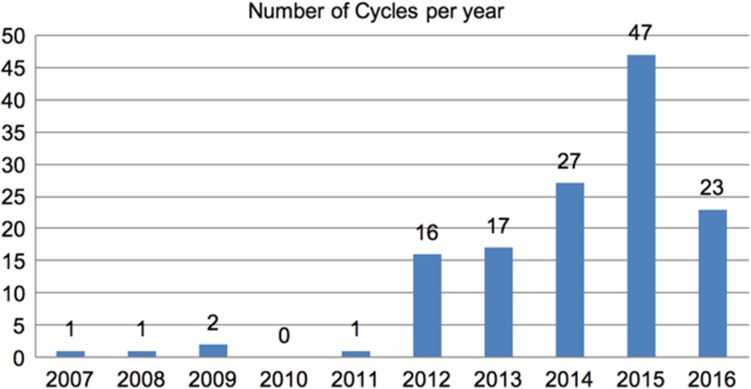
This was a retrospective, descriptive study of 135 cycles performed between 2007 and 2016 at a fertility center in Villahermosa, Tabasco, Mexico.
PARTICIPANTS/MATERIALS SETTING METHOD: We analyzed data from 135 GS cycles, 57 intended parents (IP) and 63 gestational carriers (GC).
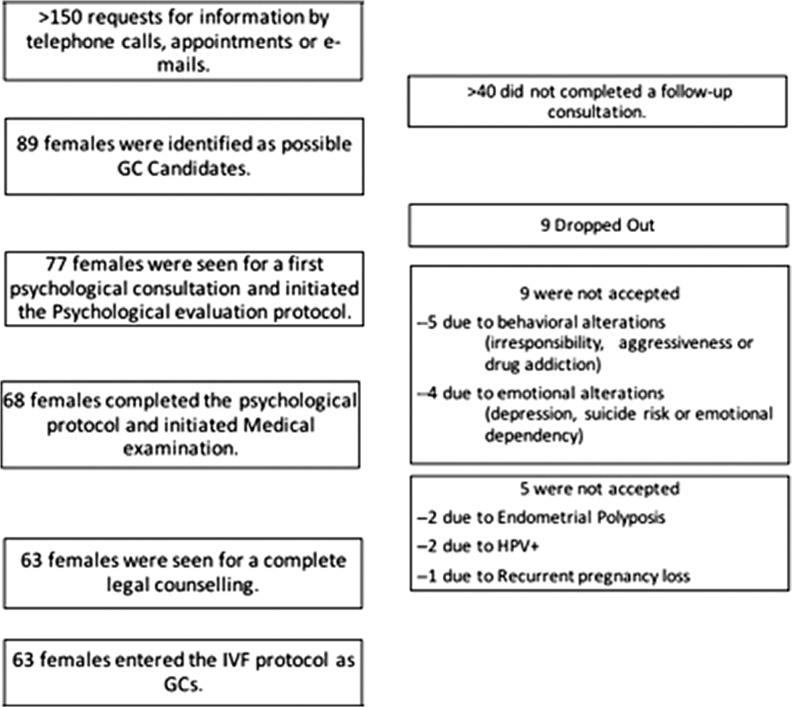
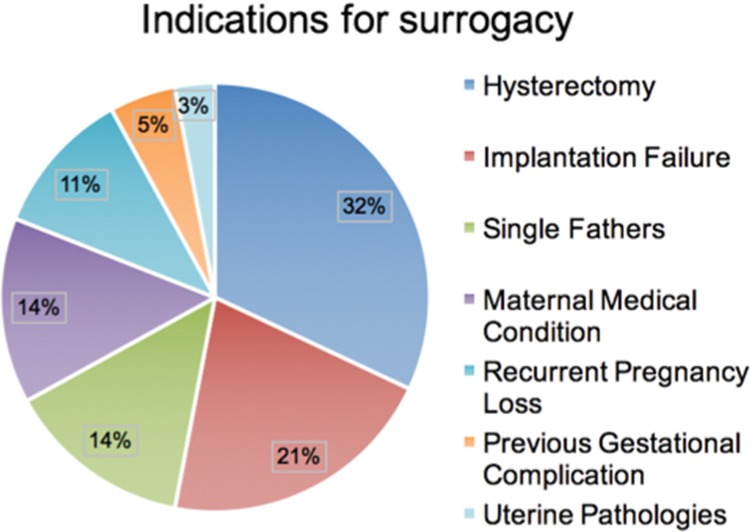
GS in Mexico is only allowed in its altruistic mode. The legal requirements for the GCs are age 25-35 years and a complete medical examination that certifies no pregnancy during the last 365 days before embryo transfer and excludes infectious and chronic diseases. The IPs must be aged 25-40 years of age, have Mexican citizenship, and provide life insurance and medical expenses for the GCs. The GC recruitment was carried out by word of mouth. Of the 150+ women that requested information, 89 were identified as possible candidates. In total, 77 underwent the psychological evaluation protocol and nine were rejected owing to behavior and emotional alterations, giving 68 who began the medical selection protocol. Five women were not accepted as they were positive for human papilloma virus, or had experienced endometrial polyposis or recurrent pregnancy loss. Finally, 63 women entered the IVF protocol as GCs. The indications for GS were: hysterectomy 32%, implantation failure 21%, single fathers 14%, maternal medical condition 14%, recurrent pregnancy loss 11%, previous pregnancy complication 5% and uterine pathologies 3%. The mean age of intended mothers was 38.8 years. The average number of embryos transferred per cycle was 1.9, with 22.2% of cycles resulting in pregnancies. The live-birth rate per IP was 33.3%, 18.5% of cycles resulted in live births, with 24% of live births being twins.
Owing to the retrospective nature of this study conclusions must be drawn accordingly.
As the first article addressing GS in Latin America, it may serve as a reference for future practice and publications. The results demonstrate the importance of having an assisted reproduction program in the form of GS.
STUDY FUNDING/COMPETING INTERESTS: There was no external funding used and there are no conflicts to report.
在墨西哥开展代孕计划涉及哪些医学、心理和法律方面的问题?
正确且完整地实施医疗方案、遵守法律规定以及进行心理筛查是代孕计划成功的关键要素。
据我们所知,这是墨西哥首例报道的代孕案例系列。
研究设计、规模、持续时间:这是一项回顾性描述性研究,对2007年至2016年在墨西哥塔巴斯科州比亚埃尔莫萨市一家生育中心进行的135个周期进行了分析。
参与者/材料、设置、方法:我们分析了135个代孕周期的数据,涉及57对意向父母(IP)和63名代孕载体(GC)。
墨西哥仅允许利他性代孕。对代孕载体的法律要求是年龄在25至35岁之间,且需进行全面体检,证明在胚胎移植前的最后365天内未怀孕,并排除传染病和慢性病。意向父母必须年龄在25至40岁之间,拥有墨西哥国籍,并为代孕载体提供人寿保险和医疗费用。代孕载体的招募通过口碑相传进行。在150多名咨询信息的女性中,89名被确定为可能的候选人。总共有77人接受了心理评估方案,其中9人因行为和情绪问题被拒绝,68人开始了医学筛选方案。5名女性因感染人乳头瘤病毒呈阳性、患有子宫内膜息肉或反复流产而未被接受。最终,63名女性作为代孕载体进入体外受精方案。代孕的指征为:子宫切除32%、植入失败21%、单亲父亲14%、母亲身体状况14%、反复流产11%、既往妊娠并发症5%和子宫病变3%。意向母亲的平均年龄为38.8岁。每个周期移植的胚胎平均数量为1.9个,22.2%的周期成功妊娠。每个意向父母的活产率为33.3%,18.5%的周期实现活产,其中24%的活产为双胞胎。
局限性、谨慎原因:由于本研究的回顾性性质,必须相应地得出结论。
作为拉丁美洲首篇关于代孕的文章,它可为未来的实践和出版物提供参考。结果表明了以代孕形式开展辅助生殖计划的重要性。
研究资金/利益冲突:未使用外部资金,且无利益冲突需要报告。