Department of Anesthesiology, Changzhou No. 2 People's Hospital Affiliated to Nanjing Medical University, Changzhou, Jiangsu 213000, P.R. China.
Mol Med Rep. 2019 May;19(5):4001-4010. doi: 10.3892/mmr.2019.10056. Epub 2019 Mar 19.
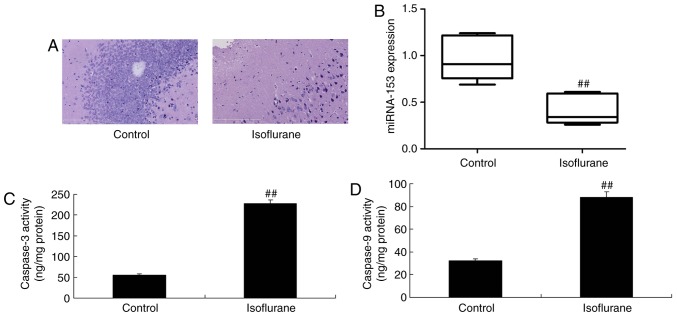
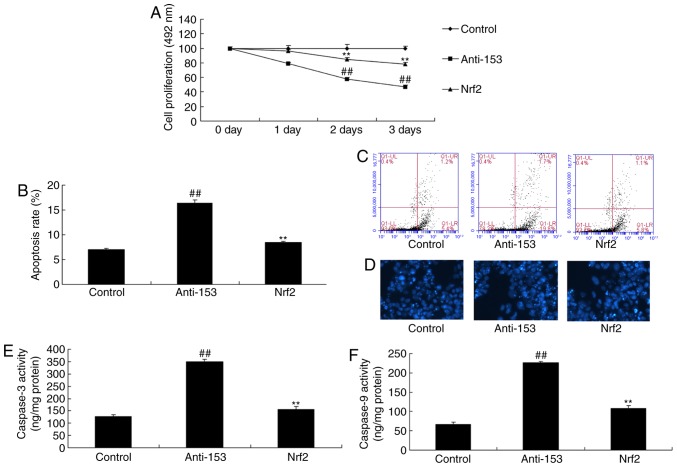
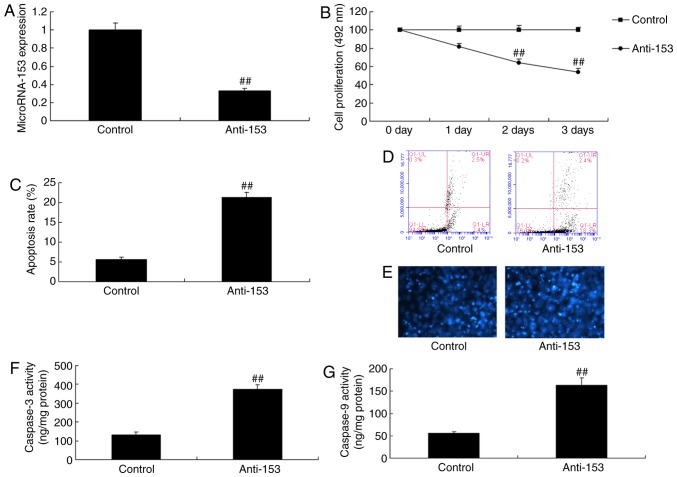
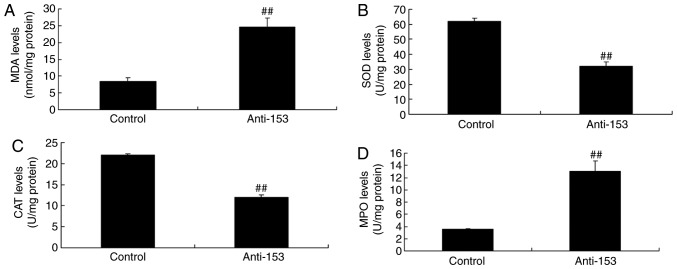
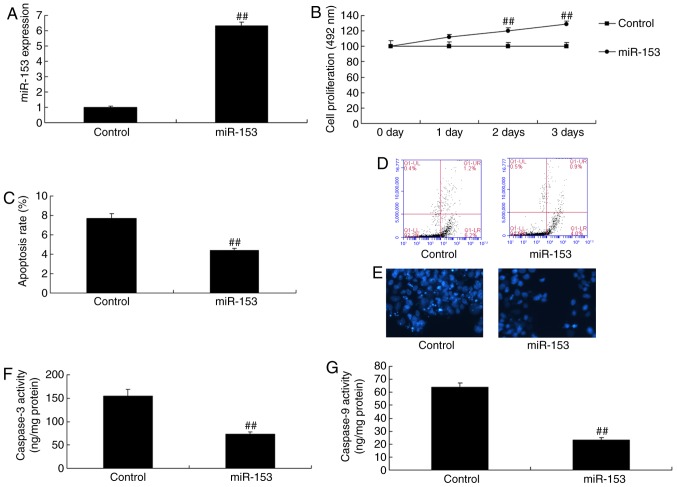
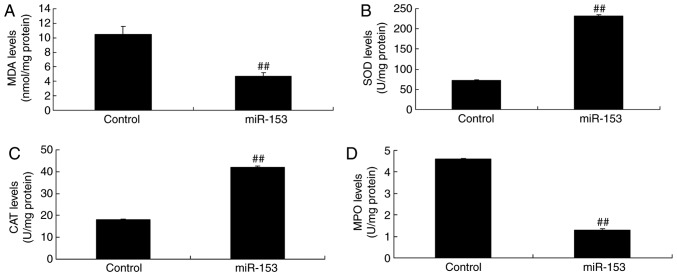
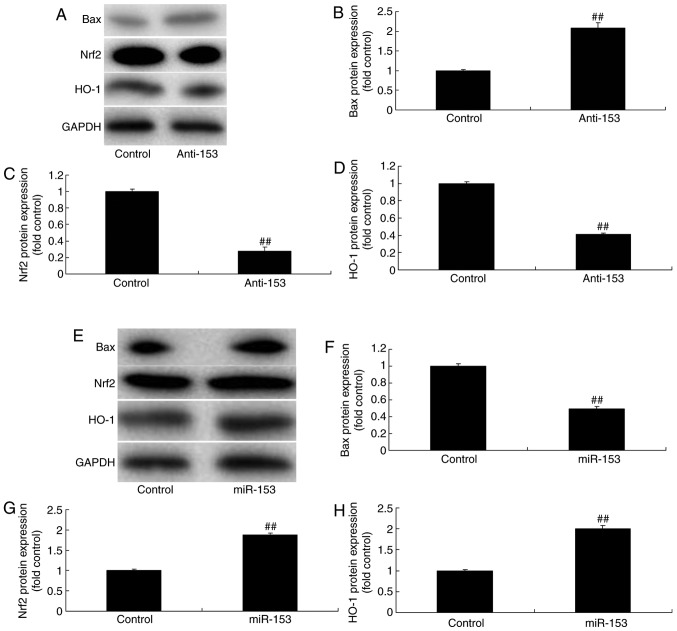
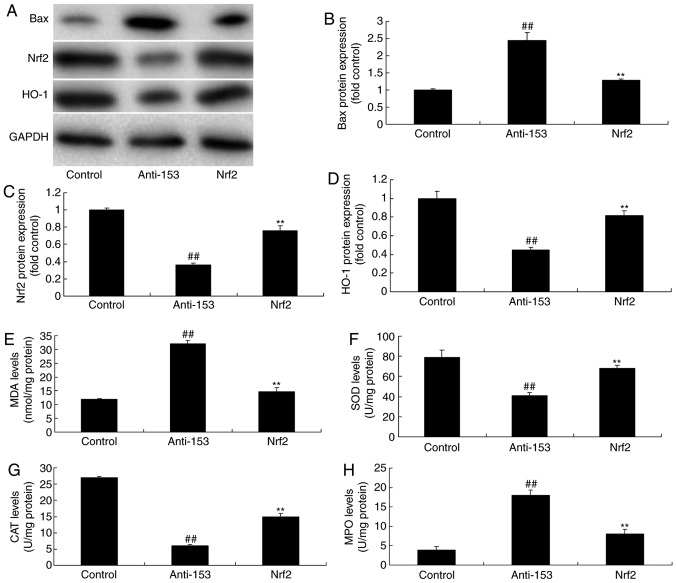
The present study aimed to investigate the function of micro (mi)RNA‑153 against isoflurane‑induced neurotoxicity and its mechanism. In isoflurane‑induced mice, miRNA‑153 expression was downregulated compared with in the control group. Downregulation of miRNA‑153 induced neurocyte apoptosis, reduced cell growth and promoted oxidative stress in an in vitro model. Overexpression of miRNA‑153 reduced oxidative stress, promoted cell growth and inhibited neurocyte apoptosis within an in vitro model. Downregulation of miRNA‑153 suppressed nuclear erythroid‑2 related factor 2 (Nrf2)/antioxidant response element (ARE) signaling pathway, which was induced via the overexpression of miRNA‑153 in vitro. The Nrf2 agonist, dimethyl fumarate (2.5 µM), induced the Nrf2/ARE signaling pathway and reduced oxidative stress to induce neurocyte apoptosis in vitro following treatment with anti‑miRNA‑153. The results of the present study suggested the function of miRNA‑153 against neurotoxicity via Nrf2/ARE‑mediated cytoprotection.
本研究旨在探讨 micro (mi)RNA-153 对异氟醚诱导的神经毒性的作用及其机制。与对照组相比,异氟醚诱导的小鼠中 miRNA-153 的表达下调。miRNA-153 下调诱导神经细胞凋亡,减少细胞生长,并促进体外模型中的氧化应激。miRNA-153 的过表达减少了氧化应激,促进了细胞生长,并抑制了体外模型中的神经细胞凋亡。miRNA-153 的下调抑制了核红细胞 2 相关因子 2 (Nrf2)/抗氧化反应元件 (ARE) 信号通路,该通路在体外通过 miRNA-153 的过表达诱导。Nrf2 激动剂丁二酸二甲酯 (2.5µM) 诱导 Nrf2/ARE 信号通路,并减少氧化应激,从而在使用抗 miRNA-153 处理后诱导体外神经细胞凋亡。本研究的结果表明,miRNA-153 通过 Nrf2/ARE 介导的细胞保护作用对抗神经毒性。