Instituto de Investigaciones en Microbiología y Parasitología Médica (IMPaM, UBA-CONICET), Facultad de Medicina, Universidad de Buenos Aires (UBA), Consejo Nacional de Investigaciones Científicas y Técnicas (CONICET), Piso 13, Paraguay 2155, CP1121, Buenos Aires, Argentina.
Instituto de Investigaciones en Microbiología y Parasitología Médica (IMPaM, UBA-CONICET), Facultad de Medicina, Universidad de Buenos Aires (UBA), Consejo Nacional de Investigaciones Científicas y Técnicas (CONICET), Piso 13, Paraguay 2155, CP1121, Buenos Aires, Argentina; Departamento de Microbiología, Parasitología e Inmunología, Facultad de Medicina, Universidad de Buenos Aires (UBA), Piso 13, Paraguay 2155, CP1121, Buenos Aires, Argentina.
Int J Parasitol Drugs Drug Resist. 2019 Apr;9:120-132. doi: 10.1016/j.ijpddr.2019.02.003. Epub 2019 Feb 23.
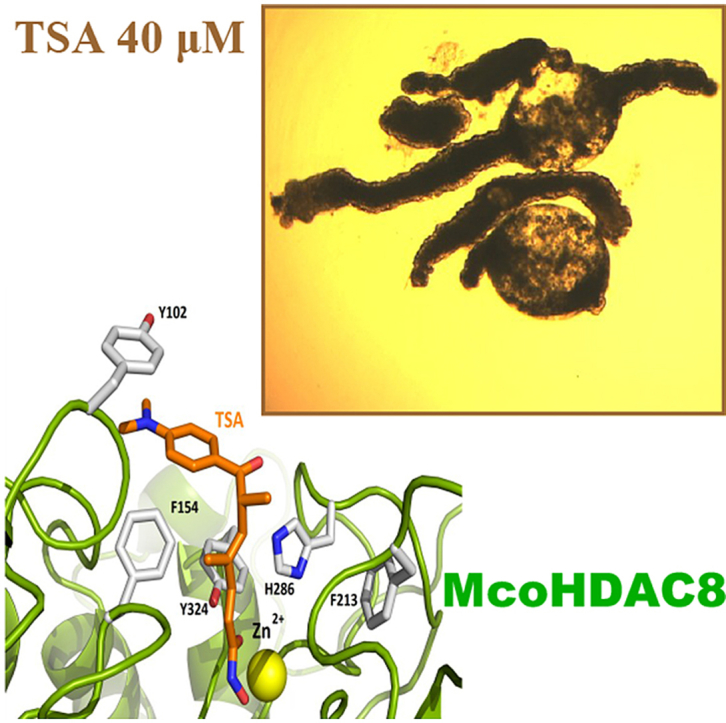
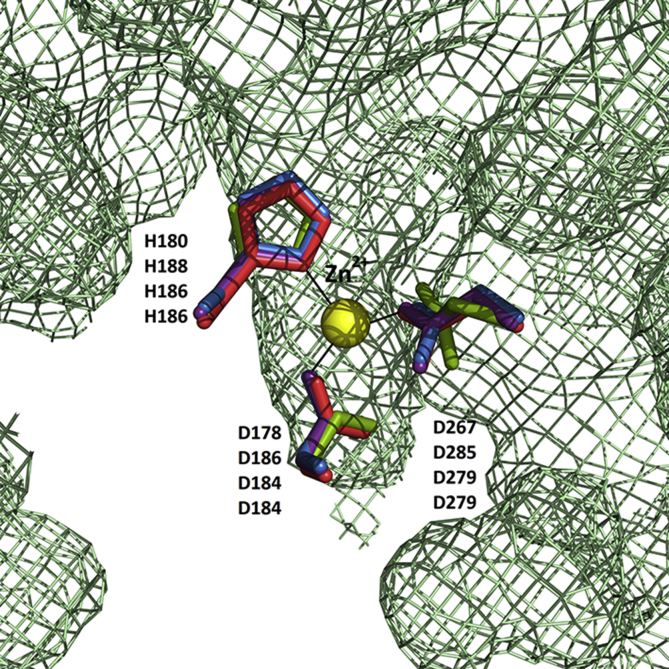
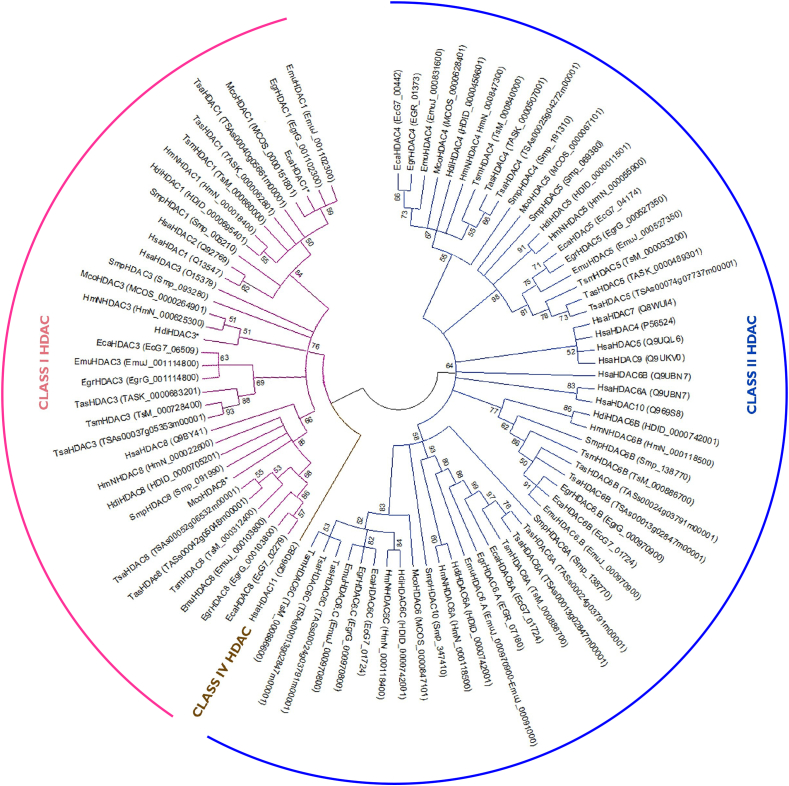
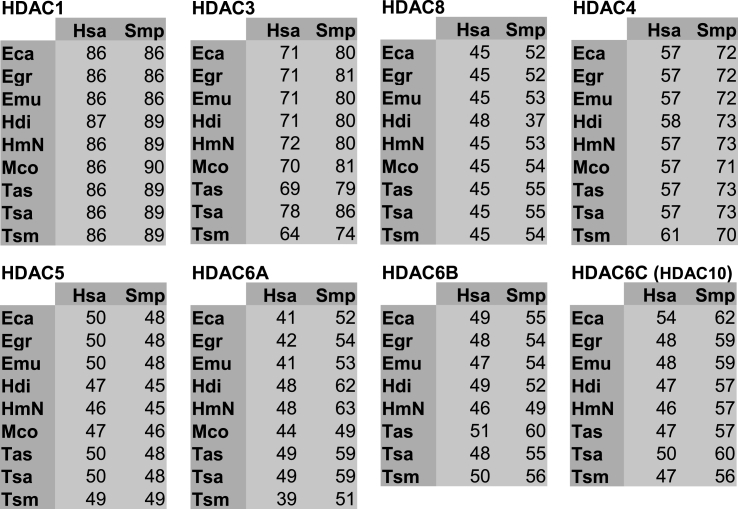
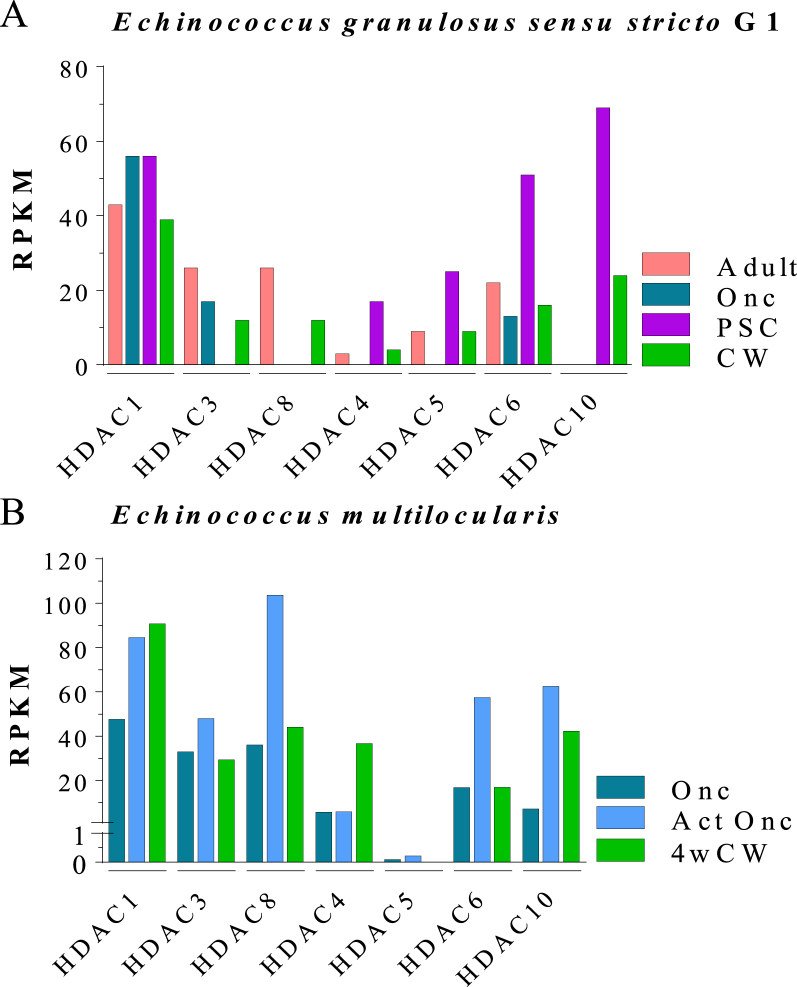
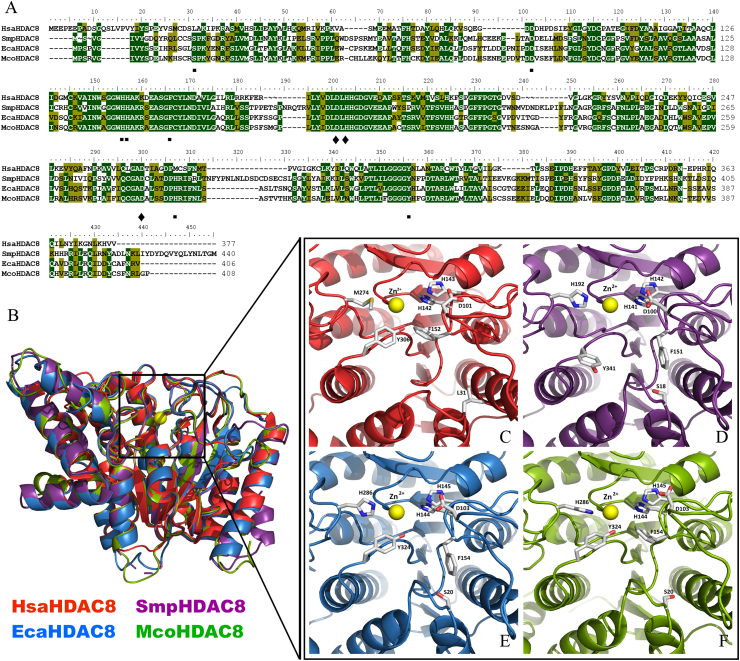
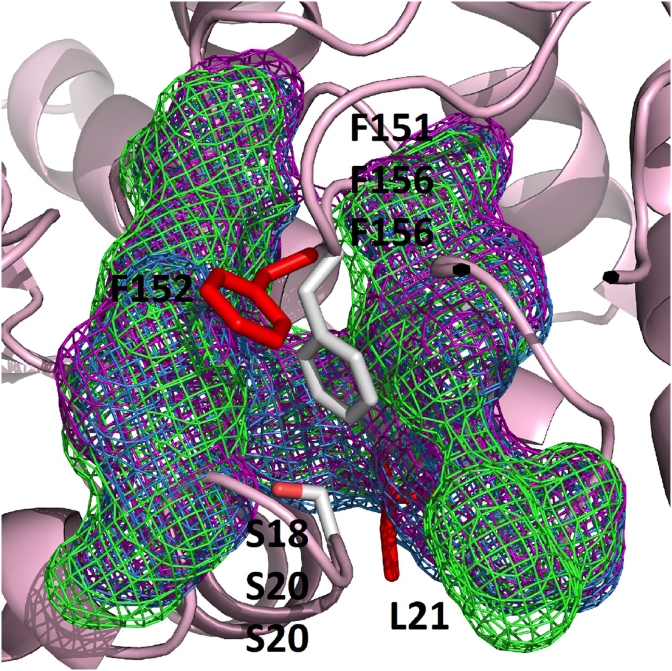
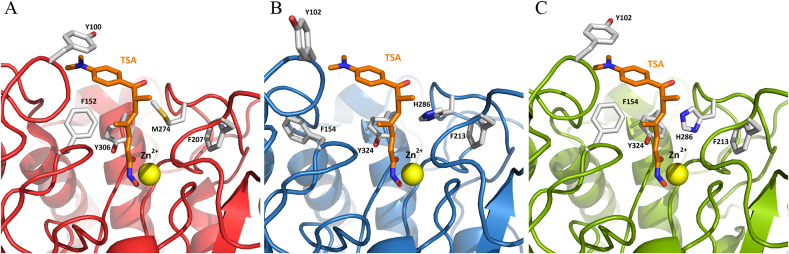
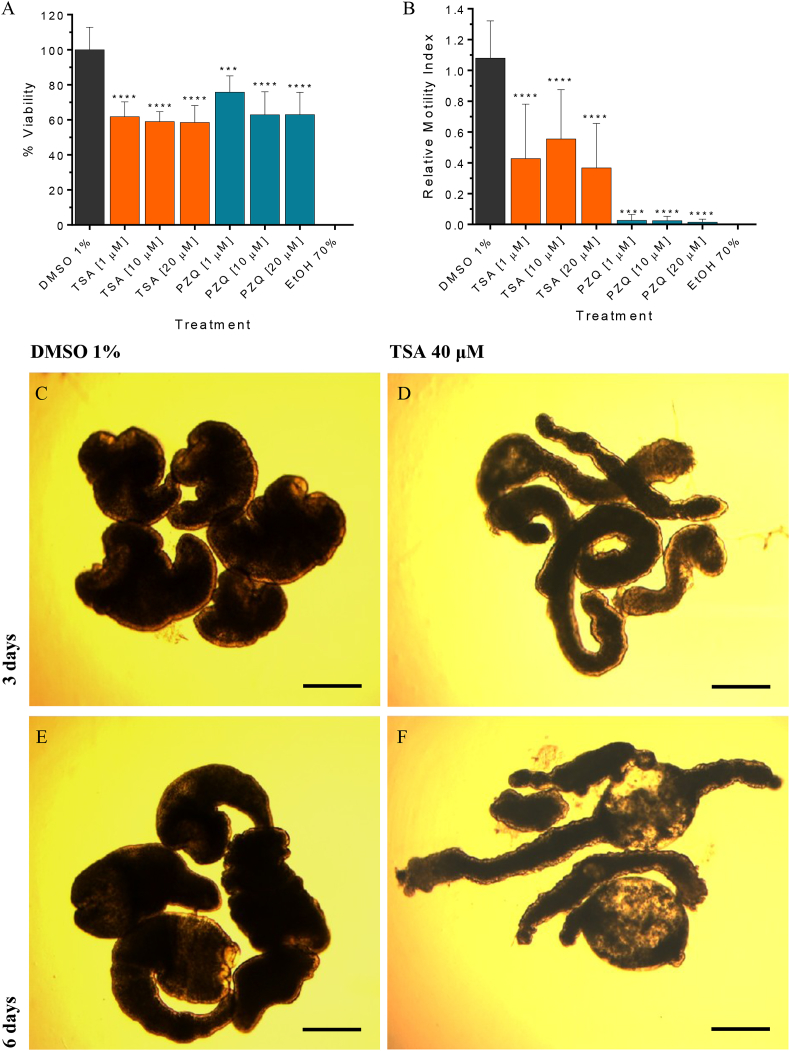
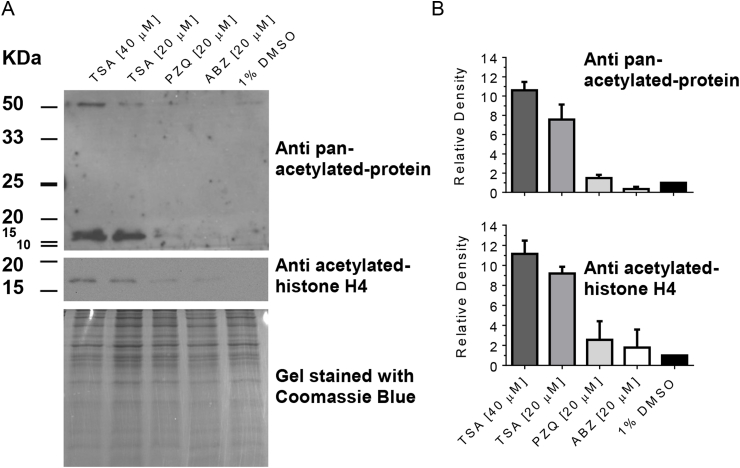
Cestode parasites cause neglected diseases, such as echinococcosis and cysticercosis, which represent a significant problem in human and animal health. Benzimidazoles and praziquantel are the only available drugs for chemotherapy and it is therefore important to identify new alternative drugs against cestode parasites. Histone deacetylases (HDACs) are validated drug targets for the treatment of cancer and other diseases, including neglected diseases. However, knowledge of HDACs in cestodes is very scarce. In this work, we investigated cestode HDACs as potential drug targets to develop new therapies against neglected diseases caused by cestodes. Here we showed the full repertoire of HDAC coding genes in several members of the class Cestoda. Between 6 and 7 zinc-dependent HDAC coding genes were identified in the genomes of species from Echinococcus, Taenia, Mesocestoides and Hymenolepis genera. We classified them as Class I and II HDACs and analyzed their transcriptional expression levels throughout developmental stages of Echinococcus spp. We confirmed for the first time the complete HDAC8 nucleotide sequences from Echinococcus canadensis G7 and Mesocestoides corti. Homology models for these proteins showed particular structural features which differentiate them from HDAC8 from Homo sapiens. Furthermore, we showed that Trichostatin A (TSA), a pan-HDAC inhibitor, decreases the viability of M. corti, alters its tegument and morphology and produces an increment of the total amount of acetylated proteins, including acetylated histone H4. These results suggest that HDAC from cestodes are functional and might play important roles on survival and development. The particular structural features observed in cestode HDAC8 proteins suggest that these enzymes could be selectively targeted. This report provides the basis for further studies on cestode HDAC enzymes and for discovery of new HDAC inhibitors for the treatment of neglected diseases caused by cestode parasites.
带绦虫寄生虫引起被忽视的疾病,如包虫病和囊虫病,这些疾病对人类和动物健康构成重大威胁。苯并咪唑类药物和吡喹酮是唯一用于化疗的药物,因此寻找新的抗带绦虫寄生虫药物非常重要。组蛋白去乙酰化酶(HDACs)是癌症和其他疾病(包括被忽视的疾病)治疗的有效药物靶点。然而,带绦虫中的 HDACs 知识非常匮乏。在这项工作中,我们研究了带绦虫的 HDACs,作为开发针对带绦虫引起的被忽视疾病的新疗法的潜在药物靶点。我们展示了几种类 Cestoda 物种中完整的 HDAC 编码基因库。在来自棘球属、带属、中殖孔属和膜壳科的物种基因组中,鉴定到 6 到 7 个锌依赖的 HDAC 编码基因。我们将它们分类为 I 类和 II 类 HDACs,并分析了它们在棘球属物种发育阶段的转录表达水平。我们首次从加拿大棘球蚴 G7 和中殖孔属包虫证实了完整的 HDAC8 核苷酸序列。这些蛋白质的同源建模显示了它们与人类 HDAC8 不同的特定结构特征。此外,我们表明,曲古抑菌素 A(TSA),一种泛 HDAC 抑制剂,降低了中殖孔属包虫的活力,改变了其外被和形态,并增加了总乙酰化蛋白的量,包括乙酰化组蛋白 H4。这些结果表明,带绦虫的 HDAC 是有功能的,可能在生存和发育中发挥重要作用。在带绦虫 HDAC8 蛋白中观察到的特定结构特征表明,这些酶可能是选择性靶向的。本报告为进一步研究带绦虫 HDAC 酶和发现新的用于治疗带绦虫寄生虫引起的被忽视疾病的 HDAC 抑制剂提供了基础。