Institute of Human Biology and Evolution, Faculty of Biology, Adam Mickiewicz University, ul. Uniwersytetu Poznańskiego 6, 61-614, Poznan, Poland.
Clin Epigenetics. 2021 Jan 19;13(1):13. doi: 10.1186/s13148-021-01001-z.
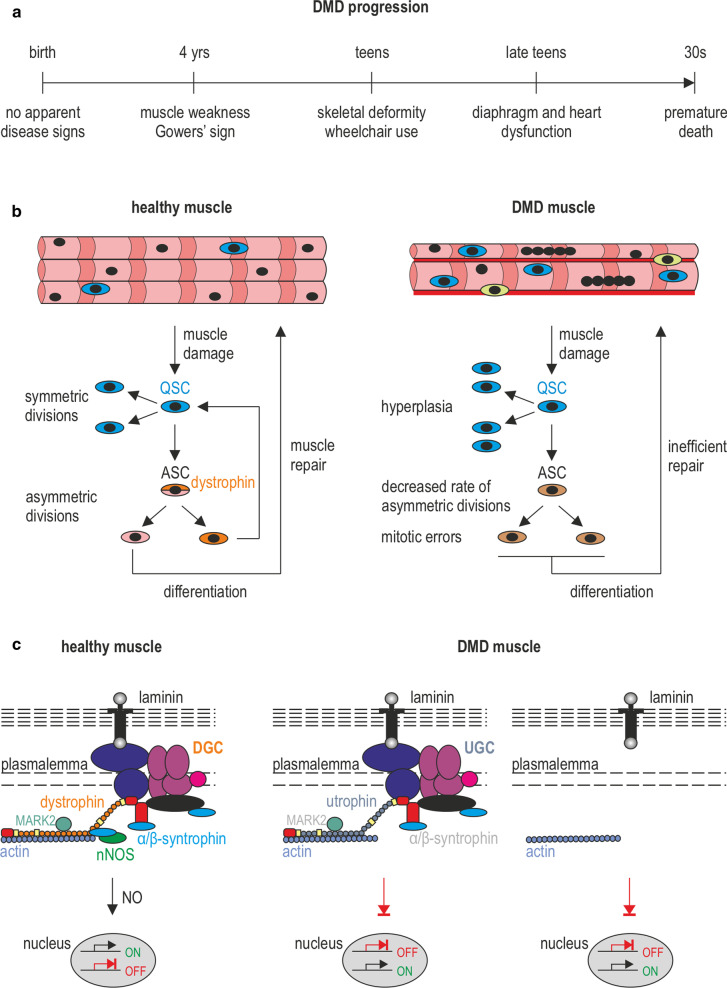
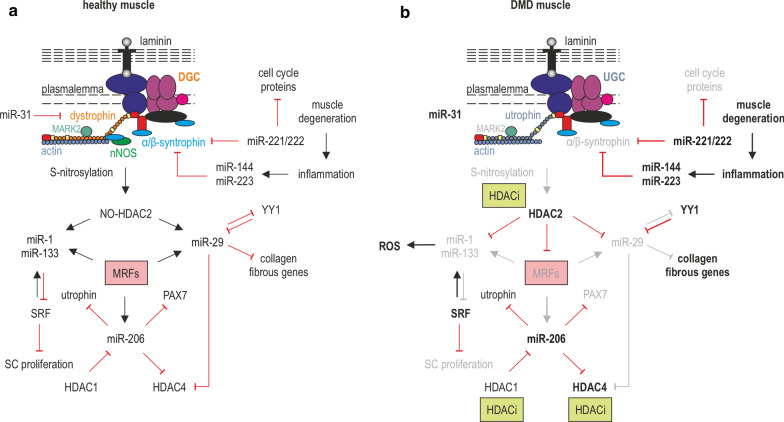
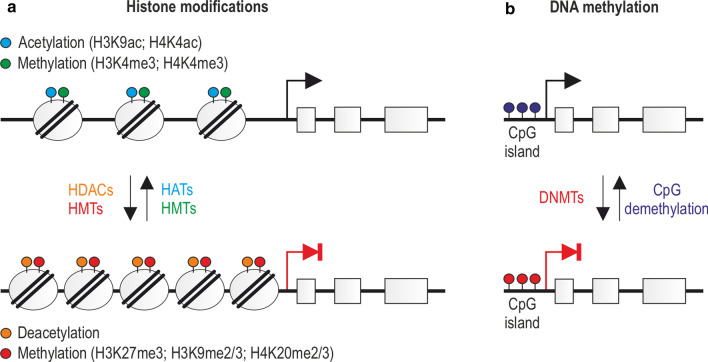
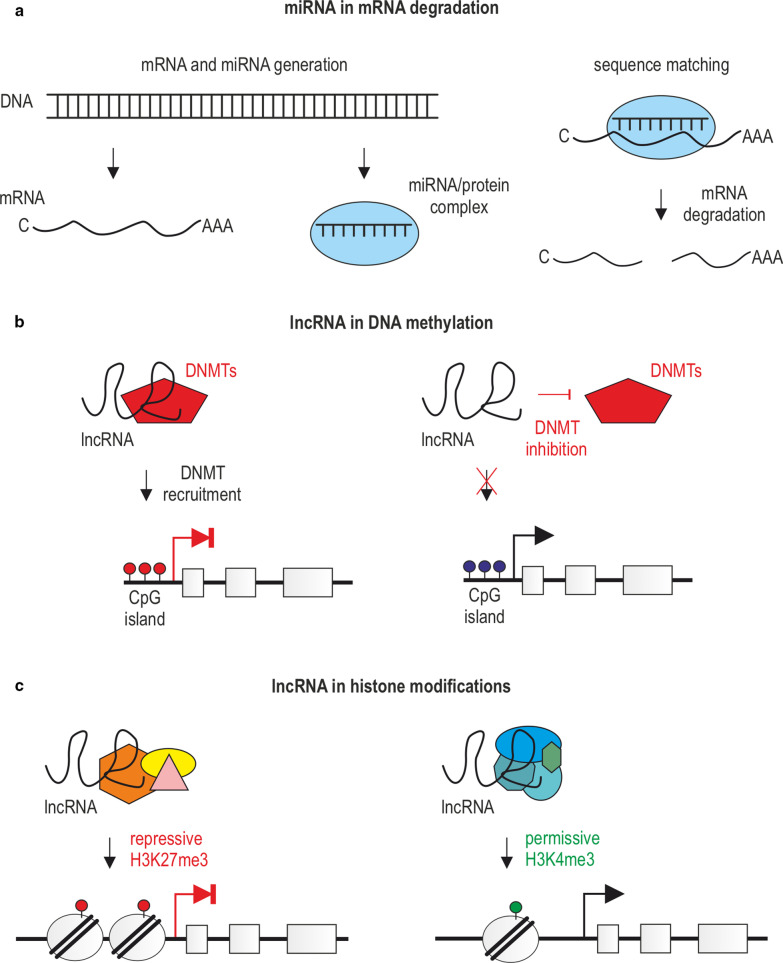
Duchenne muscular dystrophy (DMD) is a multisystemic disorder that affects 1:5000 boys. The severity of the phenotype varies dependent on the mutation site in the DMD gene and the resultant dystrophin expression profile. In skeletal muscle, dystrophin loss is associated with the disintegration of myofibers and their ineffective regeneration due to defective expansion and differentiation of the muscle stem cell pool. Some of these phenotypic alterations stem from the dystrophin absence-mediated serine-threonine protein kinase 2 (MARK2) misplacement/downregulation in activated muscle stem (satellite) cells and neuronal nitric oxide synthase loss in cells committed to myogenesis. Here, we trace changes in DNA methylation, histone modifications, and expression of regulatory noncoding RNAs during muscle regeneration, from the stage of satellite cells to myofibers. Furthermore, we describe the abrogation of these epigenetic regulatory processes due to changes in signal transduction in DMD and point to therapeutic treatments increasing the regenerative potential of diseased muscles based on this acquired knowledge.
杜氏肌营养不良症(DMD)是一种多系统疾病,影响 1:5000 名男孩。表型的严重程度取决于 DMD 基因的突变部位和由此产生的肌营养不良蛋白表达谱。在骨骼肌中,肌营养不良蛋白的缺失与肌纤维的解体及其无效再生有关,这是由于肌肉干细胞池的扩张和分化缺陷所致。这些表型改变中的一些源于肌营养不良蛋白缺失介导的丝氨酸-苏氨酸蛋白激酶 2(MARK2)在激活的肌肉干细胞(卫星)细胞中的错位/下调,以及向肌生成细胞分化过程中神经元型一氧化氮合酶的缺失。在这里,我们描述了在肌肉再生过程中,从卫星细胞到肌纤维,DNA 甲基化、组蛋白修饰和调节性非编码 RNA 表达的变化。此外,我们描述了由于 DMD 中信号转导的改变而导致这些表观遗传调控过程的中断,并指出了基于这一获得的知识增加患病肌肉再生潜力的治疗方法。