Leibniz-Institute for Food Systems Biology at the Technical University of Munich, Freising, 85354, Germany.
Int J Mol Sci. 2019 Mar 20;20(6):1402. doi: 10.3390/ijms20061402.
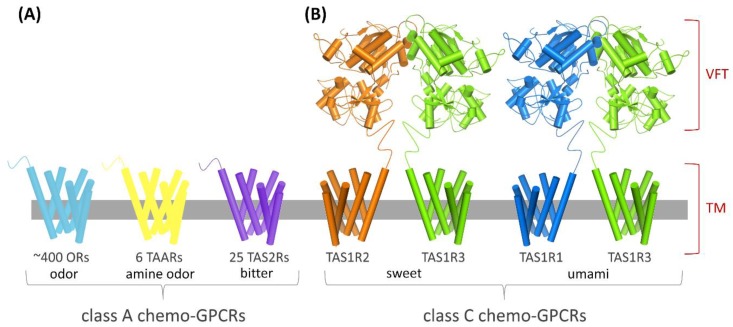
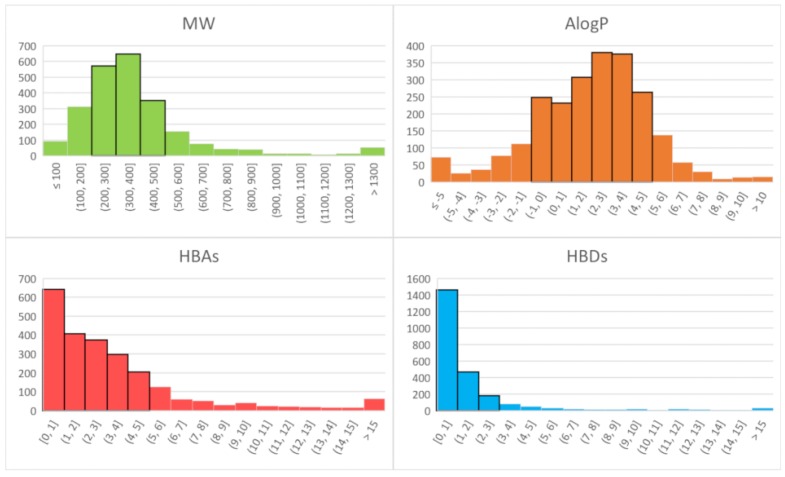
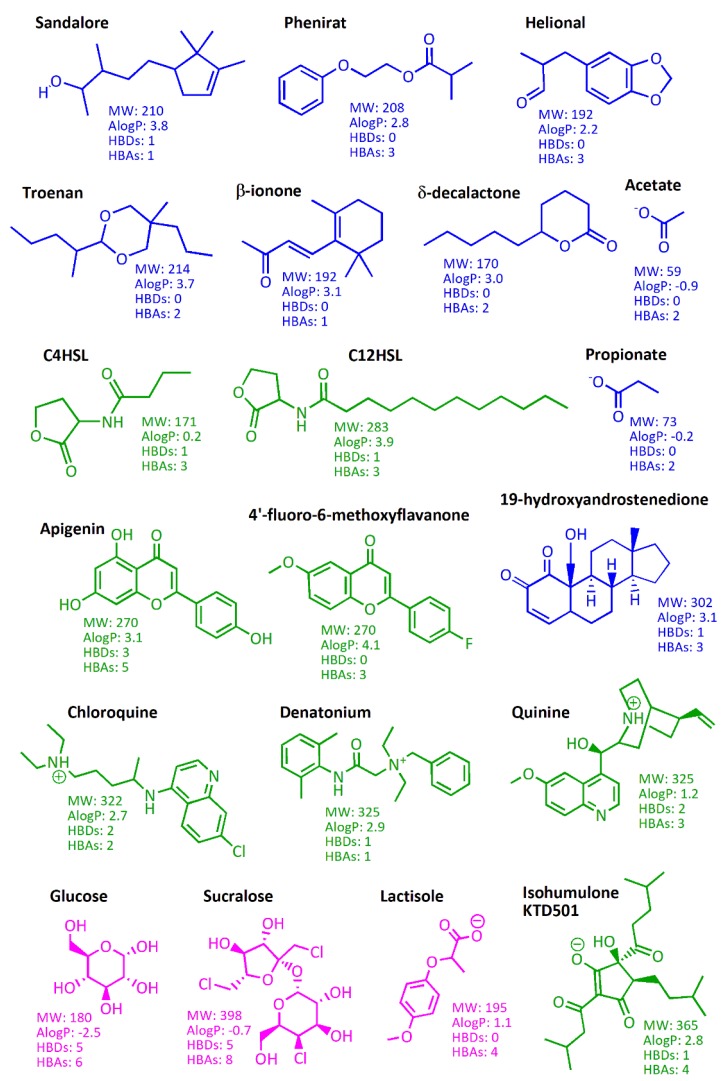
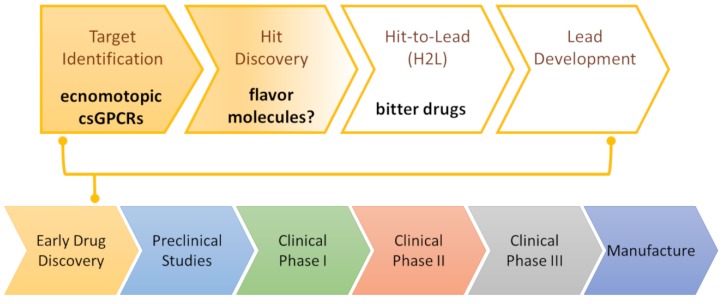
G protein-coupled receptors (GPCRs) belong to the largest class of drug targets. Approximately half of the members of the human GPCR superfamily are chemosensory receptors, including odorant receptors (ORs), trace amine-associated receptors (TAARs), bitter taste receptors (TAS2Rs), sweet and umami taste receptors (TAS1Rs). Interestingly, these chemosensory GPCRs (csGPCRs) are expressed in several tissues of the body where they are supposed to play a role in biological functions other than chemosensation. Despite their abundance and physiological/pathological relevance, the druggability of csGPCRs has been suggested but not fully characterized. Here, we aim to explore the potential of targeting csGPCRs to treat diseases by reviewing the current knowledge of csGPCRs expressed throughout the body and by analysing the chemical space and the drug-likeness of flavour molecules.
G 蛋白偶联受体 (GPCRs) 属于最大的药物靶点类别之一。人类 GPCR 超家族的大约一半成员是化学感觉受体,包括气味受体 (ORs)、痕量胺相关受体 (TAARs)、苦味受体 (TAS2Rs)、甜味和鲜味受体 (TAS1Rs)。有趣的是,这些化学感觉 GPCRs (csGPCRs) 表达在身体的几个组织中,据推测它们在除了化学感觉之外的生物学功能中发挥作用。尽管它们丰富且具有生理/病理相关性,但 csGPCRs 的成药性已被提出但尚未完全表征。在这里,我们旨在通过回顾全身表达的 csGPCR 的现有知识,并通过分析风味分子的化学空间和类药性,来探讨靶向 csGPCR 治疗疾病的潜力。