Department of Infectious Diseases, Alfred Health and Central Clinical School, Monash University, Melbourne, Victoria, Australia.
Cancer Research Division, Level 13, Peter MacCallum Cancer Centre, Victorian Comprehensive Cancer Centre, 305 Grattan Street, Melbourne, Victoria, 3000, Australia.
BMC Infect Dis. 2019 Mar 21;19(1):274. doi: 10.1186/s12879-019-3901-y.
Little is known about the morbidity and mortality of invasive fungal disease (IFD) at a population level. The aim of this study was to determine the incidence, trends and outcomes of IFD in all haematology-oncology patients by linking Victorian hospital data to state-based registries.
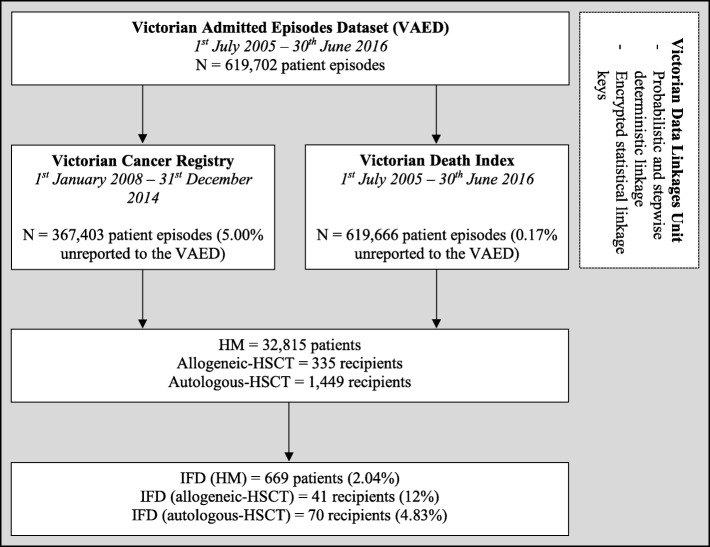
Episodes of IFD complicating adult haematological malignancy (HM) and haematopoietic stem cell transplantation (HSCT) patients admitted to Victorian hospitals from 1 July 2005 to 30 June 2016 were extracted from the Victorian Admitted Episodes Dataset and linked to the date of HM diagnosis from the Victorian Cancer Registry and mortality from the Victorian Death Index. Descriptive analyses and regression modelling were used.
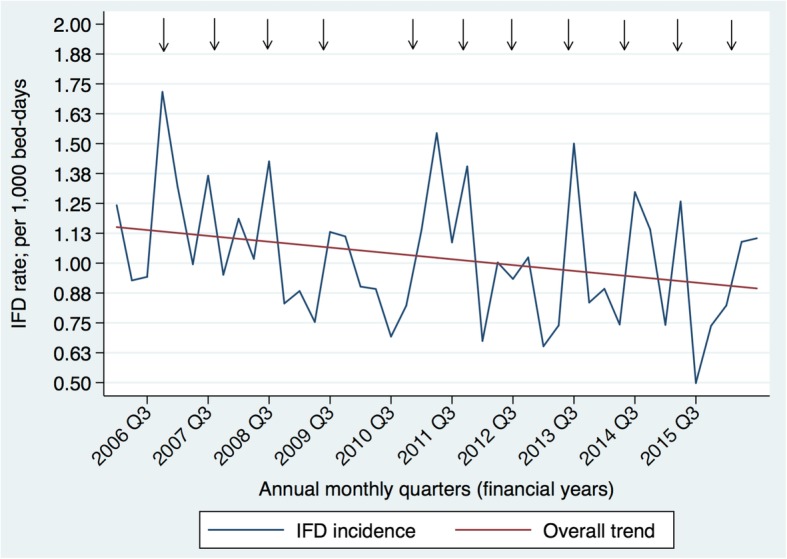
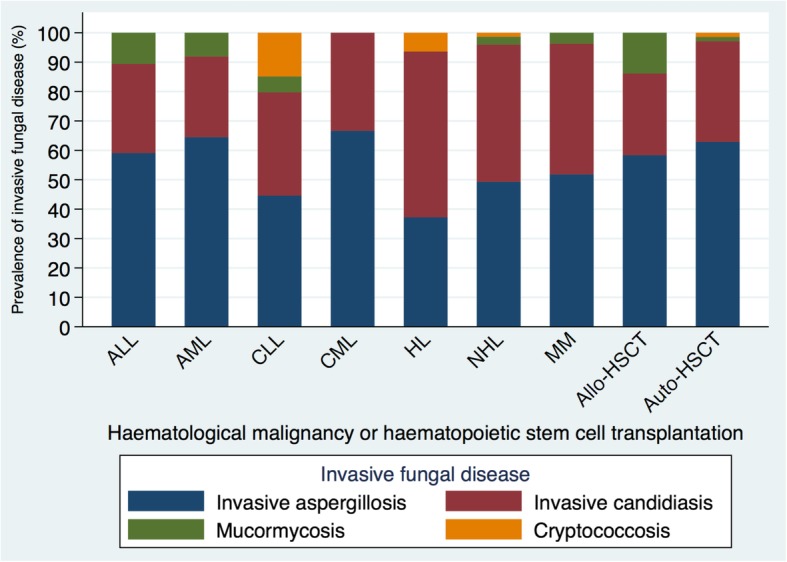
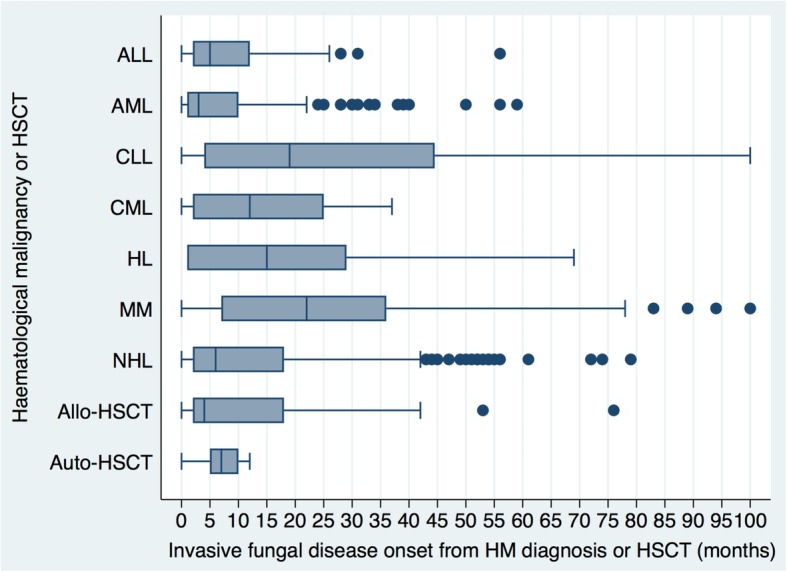
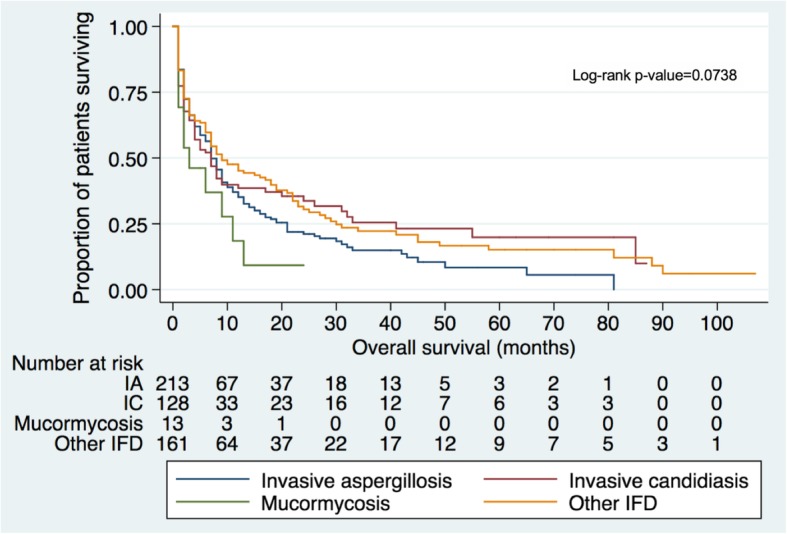
There were 619,702 inpatient-episodes among 32,815 HM and 1,765 HSCT-patients. IFD occurring twelve-months from HM-diagnosis was detected in 669 (2.04%) HM-patients and 111 (6.29%) HSCT-recipients, respectively. Median time to IFD-diagnosis was 3, 5, 15 and 22 months in acute myeloid leukaemia, acute lymphoblastic leukaemia, Hodgkin lymphoma and multiple myeloma, respectively. Median survival from IFD-diagnosis was 7, 7 and 3 months for invasive aspergillosis, invasive candidiasis and mucormycosis, respectively. From 2005-2016, IFD incidence decreased 0.28% per 1,000 bed-days. Fungal incidence coincided with spring peaks on time-series analysis.
Data linkage is an efficient means of evaluating the epidemiology of a rare disease, however the burden of IFD is likely underestimated, arguing for better quality hospital level surveillance data to improve management strategies.
在人群水平上,侵袭性真菌病(IFD)的发病率和死亡率知之甚少。本研究的目的是通过将维多利亚州的医院数据与州级登记处相联系,确定所有血液肿瘤患者中 IFD 的发病率、趋势和结局。
从维多利亚州住院患者数据集提取 2005 年 7 月 1 日至 2016 年 6 月 30 日期间成年血液恶性肿瘤(HM)和造血干细胞移植(HSCT)患者合并 IFD 的住院病例,并与维多利亚癌症登记处 HM 诊断日期以及维多利亚州死亡指数的死亡率相联系。采用描述性分析和回归模型进行分析。
在 32815 例 HM 和 1765 例 HSCT 患者中,共有 619702 例住院病例。HM 诊断后 12 个月内发现 669 例(2.04%)HM 患者和 111 例(6.29%)HSCT 患者发生 IFD。从 IFD 诊断到死亡的中位时间分别为急性髓性白血病、急性淋巴细胞白血病、霍奇金淋巴瘤和多发性骨髓瘤患者的 3、5、15 和 22 个月。侵袭性曲霉菌病、侵袭性念珠菌病和毛霉菌病的 IFD 诊断后中位生存期分别为 7、7 和 3 个月。从 2005 年至 2016 年,每 1000 个床位日 IFD 发病率下降 0.28%。时间序列分析表明,真菌发病率与春季高峰相吻合。
数据链接是评估罕见疾病流行病学的有效手段,然而 IFD 的负担可能被低估,这需要更好的医院级监测数据来改善管理策略。