Global Vaccine Epidemiology and Modeling department (VEM), Sanofi Pasteur, Lyon, France.
Netherlands Institute for Health Services Research (NIVEL), Utrecht, The Netherlands.
BMC Public Health. 2019 Mar 21;19(1):331. doi: 10.1186/s12889-019-6647-y.
Description of the epidemiology of influenza is needed to inform influenza vaccination policy. Here we examined influenza virus circulation in countries in the Asia-Pacific region and compared the timing of seasonal epidemics with the timing of influenza vaccination.
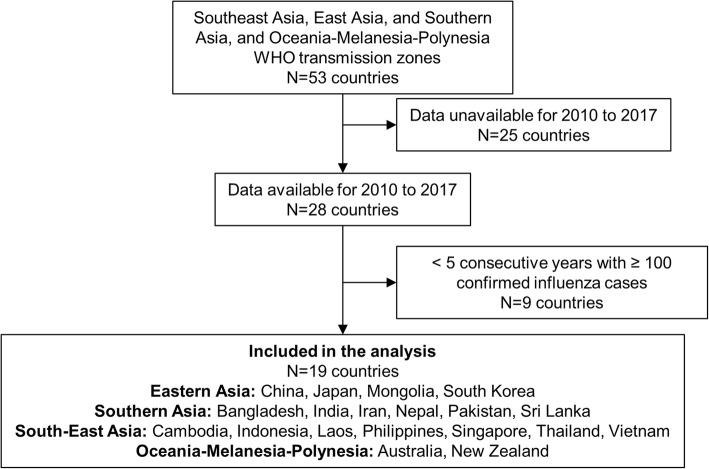
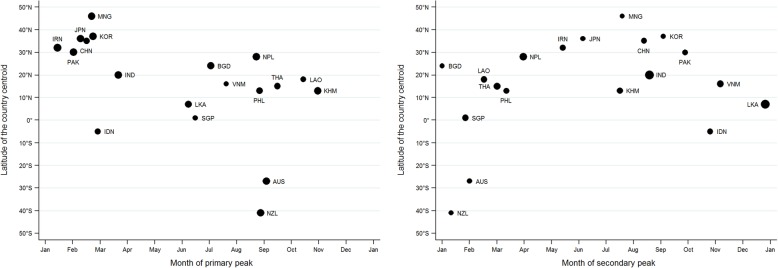
Data were obtained from the World Health Organization (WHO) FluNet database for 2010-2017 for countries in the WHO Asia-Pacific region. Data from countries covering ≥5 consecutive seasons and ≥ 100 influenza positive cases per year were included. Median proportions of cases for each influenza virus type were calculated by country and season. The timing and amplitude of the epidemic peaks were determined by Fourier decomposition. Vaccination timing was considered appropriate for each country if it was recommended ≤4 months before the primary peak of influenza circulation.
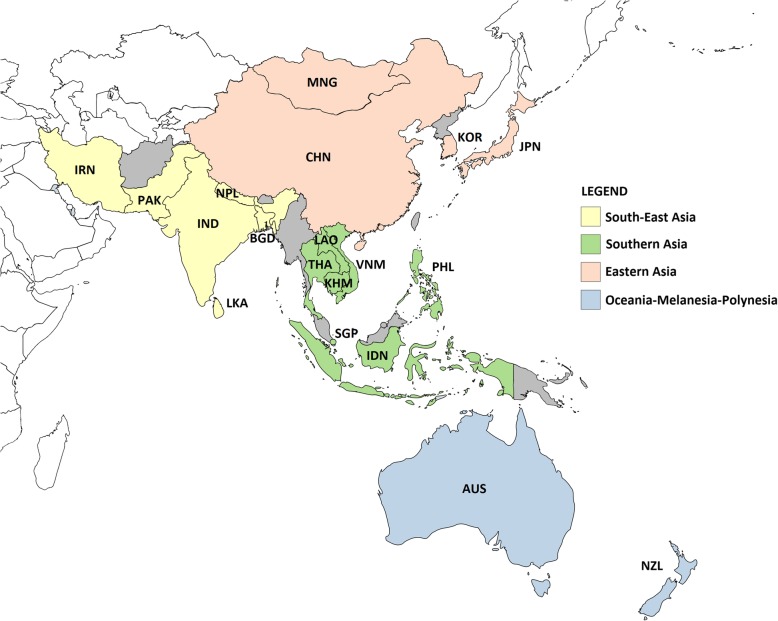
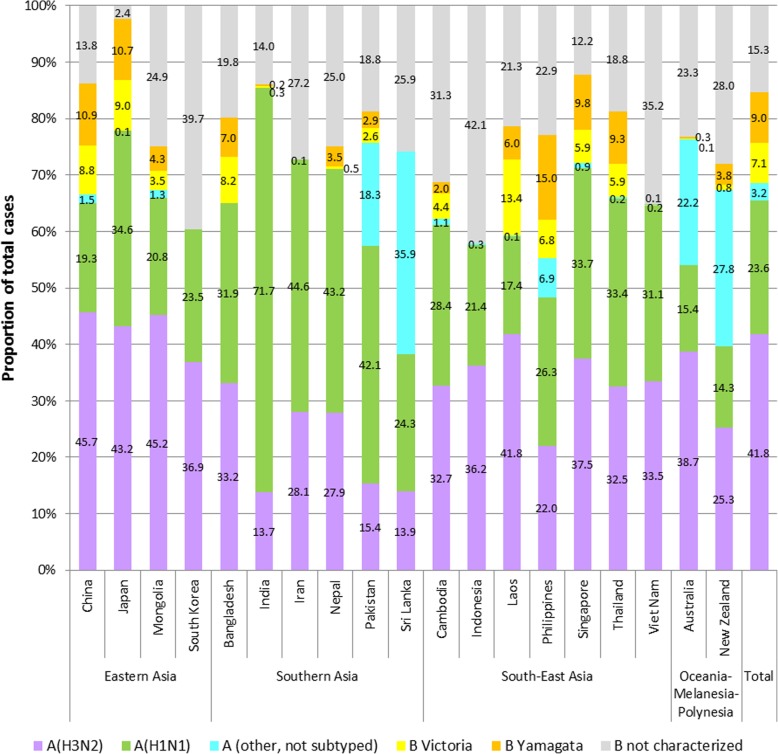
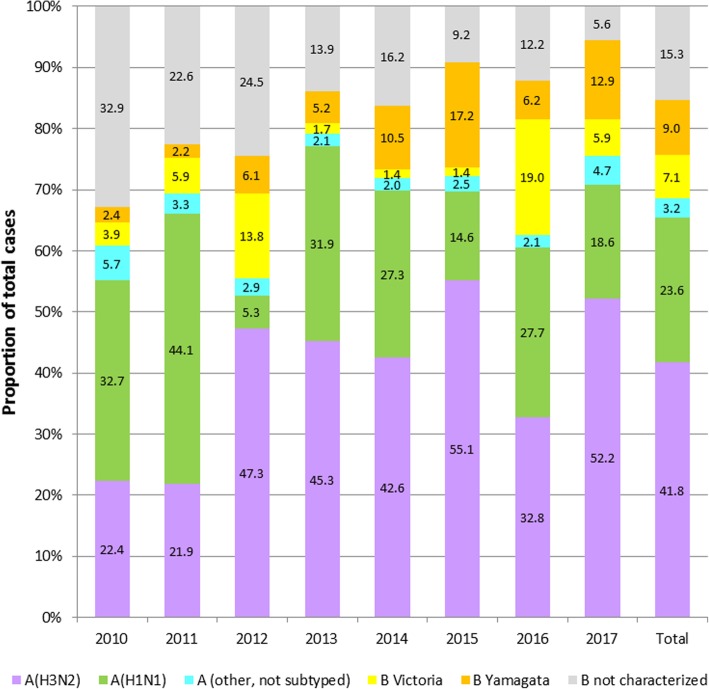
Seven hundred eleven thousand seven hundred thirty-four influenza cases were included from 19 countries. Peak circulation coincided with the winter seasons in most countries, although patterns were less clear in some countries in the inter-tropical area due to substantial secondary peaks. Influenza A/H3N2 dominated overall, but proportions of A and B strains varied by year and by country. Influenza B represented 31.4% of all cases. The WHO-recommended timing for influenza vaccination was appropriate in 12 countries. Vaccination timing recommendations were considered inappropriate in Laos, Cambodia, and Thailand, and were inconclusive for India, Sri Lanka, Singapore, and Vietnam due to unclear seasonality of influenza virus circulation.
Influenza virus circulation varied considerably across the Asia-Pacific region with an unusually high burden of influenza B. The recommended timing for vaccination was appropriate in most countries, except for several countries with unclear seasonality, mainly located in the inter-tropical area.
为了制定流感疫苗接种政策,需要了解流感在亚太地区国家的流行病学情况。在这里,我们研究了亚太地区国家的流感病毒传播情况,并比较了季节性流行的时间与流感疫苗接种的时间。
我们从世界卫生组织(WHO)的 FluNet 数据库获取了 2010 年至 2017 年期间亚太地区国家的数据。纳入的数据应覆盖连续≥5 个季节且每年≥100 例流感阳性病例。按国家和季节计算每种流感病毒类型的病例中位数比例。通过傅里叶分解确定流行高峰的时间和幅度。如果国家推荐的流感疫苗接种时间距离流感传播的主要高峰≤4 个月,则认为其接种时间合适。
从 19 个国家中纳入了 711 万 734 例流感病例。大多数国家的流行高峰出现在冬季,但由于热带地区的一些国家存在大量的次要高峰,因此模式不太明显。总体上 A/H3N2 型流感病毒占主导地位,但 A 型和 B 型病毒的比例因年份和国家而异。B 型流感占所有病例的 31.4%。在 12 个国家中,WHO 推荐的流感疫苗接种时间是合适的。由于流感病毒传播的季节性不明确,老挝、柬埔寨和泰国的疫苗接种时间建议不合适,印度、斯里兰卡、新加坡和越南的建议也不合适。
亚太地区的流感病毒传播情况差异很大,B 型流感的负担异常沉重。除了几个主要位于热带地区的国家季节性不明确外,大多数国家的推荐接种时间是合适的。