College of Science, Health, Engineering and Education, Murdoch University, 90 South Street, Murdoch, Western Australia, 6150, Australia.
Department of Zoology, University of Otago, 362 Leith Street, Dunedin, 9016, New Zealand.
Parasit Vectors. 2019 Mar 21;12(1):126. doi: 10.1186/s13071-019-3370-6.
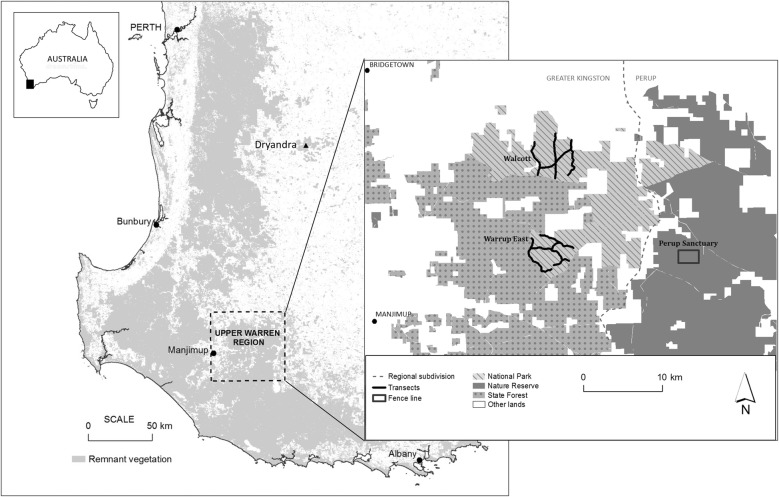
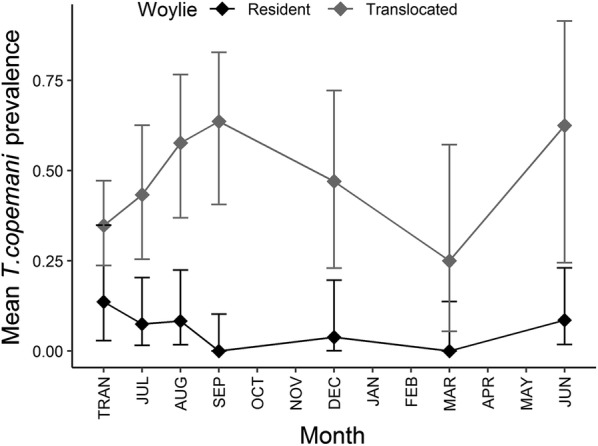
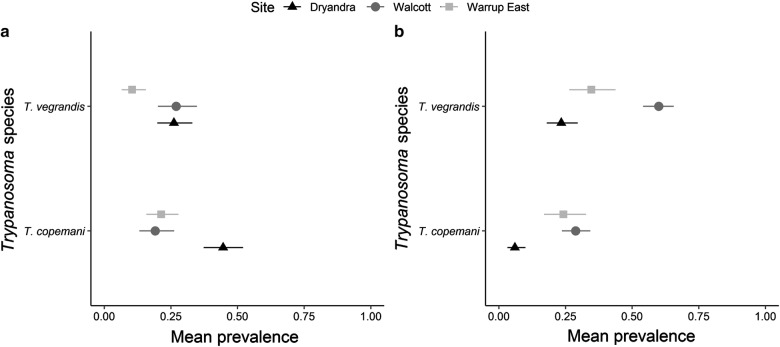
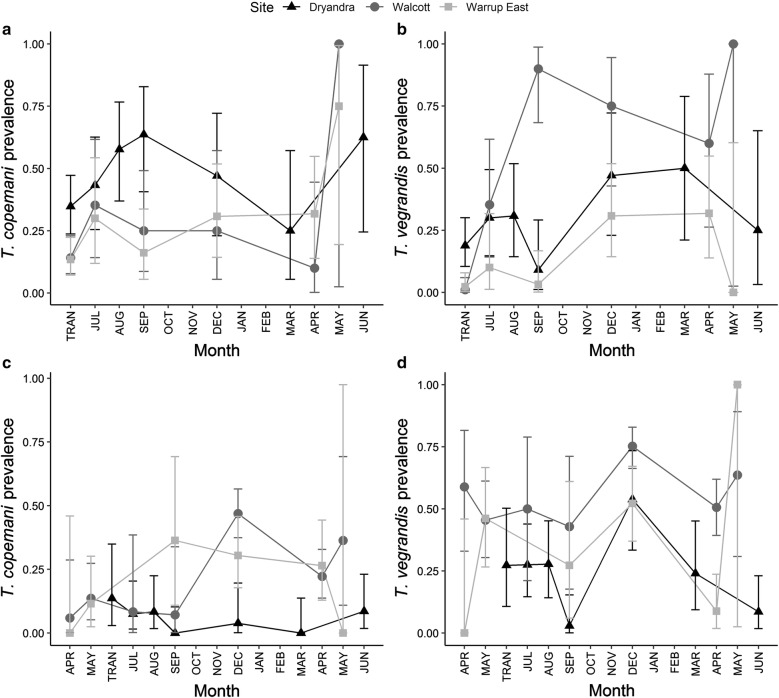
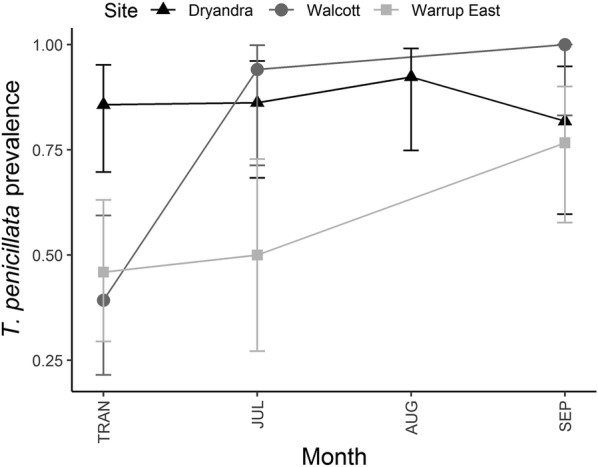
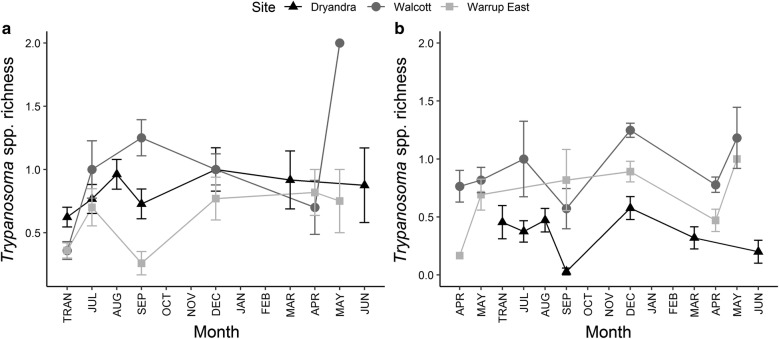
Understanding how fauna translocation and antiparasitic drug treatment impact parasite community structure within a host is vital for optimising translocation outcomes. Trypanosoma spp. and piroplasms (Babesia and Theileria spp.) are known to infect Australian marsupials, including the woylie (Bettongia penicillata). However relatively little is known about these haemoparasites, or how they respond to management practices such as translocation. We monitored haemoparasites infecting woylies for up to 12 months during two fauna translocations to supplement existing woylie populations in three different sites (Dryandra, Walcott and Warrup East) within south-western Australia between 2014 and 2016, with the aim of investigating (i) how haemoparasite prevalence, Trypanosoma spp. richness and Trypanosoma spp. community composition varied over time and between different sites following translocation; and (ii) whether ivermectin treatment indirectly impacts haemoparasite prevalence. Using molecular methods, 1211 blood samples were screened for the presence of trypanosomes, and a subset of these samples (n = 264) were also tested for piroplasms.
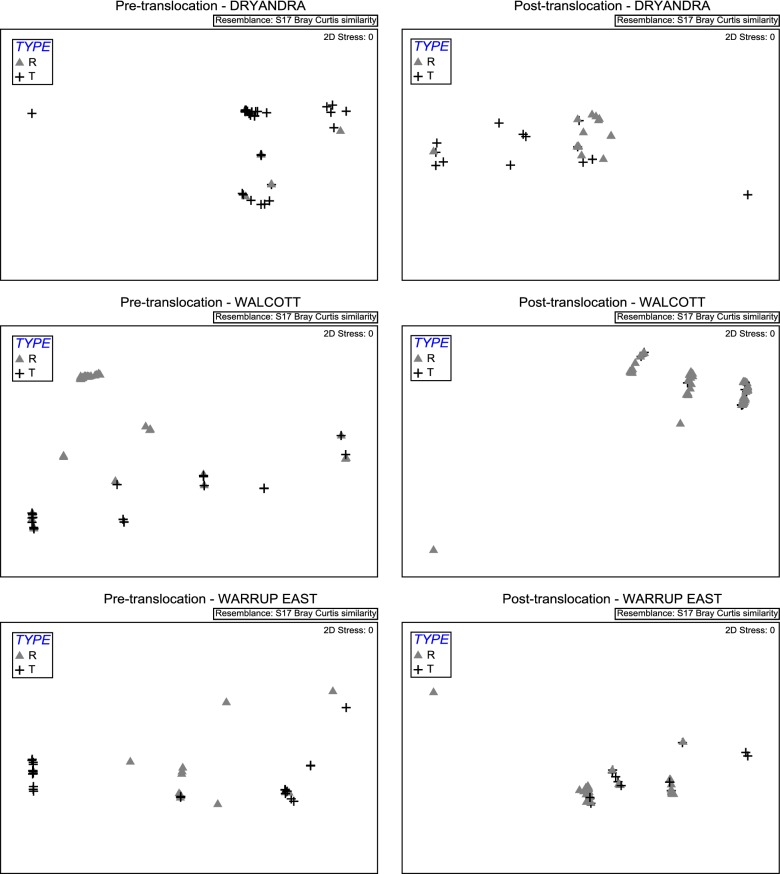
Trypanosomes and piroplasms were identified in 55% and 94% of blood samples, respectively. We identified five Trypanosoma species, two Theileria species, a single species of Babesia and a novel Bodo species. Trypanosoma spp. richness and the prevalence of haemoparasite co-infection increased after translocation. Prior to translocation, Trypanosoma spp. community composition differed significantly between translocated and resident woylies within Walcott and Warrup East, but not Dryandra. Six months later, there was a significant difference between translocated and resident woylies within Dryandra, but not Walcott or Warrup East. The response of haemoparasites to translocation was highly site-specific, with predominant changes to the haemoparasite community in translocated woylies occurring within the first few months following translocation. Ivermectin treatment had no significant effect on haemoparasite prevalence.
This study contributes to our understanding of haemoparasite dynamics in woylies following translocation. The highly site-specific and rapid response of haemoparasites to translocation highlights the need to better understand what drives these effects. Given that haemoparasite prevalence and composition of translocated and resident animals changed significantly following translocation, we propose that parasite monitoring should form an essential component of translocation protocols, and such protocols should endeavour to monitor translocated hosts and cohabiting species.
了解动物迁移和抗寄生虫药物治疗如何影响宿主体内寄生虫群落结构,对于优化迁移结果至关重要。锥虫和梨形虫(巴贝虫和泰勒虫属)已知感染澳大利亚有袋动物,包括沃利( Bettongia penicillata )。然而,人们对这些血液寄生虫知之甚少,也不知道它们如何对迁移等管理措施做出反应。我们在 2014 年至 2016 年期间,对两次动物迁移进行了长达 12 个月的监测,以补充澳大利亚西南部三个不同地点( Dryandra 、 Walcott 和 Warrup East )现有的沃利种群,目的是调查(i)在迁移后,血液寄生虫的流行率、锥虫丰富度和锥虫群落组成如何随时间和地点而变化;以及(ii)伊维菌素治疗是否会间接影响血液寄生虫的流行率。我们使用分子方法筛查了 1211 份血液样本中是否存在锥虫,其中一部分样本(n=264)还检测了梨形虫。
血液样本中分别有 55%和 94%检测出了锥虫和梨形虫。我们鉴定出了五种锥虫、两种泰勒虫、一种巴贝虫和一种新型博多虫。在迁移后,锥虫丰富度和血液寄生虫混合感染的流行率增加。在迁移之前,Walcott 和 Warrup East 内部的迁移和常驻沃利之间的锥虫群落组成有显著差异,但 Dryandra 内部没有。6 个月后,Dryandra 内部的迁移和常驻沃利之间有显著差异,但 Walcott 和 Warrup East 内部没有。血液寄生虫对迁移的反应具有很强的地点特异性,在迁移后最初的几个月内,主要发生了迁移沃利血液寄生虫群落的变化。伊维菌素治疗对血液寄生虫的流行率没有显著影响。
本研究增进了我们对沃利迁移后血液寄生虫动态的理解。血液寄生虫对迁移的高度特定和快速反应,突出了更好地了解驱动这些影响的因素的必要性。鉴于迁移和常驻动物的血液寄生虫流行率和组成在迁移后发生了显著变化,我们建议寄生虫监测应成为迁移协议的重要组成部分,并且此类协议应努力监测迁移的宿主和共生物种。