Department of Obstetrics and Feto-maternal Medicine, University Women's Hospital, Inselspital, Bern University Hospital, Bern, Switzerland.
Department for BioMedical Research (DBMR), University of Bern, Bern, Switzerland.
Stem Cell Res Ther. 2019 Mar 21;10(1):105. doi: 10.1186/s13287-019-1207-z.
Preterm newborns are at high risk of developing neurodevelopmental deficits caused by neuroinflammation leading to perinatal brain injury. Human Wharton's jelly mesenchymal stem cells (hWJ-MSC) derived from the umbilical cord have been suggested to reduce neuroinflammation, in part through the release of extracellular vesicle-like exosomes. Here, we studied whether exosomes derived from hWJ-MSC have anti-inflammatory effects on microglia-mediated neuroinflammation in perinatal brain injury.
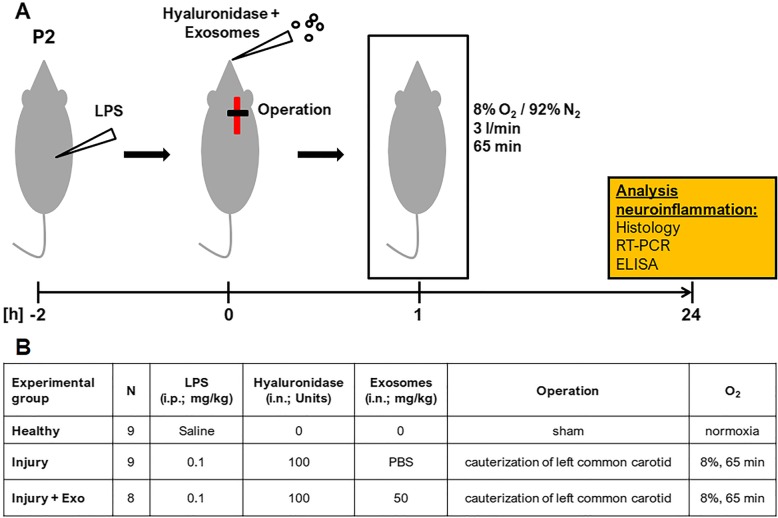
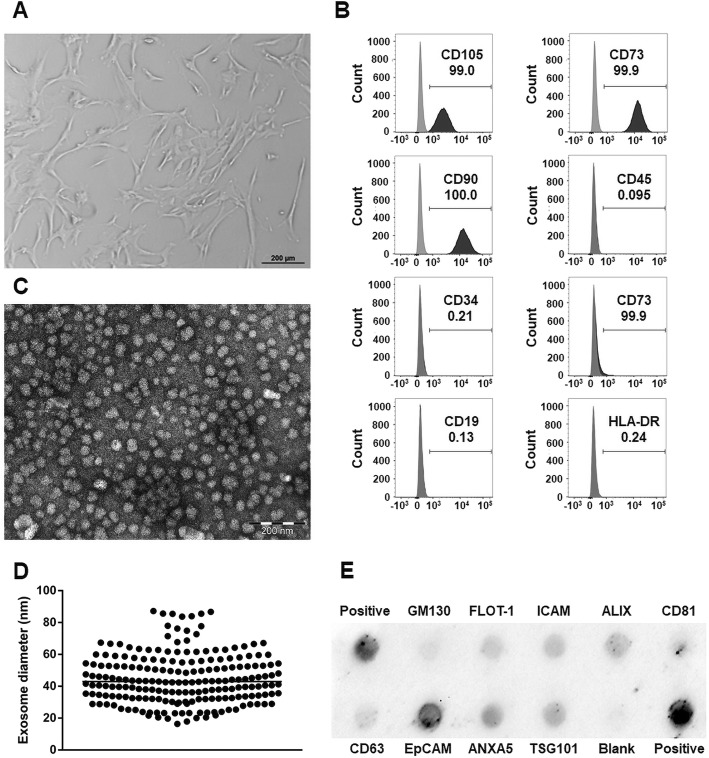
Using ultracentrifugation, we isolated exosomes from hWJ-MSC culture supernatants. In an in vitro model of neuroinflammation, we stimulated immortalized BV-2 microglia and primary mixed glial cells with lipopolysaccharide (LPS) in the presence or absence of exosomes. In vivo, we introduced brain damage in 3-day-old rat pups and treated them intranasally with hWJ-MSC-derived exosomes.
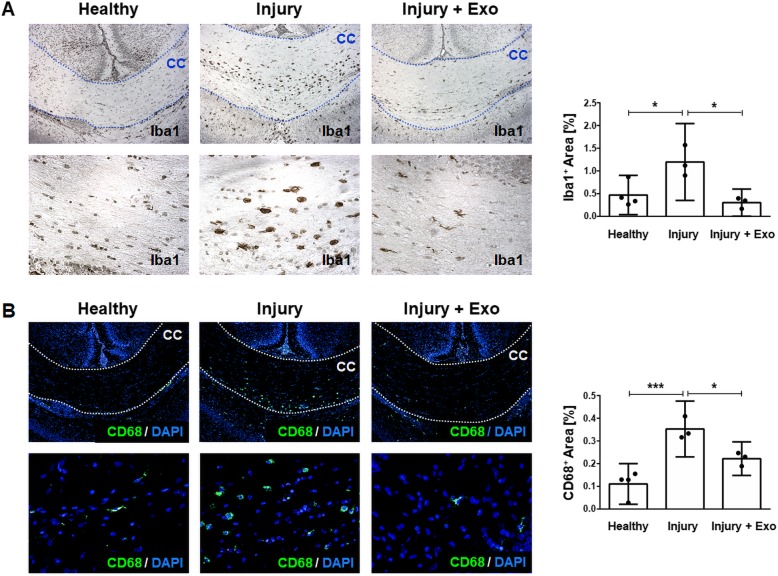
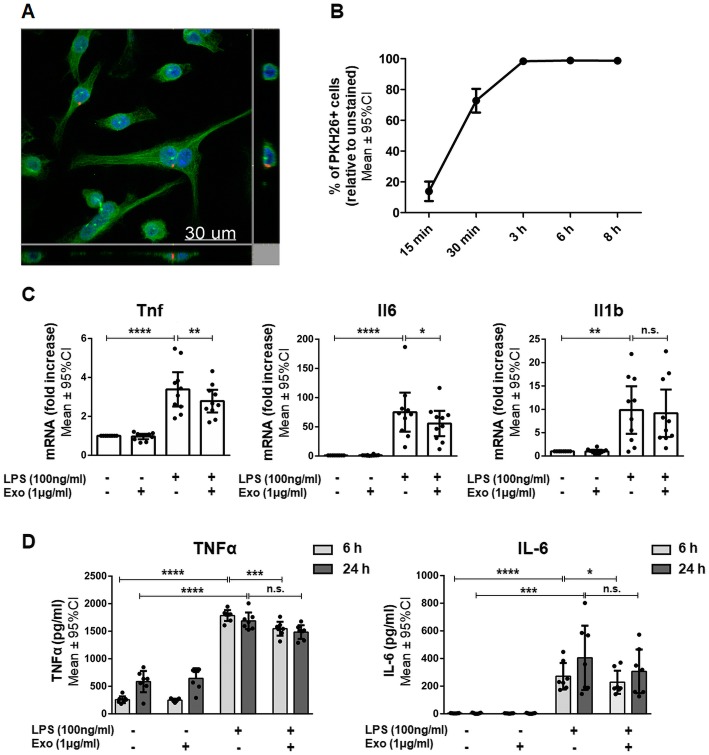
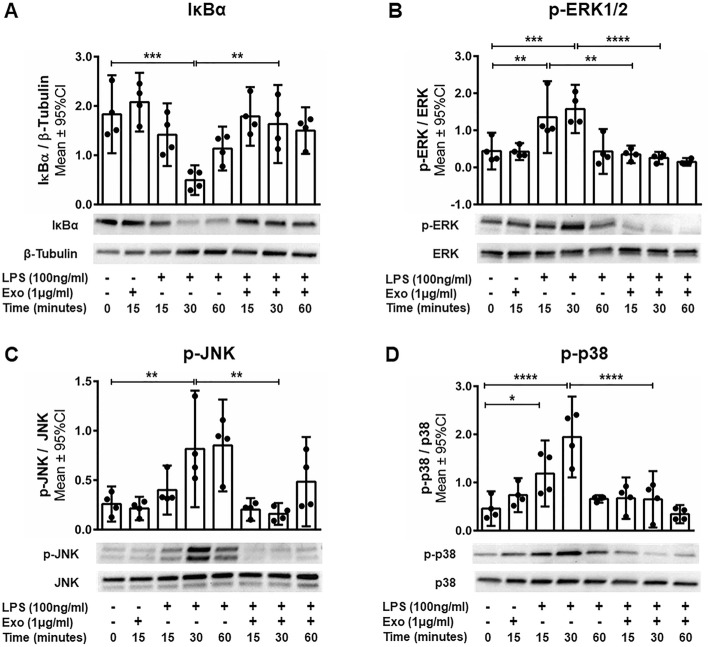
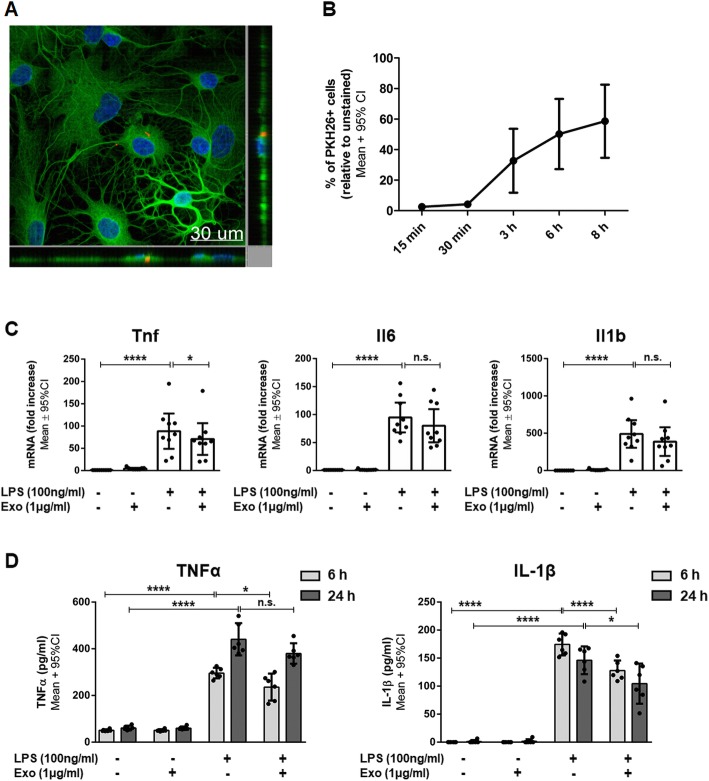
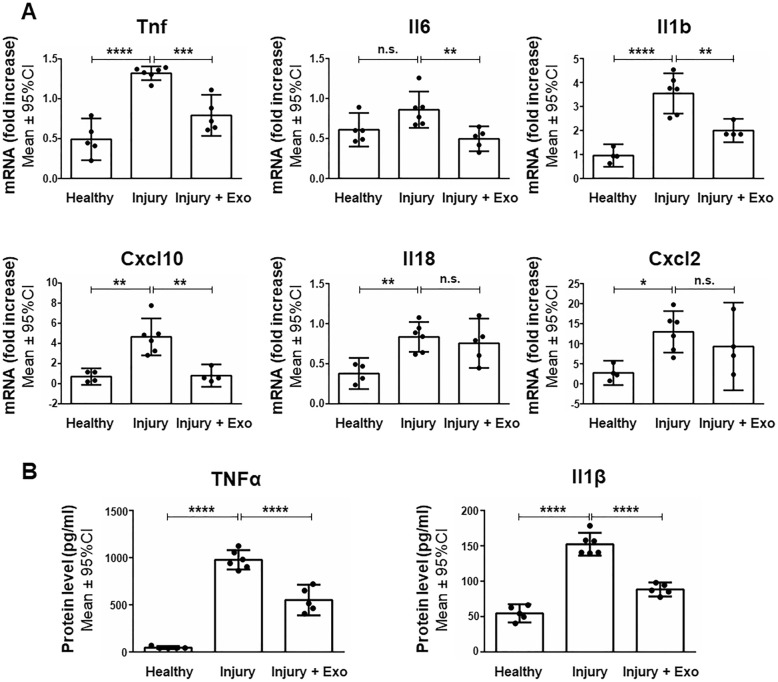
hWJ-MSC-derived exosomes dampened the LPS-induced expression of inflammation-related genes by BV-2 microglia and primary mixed glial cells. The secretion of pro-inflammatory cytokines by LPS-stimulated primary mixed glial was inhibited by exosomes as well. Exosomes interfered within the Toll-like receptor 4 signaling of BV-2 microglia, as they prevented the degradation of the NFκB inhibitor IκBα and the phosphorylation of molecules of the mitogen-activated protein kinase family in response to LPS stimulation. Finally, intranasally administered exosomes reached the brain and reduced microglia-mediated neuroinflammation in rats with perinatal brain injury.
Our data suggest that the administration of hWJ-MSC-derived exosomes represents a promising therapy to prevent and treat perinatal brain injury.
早产儿由于神经炎症导致围产期脑损伤,存在发生神经发育缺陷的高风险。人脐带华通氏胶间充质干细胞(hWJ-MSC)已被证明可以减少神经炎症,部分是通过释放细胞外囊泡样外泌体。在这里,我们研究了 hWJ-MSC 来源的外泌体是否对围产期脑损伤中微胶质细胞介导的神经炎症具有抗炎作用。
我们使用超速离心法从 hWJ-MSC 培养上清液中分离出外泌体。在体外神经炎症模型中,我们用脂多糖(LPS)刺激永生化 BV-2 小胶质细胞和原代混合胶质细胞,并在存在或不存在外泌体的情况下进行刺激。在体内,我们在 3 日龄大鼠幼仔中引入脑损伤,并通过鼻腔内给予 hWJ-MSC 衍生的外泌体进行治疗。
hWJ-MSC 衍生的外泌体抑制了 LPS 诱导的 BV-2 小胶质细胞和原代混合胶质细胞中炎症相关基因的表达。外泌体也抑制了 LPS 刺激的原代混合胶质细胞中促炎细胞因子的分泌。外泌体还干扰了 LPS 刺激的 BV-2 小胶质细胞中的 Toll 样受体 4 信号转导,因为它们阻止了 NFκB 抑制剂 IκBα的降解和丝裂原活化蛋白激酶家族分子的磷酸化。最后,鼻腔内给予的外泌体到达大脑,并减少了围产期脑损伤大鼠中微胶质细胞介导的神经炎症。
我们的数据表明,给予 hWJ-MSC 衍生的外泌体代表了一种有前途的治疗方法,可以预防和治疗围产期脑损伤。