Wolfson Brain Imaging Centre, Department of Clinical Neurosciences, University of Cambridge, Cambridge, CB2 0QQ, UK.
Laboratory of Research in Neuroimaging (LREN), Department of Clinical Neurosciences, CHUV, University of Lausanne, 1011, Lausanne, Switzerland.
Nat Commun. 2019 Dec 25;10(1):1220. doi: 10.1038/s41467-019-09230-w.
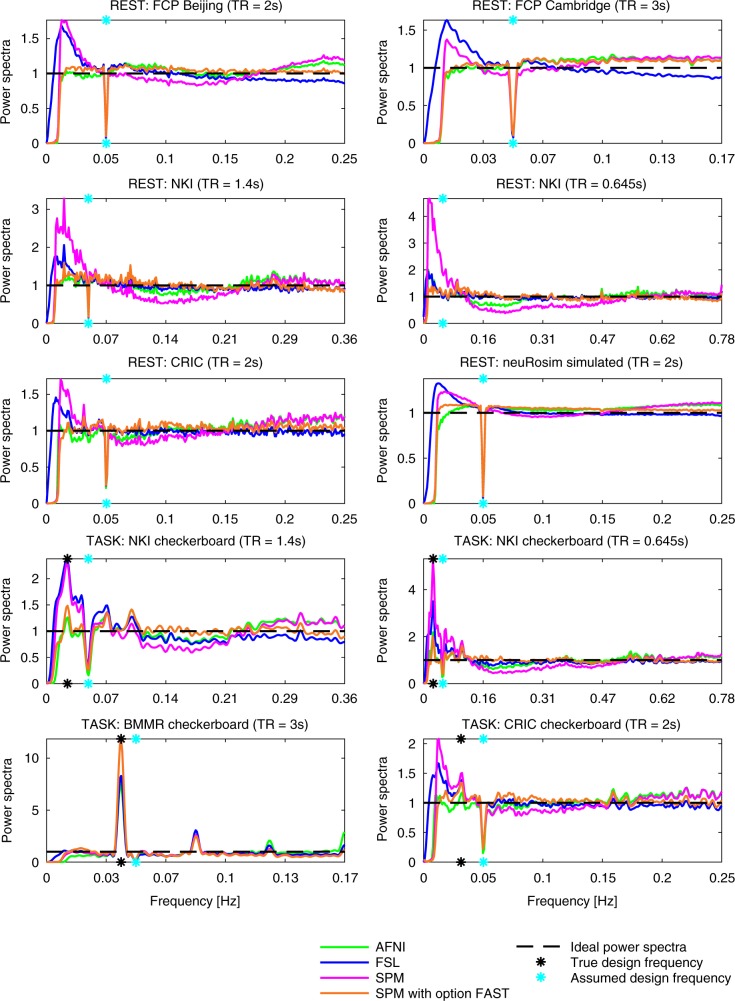
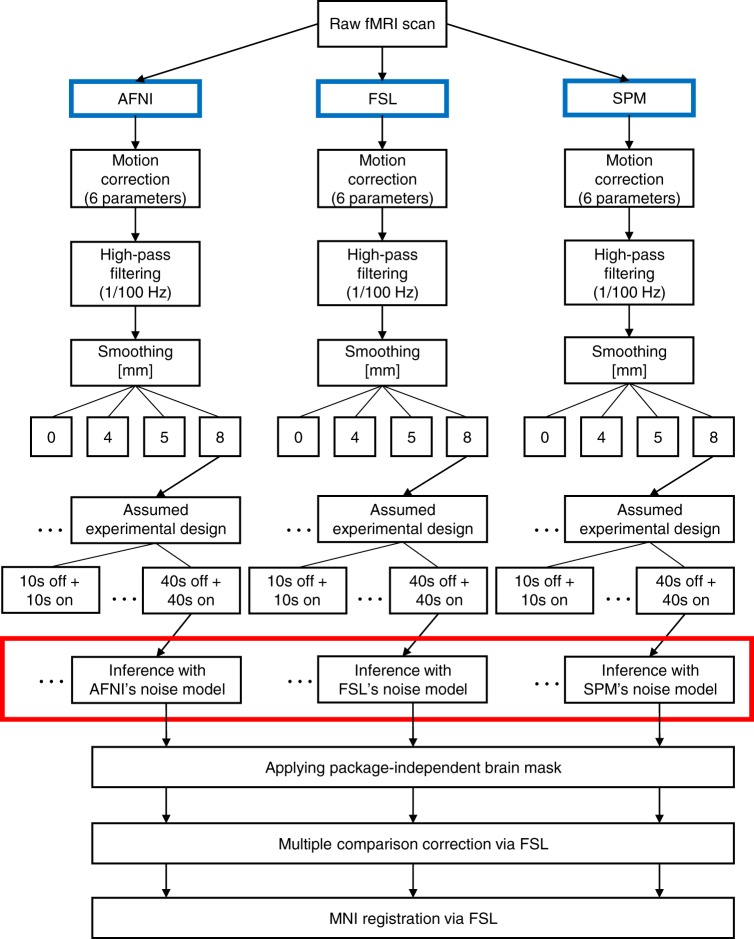
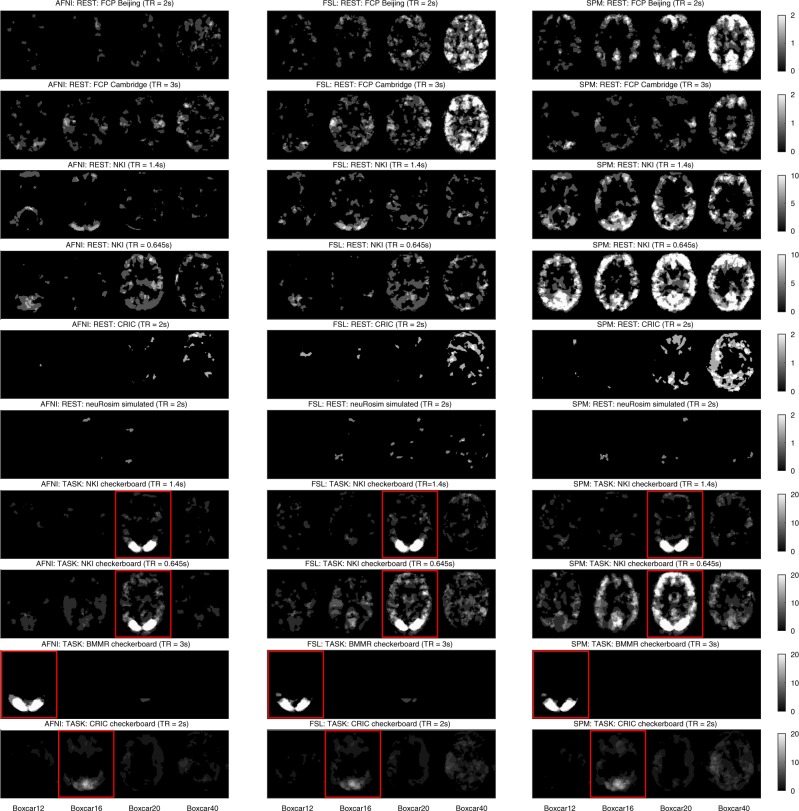
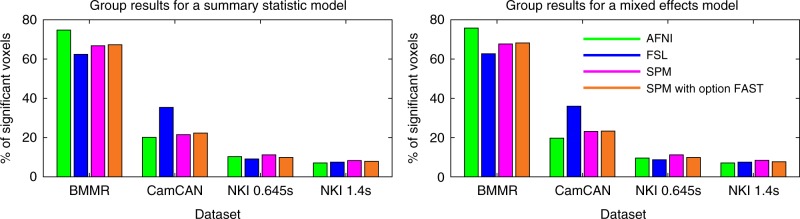
Given the recent controversies in some neuroimaging statistical methods, we compare the most frequently used functional Magnetic Resonance Imaging (fMRI) analysis packages: AFNI, FSL and SPM, with regard to temporal autocorrelation modeling. This process, sometimes known as pre-whitening, is conducted in virtually all task fMRI studies. Here, we employ eleven datasets containing 980 scans corresponding to different fMRI protocols and subject populations. We found that autocorrelation modeling in AFNI, although imperfect, performed much better than the autocorrelation modeling of FSL and SPM. The presence of residual autocorrelated noise in FSL and SPM leads to heavily confounded first level results, particularly for low-frequency experimental designs. SPM's alternative pre-whitening method, FAST, performed better than SPM's default. The reliability of task fMRI studies could be improved with more accurate autocorrelation modeling. We recommend that fMRI analysis packages provide diagnostic plots to make users aware of any pre-whitening problems.
鉴于最近一些神经影像学统计方法存在争议,我们比较了最常用的功能磁共振成像(fMRI)分析包:AFNI、FSL 和 SPM,主要关注于时间自相关建模。这个过程有时也被称为预白化,几乎在所有任务 fMRI 研究中都需要进行。在这里,我们使用了包含 980 个扫描的 11 个数据集,这些数据集对应于不同的 fMRI 协议和受试者群体。我们发现,尽管 AFNI 的自相关建模并不完美,但它的性能远远优于 FSL 和 SPM 的自相关建模。FSL 和 SPM 中存在的残留自相关噪声会导致一级结果严重混淆,特别是对于低频实验设计。SPM 的替代预白化方法 FAST 比 SPM 的默认方法表现更好。更准确的自相关建模可以提高任务 fMRI 研究的可靠性。我们建议 fMRI 分析包提供诊断图,使用户能够意识到任何预白化问题。