Biological and Environmental Sciences and Engineering Division (BESE), Red Sea Research Center, King Abdullah University of Science and Technology (KAUST), Thuwal, 23955-6900, Saudi Arabia.
Computer Electrical and Mathematical Science and Engineering Division (CEMSE), King Abdullah University of Science and Technology (KAUST), Thuwal, 23955-6900, Saudi Arabia.
Nat Commun. 2019 Mar 21;10(1):1314. doi: 10.1038/s41467-019-09306-7.
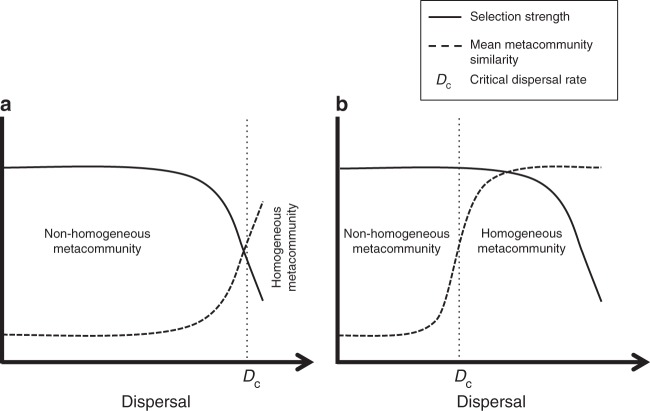
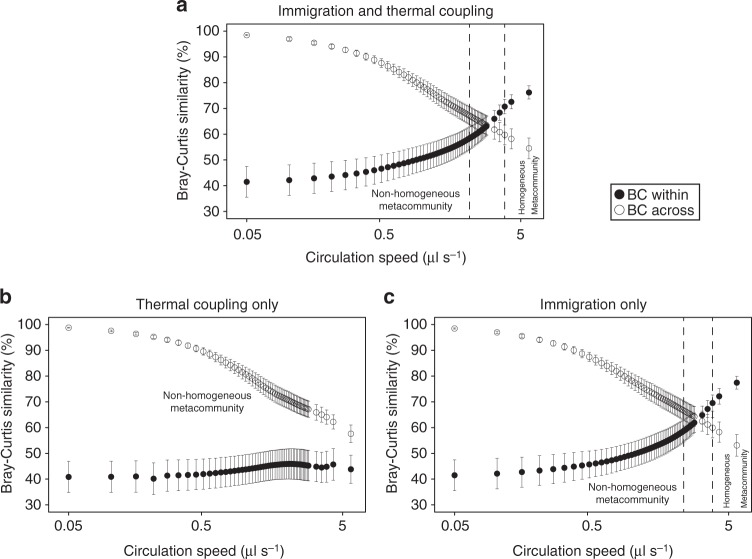
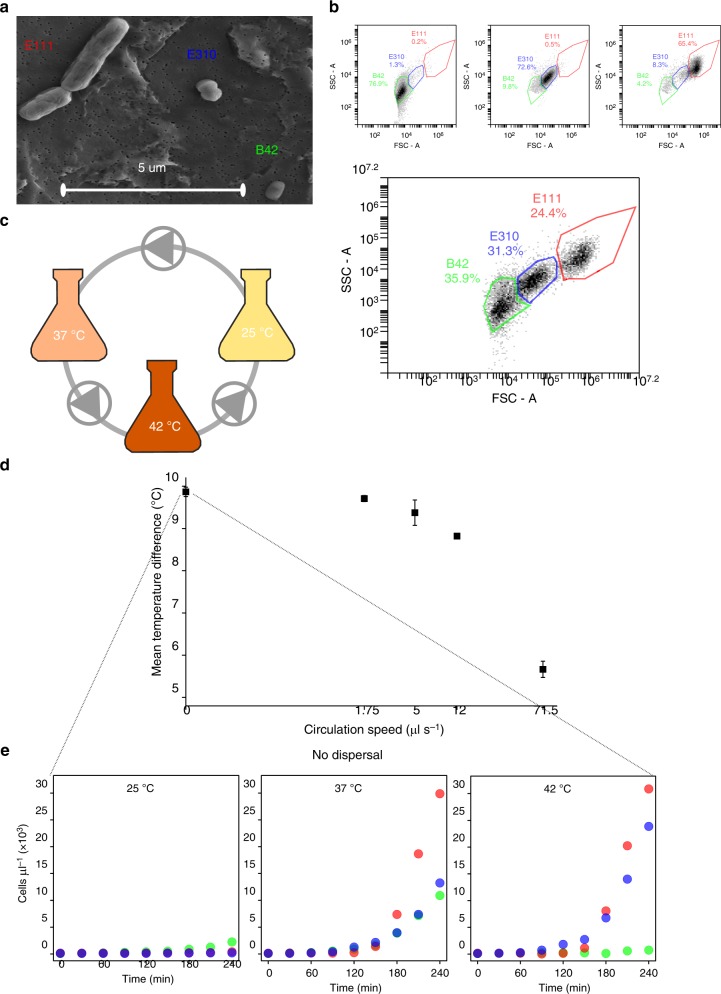
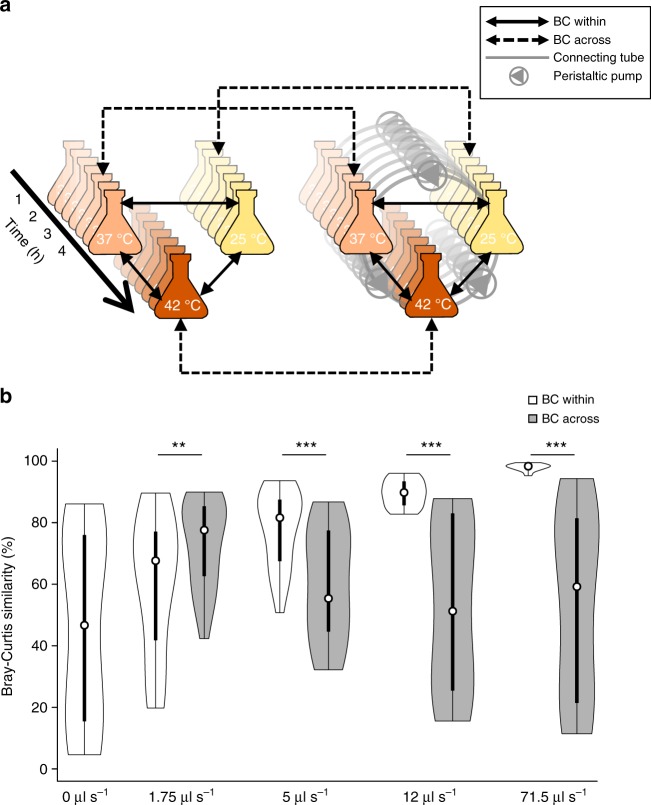
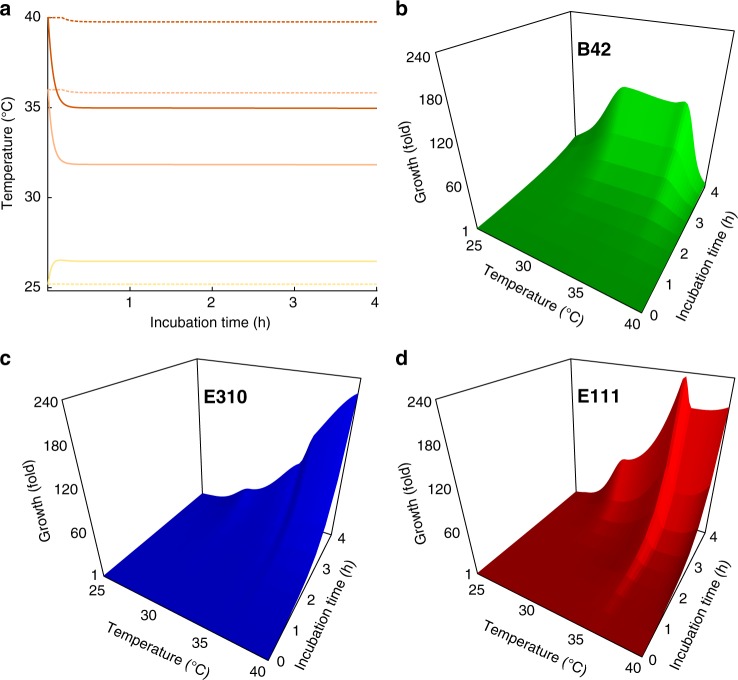
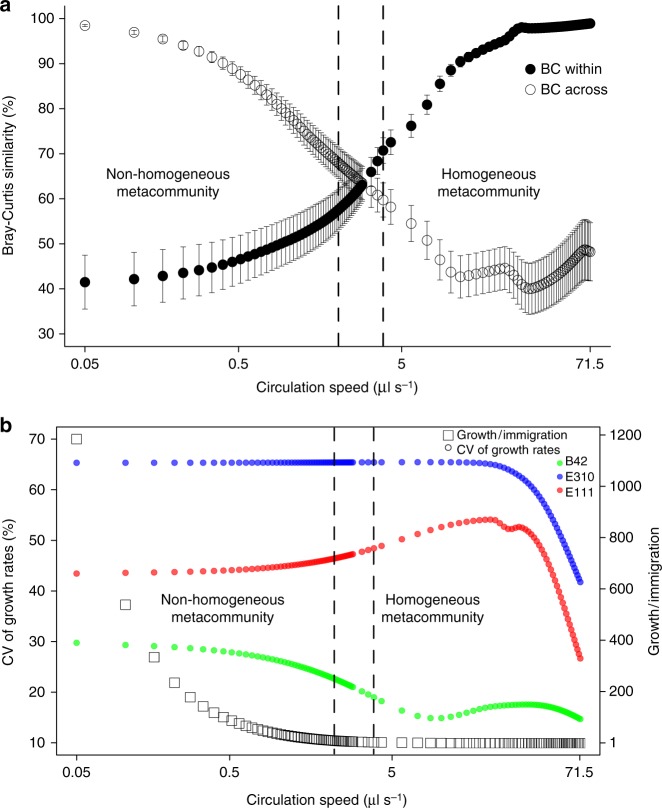
Selection and dispersal are ecological processes that have contrasting roles in the assembly of communities. Variable selection diversifies and strong dispersal homogenizes them. However, we do not know whether dispersal homogenizes communities directly via immigration or indirectly via weakening selection across habitats due to physical transfer of material, e.g., water mixing in aquatic ecosystems. Here we examine how dispersal homogenizes a simplified synthetic bacterial metacommunity, using a sequencing-independent approach based on flow cytometry and mathematical modeling. We show that dispersal homogenizes the metacommunity via immigration, not via weakening selection, and even when immigration is four times slower than growth. This finding challenges the current view that dispersal homogenizes communities only at high rates and explains why communities are homogeneous at small spatial scales. It also offers a benchmark for sequence-based studies in natural microbial communities where immigration rates can be inferred solely by using neutral models.
选择和扩散是生态过程,它们在群落的组装中扮演着相反的角色。可变选择使它们多样化,而强扩散则使它们同质化。然而,我们不知道扩散是通过移民直接同质化群落,还是通过由于物质的物理转移,例如在水生生态系统中混合水,间接地通过减弱栖息地之间的选择来同质化群落。在这里,我们使用基于流式细胞术和数学建模的无测序依赖方法来检查扩散如何同质化简化的合成细菌集合群落。我们表明,扩散通过移民而不是通过减弱选择使集合群落同质化,即使移民速度比生长速度慢四倍。这一发现挑战了当前的观点,即只有在高扩散率下扩散才会使群落同质化,并解释了为什么在小的空间尺度上群落是同质的。它还为基于序列的自然微生物群落研究提供了一个基准,其中可以仅通过使用中性模型来推断移民率。