Research Platform in Biological Oncology, Dijon, France.
GIMI Genetic and Immunology Medical Institute, Dijon, France.
Br J Cancer. 2019 Apr;120(8):806-814. doi: 10.1038/s41416-019-0404-y. Epub 2019 Mar 22.
Prognostic markers for glioblastoma are lacking. Both intrinsic tumour characteristics and microenvironment could influence cancer prognostic. The aim of our study was to generate a pure glioblastoma cell lines and immune classification in order to decipher the respective role of glioblastoma cell and microenvironment on prognosis.
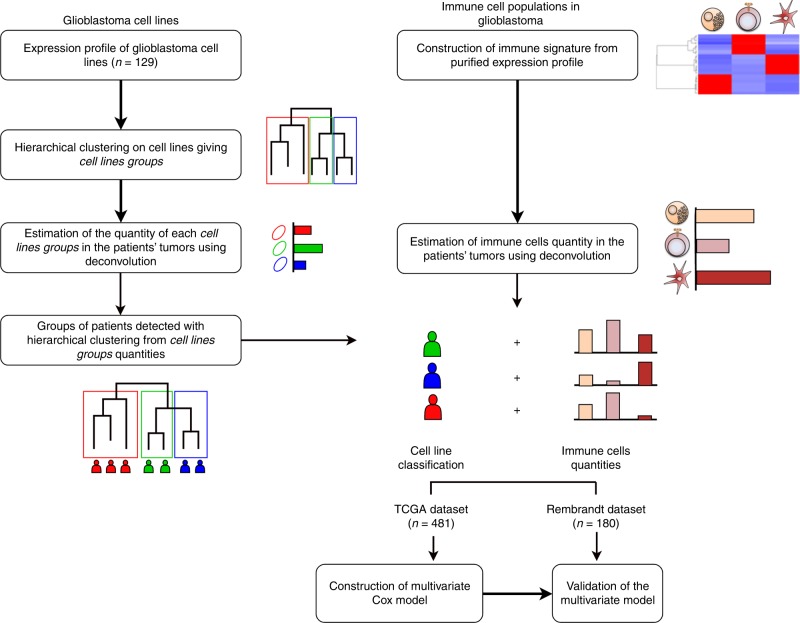
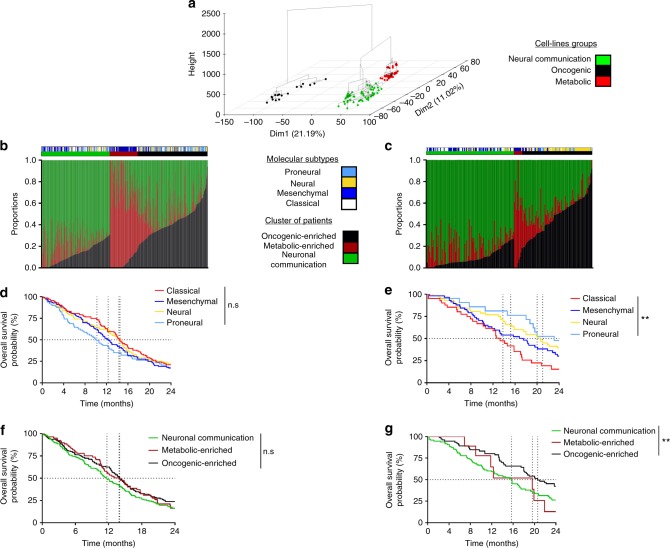
We worked on two large cohorts of patients suffering from glioblastoma (TCGA, n = 481 and Rembrandt, n = 180) for which clinical data, transcriptomic profiles and outcome were recorded. Transcriptomic profiles of 129 pure glioblastoma cell lines were clustered to generate a glioblastoma cell lines classification. Presence of subtypes of glioblastoma cell lines and immune cells was determined using deconvolution.
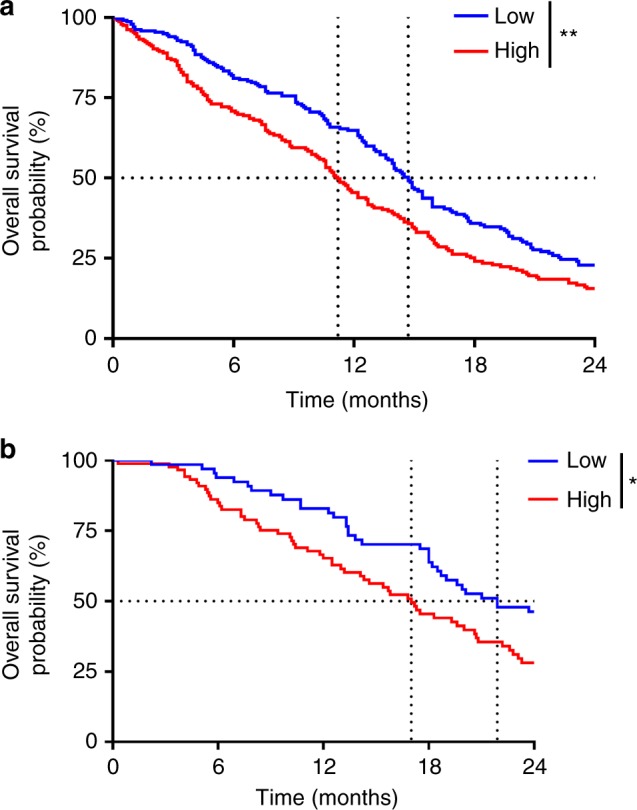
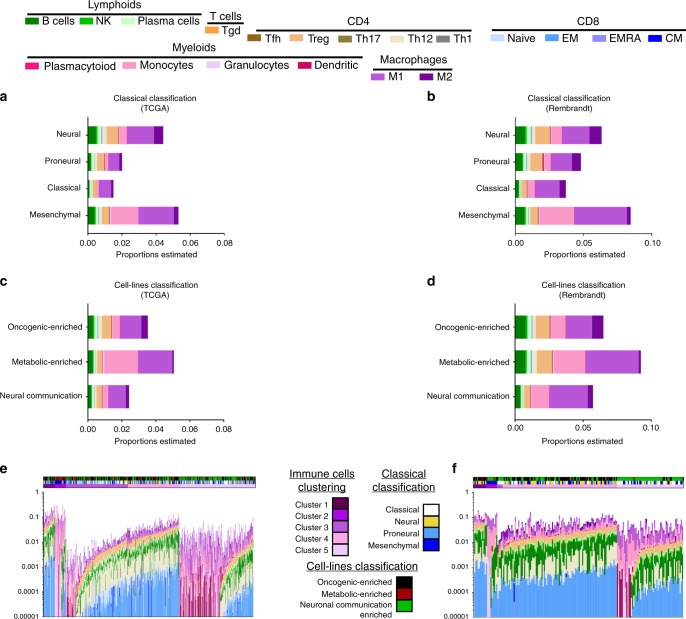
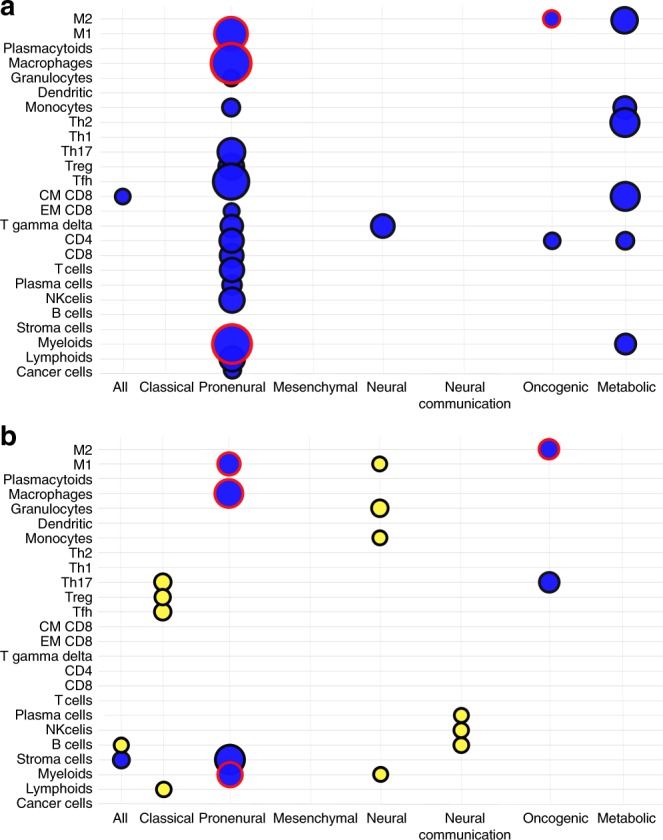
Glioblastoma cell lines classification defined three new molecular groups called oncogenic, metabolic and neuronal communication enriched. Neuronal communication-enriched tumours were associated with poor prognosis in both cohorts. Immune cell infiltrate was more frequent in mesenchymal classical classification subgroup and metabolic-enriched tumours. A combination of age, glioblastoma cell lines classification and immune classification could be used to determine patient's outcome in both cohorts.
Our study shows that glioblastoma-bearing patients can be classified based on their age, glioblastoma cell lines classification and immune classification. The combination of these information improves the capacity to address prognosis.
胶质母细胞瘤缺乏预后标志物。内在肿瘤特征和微环境都可能影响癌症的预后。我们的研究旨在生成纯胶质母细胞瘤细胞系和免疫分类,以破译胶质母细胞瘤细胞和微环境对预后的各自作用。
我们对两个大型胶质母细胞瘤患者队列(TCGA,n=481 和 Rembrandt,n=180)进行了研究,记录了临床数据、转录组谱和结果。对 129 个纯胶质母细胞瘤细胞系的转录组谱进行聚类,以生成胶质母细胞瘤细胞系分类。使用去卷积确定胶质母细胞瘤细胞系和免疫细胞的亚型存在。
胶质母细胞瘤细胞系分类定义了三个新的分子群,分别称为致癌、代谢和神经元通讯富集群。在两个队列中,神经元通讯富集肿瘤与预后不良相关。间充质经典分类亚组和代谢富集肿瘤中免疫细胞浸润更为频繁。年龄、胶质母细胞瘤细胞系分类和免疫分类的组合可用于确定两个队列中患者的预后。
我们的研究表明,胶质母细胞瘤患者可以根据其年龄、胶质母细胞瘤细胞系分类和免疫分类进行分类。这些信息的组合提高了确定预后的能力。