• 文献检索
  • 文档翻译
  • 深度研究
  • 学术资讯
  • Suppr Zotero 插件Zotero 插件
  • 邀请有礼
  • 套餐&价格
  • 历史记录
应用&插件
Suppr Zotero 插件Zotero 插件浏览器插件Mac 客户端Windows 客户端微信小程序
定价
高级版会员购买积分包购买API积分包
服务
文献检索文档翻译深度研究API 文档MCP 服务
关于我们
关于 Suppr公司介绍联系我们用户协议隐私条款
关注我们

Suppr 超能文献

核心技术专利:CN118964589B侵权必究
粤ICP备2023148730 号-1Suppr @ 2026

文献检索

告别复杂PubMed语法,用中文像聊天一样搜索,搜遍4000万医学文献。AI智能推荐,让科研检索更轻松。

立即免费搜索

文件翻译

保留排版,准确专业,支持PDF/Word/PPT等文件格式,支持 12+语言互译。

免费翻译文档

深度研究

AI帮你快速写综述,25分钟生成高质量综述,智能提取关键信息,辅助科研写作。

立即免费体验

开发一种创新且可持续的一步法,利用磁性离子液体快速分离植物DNA用于靶向PCR。

Development of an innovative and sustainable one-step method for rapid plant DNA isolation for targeted PCR using magnetic ionic liquids.

作者信息

Marengo Arianna, Cagliero Cecilia, Sgorbini Barbara, Anderson Jared L, Emaus Miranda N, Bicchi Carlo, Bertea Cinzia M, Rubiolo Patrizia

机构信息

1Dipartimento di Scienza e Tecnologia del Farmaco, Università di Torino, Via P. Giuria 9, 10125 Turin, Italy.

2Department of Chemistry, Iowa State University, Ames, IA 50011 USA.

出版信息

Plant Methods. 2019 Mar 9;15:23. doi: 10.1186/s13007-019-0408-x. eCollection 2019.

DOI:10.1186/s13007-019-0408-x
PMID:30899320
原文链接:https://pmc.ncbi.nlm.nih.gov/articles/PMC6408755/
Abstract

BACKGROUND

Nowadays, there is an increasing demand for fast and reliable plant biomolecular analyses. Conventional methods for the isolation of nucleic acids are time-consuming and require multiple and often non-automatable steps to remove cellular interferences, with consequence that sample preparation is the major bottleneck in the bioanalytical workflow. New opportunities have been created by the use of magnetic ionic liquids (MILs) thanks to their affinity for nucleic acids.

RESULTS

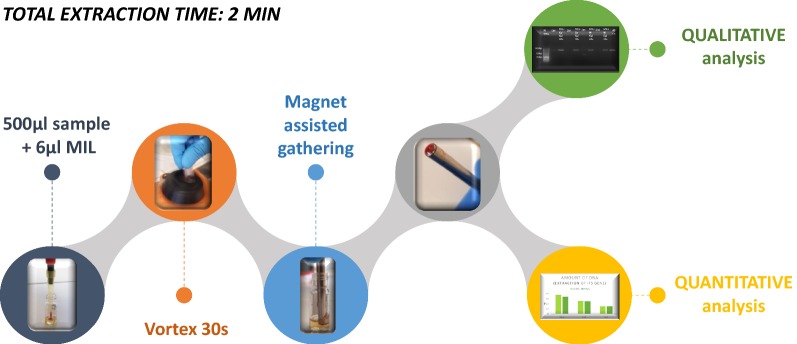
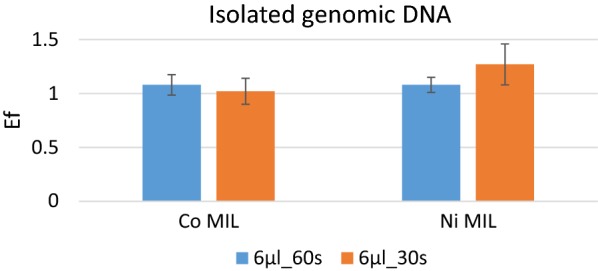
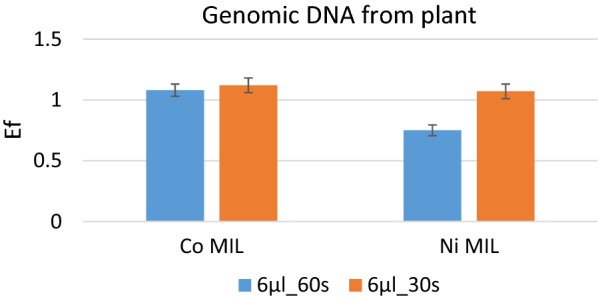
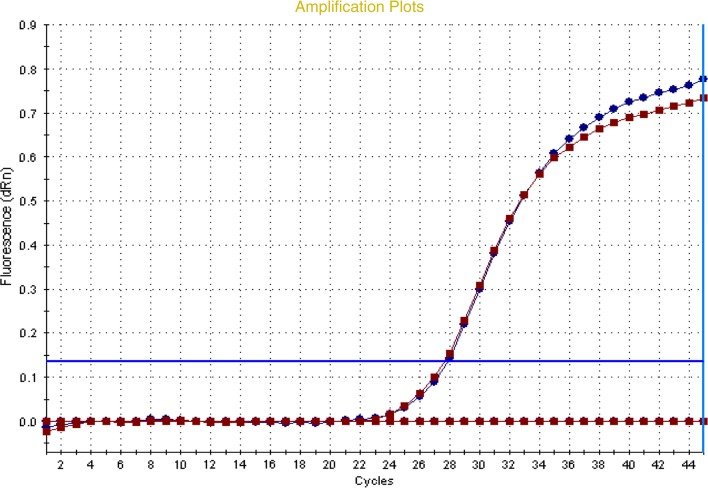
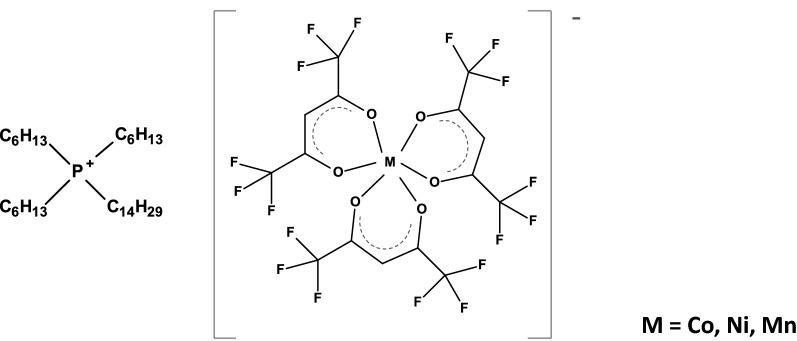
In the present study, a MIL-based magnet-assisted dispersive liquid-liquid microextraction (maDLLME) method was optimized for the extraction of genomic DNA from (L.) Heynh leaves. MILs containing different metal centers were tested and the extraction method was optimized in terms of MIL volume and extraction time for purified DNA and crude lysates. The proposed approach yielded good extraction efficiency and is compatible with both quantitative analysis through fluorimetric-based detection and qualitative analysis as PCR amplification of multi and single locus genes. The protocol was successfully applied to a set of plant species and tissues.

CONCLUSIONS

The developed MIL-based maDLLME approach exhibits good enrichment of nucleic acids for extraction of template suitable for targeted PCR; it is very fast, sustainable and potentially automatable thereby representing a powerful tool for screening plants rapidly using DNA-based methods.

摘要

背景

如今,对快速可靠的植物生物分子分析的需求日益增加。传统的核酸分离方法耗时且需要多个通常无法自动化的步骤来去除细胞干扰,因此样品制备是生物分析工作流程中的主要瓶颈。由于磁性离子液体(MILs)对核酸具有亲和力,使用它们创造了新的机遇。

结果

在本研究中,优化了一种基于MIL的磁辅助分散液液微萃取(maDLLME)方法,用于从番茄(L.)Heynh叶片中提取基因组DNA。测试了含有不同金属中心的MILs,并针对纯化的DNA和粗裂解物,在MIL体积和提取时间方面对提取方法进行了优化。所提出的方法具有良好的提取效率,并且与基于荧光检测的定量分析以及多基因座和单基因座基因的PCR扩增:::::::::::::::::::::::::::::::::::::::::::::::::::::::::::::::::::::::::::::::::::::::::::::::::::::::::::::::::::::::::::::::::::::::::::::::::::::::::::::::::::::::::::::::::::::::::::::::::::::::::::::::::::::::::::::::::::::::::::::::::::::::::::::::::::::::::::::::::::::::::::::::::::::::::::::::::::::::::::::::::::::::::::::::::::::::::::::::::::::::::::::::::::::::::::::::::::::::::::::::::::::::::::::::::::::::::::::::::::::::::::::::::::::::::::::::::::::::::::::::::::::::::::::::::::::::::::::::::::::::::::::::::::::::::::::::::::::::::::::::::::::::::::::::::::::::::::::::::::::::::::::::::::::::::::::::::::::::::::::::::::::::::::::::::::::::::::::::::::::::::::::::::::::::::::::::::::::::::::::::::::::::::::::::::::::::::::::::::::::::::::::::::::::::::::::::::::::::::::::::::::::::::::::::::::::::::::::::::::::::::::::::::::::::::::::::::::::::::::::::::::::::::::::::::::::::::::::::::::::::::::::::::::::::::::::::::::::::::::::::::::::::::::::::::::::::::::::::::::::::::::::::::::::::::::::::::::::::::::::::::::::::::::::::::::::::::::::::::::::::::::::::::::::::::::::::::::::::::::::::::::::::::::::::::::::::::::::::::::::::::::::::::::::::::::::::::::::::::::::::::::::::::::::::::::::::::::::::::::::::::::::::::::::::::::::::::::::::::::::::::::::::::::::::::::::::::::::::::::::::::::::::::::::::::::::::::::::::::::::::::::::::::::::::::::::::::::::::::::::::::::::::::::::::::::::::::::::::::::::::::::::::::::::::::::::::::::::::::::::::::::::::::::::::::::::::::::::::::::::::::::::::::::::::::::::::::::::::::::::::::::::::::::::::::::::::::::::::::::::::::::::::::::::::::::::::::::::::::::::::::::::::::::::::::::::::::::::::::::::::::::::::::::::::::::::::::::::::::::::::::::::::::::::::::::::::::::::::::::::::::::::::::::::::::::::::::::::::::::::::::::::::::::::::::::::::::::::::::::::::::::::::::::::::::::::::::::::::::::::::::::::::::::::::::::::::::::::::::::::::::::::::::::::::::::::::::::::::::::::::::::::::::::::::::::::::::::::::::::::::::::::::::::::::::::::::::::::::::::::::::::::::::::::::::::::::::::::::::::::::::::::::::::::::::::::::::::::::::::::::::::::::::::::::::::::::::::::::::::::::::::::::::::::::::::::::::::::::::::::::::::::::::::::::::::::::::::::::::::::::::::::::::::::::::::::::::::::::::::::::::::::::::::::::::::::::::::::::::::::::::::::::::::::::::::::::::::::::::::::::::::::::::::::::::::::::::::::::::::::::::::::::::::::::::::::::::::::::::::::::::::::::::::::::::::::::::::::::::::::::::::::::::::::::::::::::::::::::::::::::::::::::::::::::::::::::::::::::::::::::::::::::::::::::::::::::::::::::::::::::::::::::::::::::::::::::::::::::::::::::::::::::::::::::::::::::::::::::::::::::::::::::::::::::::::::::::::::::::::::::::::::::::::::::::::::::::::::::::::::::::::::::::::::::::::::::::::::::::::::::::::::::::::::::::::::::::::::::::::::::::::::::::::::::::::::::::::::::::::::::::::::::::::::::::::::::::::::::::::::::::::::::::::::::::::::::::::::::::::::::::::::::::::::::::::::::::::::::::::::::::::::::::::::::::::::::::::::::::::::::::::::::::::::::::::::::::::::::::::::::::::::::::::::::::::::::::::::::::::::::::::::::::::::::::::::::::::::::::::::::::::::::::::::::::::::::::::::::::::::::::::::::::::::::::::::::::::::::::::::::::::::::::::::::::::::::::::::::::::::::::::::::::::::::::::::::::::::::::::::::::::::::::::::::::::::::::::::::::::::::::::::::::::::::::::::::::::::::::::::::::::::::::::::::::::::::::::::::::::::::::::::::::::::::::::::::::::::::::::::::::::::::::::::::::::::::::::::::::::::::::::::::::::::::::::::::::::::::::::::::::::::::::::::::::::::::::::::::::::::::::::::::::::::::::::::::::::::::::::::::::::::::::::::::::::::::::::::::::::::::::::::::::::::::::::::::::::::::::::::::::::::::::::::::::::::::::::::::::::::::::::::::::::::::::::::::::::::::::::::::::::::::::::::::::::::::::::::::::::::::::::::::::::::::::::::::::::::::::::::::::::::::::::::::::::::::::::::::::::
https://cdn.ncbi.nlm.nih.gov/pmc/blobs/f932/6408755/5a2449cc5c4e/13007_2019_408_Fig7_HTML.jpg
https://cdn.ncbi.nlm.nih.gov/pmc/blobs/f932/6408755/a56b2a6218cc/13007_2019_408_Fig1_HTML.jpg
https://cdn.ncbi.nlm.nih.gov/pmc/blobs/f932/6408755/022d19dd4ced/13007_2019_408_Fig2_HTML.jpg
https://cdn.ncbi.nlm.nih.gov/pmc/blobs/f932/6408755/7aec638d1b0f/13007_2019_408_Fig3_HTML.jpg
https://cdn.ncbi.nlm.nih.gov/pmc/blobs/f932/6408755/a7ce6bf45d02/13007_2019_408_Fig4_HTML.jpg
https://cdn.ncbi.nlm.nih.gov/pmc/blobs/f932/6408755/618b674d2c71/13007_2019_408_Fig5_HTML.jpg
https://cdn.ncbi.nlm.nih.gov/pmc/blobs/f932/6408755/1dd43a680250/13007_2019_408_Fig6_HTML.jpg
https://cdn.ncbi.nlm.nih.gov/pmc/blobs/f932/6408755/5a2449cc5c4e/13007_2019_408_Fig7_HTML.jpg
https://cdn.ncbi.nlm.nih.gov/pmc/blobs/f932/6408755/a56b2a6218cc/13007_2019_408_Fig1_HTML.jpg
https://cdn.ncbi.nlm.nih.gov/pmc/blobs/f932/6408755/022d19dd4ced/13007_2019_408_Fig2_HTML.jpg
https://cdn.ncbi.nlm.nih.gov/pmc/blobs/f932/6408755/7aec638d1b0f/13007_2019_408_Fig3_HTML.jpg
https://cdn.ncbi.nlm.nih.gov/pmc/blobs/f932/6408755/a7ce6bf45d02/13007_2019_408_Fig4_HTML.jpg
https://cdn.ncbi.nlm.nih.gov/pmc/blobs/f932/6408755/618b674d2c71/13007_2019_408_Fig5_HTML.jpg
https://cdn.ncbi.nlm.nih.gov/pmc/blobs/f932/6408755/1dd43a680250/13007_2019_408_Fig6_HTML.jpg
https://cdn.ncbi.nlm.nih.gov/pmc/blobs/f932/6408755/5a2449cc5c4e/13007_2019_408_Fig7_HTML.jpg

相似文献

1
Development of an innovative and sustainable one-step method for rapid plant DNA isolation for targeted PCR using magnetic ionic liquids.开发一种创新且可持续的一步法,利用磁性离子液体快速分离植物DNA用于靶向PCR。
Plant Methods. 2019 Mar 9;15:23. doi: 10.1186/s13007-019-0408-x. eCollection 2019.
2
Versatile DNA extraction from diverse plant taxa using ionic liquids and magnetic ionic liquids: a methodological breakthrough for enhanced sample utility.使用离子液体和磁性离子液体从多种植物类群中进行通用DNA提取:提高样本利用率的方法突破。
Plant Methods. 2024 Jun 14;20(1):91. doi: 10.1186/s13007-024-01217-z.
3
Extraction of DNA with magnetic ionic liquids using in situ dispersive liquid-liquid microextraction.利用原位分散液液微萃取技术用磁性离子液体提取 DNA。
Anal Bioanal Chem. 2019 Nov;411(28):7375-7385. doi: 10.1007/s00216-019-02163-9. Epub 2019 Oct 26.
4
Isolation of DNA from plant tissues using a miniaturized matrix solid-phase dispersion approach featuring ionic liquid and magnetic ionic liquid solvents.采用微型基质固相分散法,使用离子液体和磁性离子液体溶剂从植物组织中分离 DNA。
Anal Chim Acta. 2023 Mar 8;1245:340858. doi: 10.1016/j.aca.2023.340858. Epub 2023 Jan 19.
5
Preconcentration of DNA using magnetic ionic liquids that are compatible with real-time PCR for rapid nucleic acid quantification.使用与实时 PCR 兼容的磁性离子液体进行 DNA 预浓缩,以实现快速核酸定量。
Anal Bioanal Chem. 2018 Jul;410(17):4135-4144. doi: 10.1007/s00216-018-1092-9. Epub 2018 Apr 28.
6
Simple and efficient isolation of plant genomic DNA using magnetic ionic liquids.使用磁性离子液体简单高效地分离植物基因组DNA
Plant Methods. 2022 Mar 24;18(1):37. doi: 10.1186/s13007-022-00860-8.
7
Magnetic ionic liquids as non-conventional extraction solvents for the determination of polycyclic aromatic hydrocarbons.磁性离子液体作为用于测定多环芳烃的非常规萃取溶剂。
Anal Chim Acta. 2016 Aug 31;934:106-13. doi: 10.1016/j.aca.2016.06.014. Epub 2016 Jun 15.
8
Rapid preconcentration of viable bacteria using magnetic ionic liquids for PCR amplification and culture-based diagnostics.使用磁性离子液体对活细菌进行快速预富集以用于PCR扩增和基于培养的诊断。
Anal Bioanal Chem. 2017 Aug;409(21):4983-4991. doi: 10.1007/s00216-017-0439-y. Epub 2017 Jun 20.
9
In situ formation of hydrophobic magnetic ionic liquids for dispersive liquid-liquid microextraction.用于分散液液微萃取的疏水性磁性离子液体的原位形成。
J Chromatogr A. 2019 Mar 15;1588:8-16. doi: 10.1016/j.chroma.2018.12.032. Epub 2018 Dec 16.
10
Allelic discrimination between circulating tumor DNA fragments enabled by a multiplex-qPCR assay containing DNA-enriched magnetic ionic liquids.多重 qPCR 分析方法结合富含 DNA 的磁性离子液体实现对循环肿瘤 DNA 片段的等位基因鉴别。
Anal Chim Acta. 2020 Aug 8;1124:184-193. doi: 10.1016/j.aca.2020.04.078. Epub 2020 May 6.

引用本文的文献

1
Ionic liquid-assisted seed genomic DNA extraction for advanced sequencing applications.用于高级测序应用的离子液体辅助种子基因组DNA提取
Plant Methods. 2025 Jul 16;21(1):97. doi: 10.1186/s13007-025-01417-1.
2
Guidelines for the effective and ethical sampling of herbaria.植物标本馆有效且符合道德规范的采样指南。
Nat Ecol Evol. 2025 Feb;9(2):196-203. doi: 10.1038/s41559-024-02544-z. Epub 2024 Sep 27.
3
Versatile DNA extraction from diverse plant taxa using ionic liquids and magnetic ionic liquids: a methodological breakthrough for enhanced sample utility.

本文引用的文献

1
Coupling oligonucleotides possessing a poly-cytosine tag with magnetic ionic liquids for sequence-specific DNA analysis.将带有聚胞嘧啶标签的寡核苷酸与磁性离液液结合用于序列特异性 DNA 分析。
Chem Commun (Camb). 2018 Sep 11;54(73):10284-10287. doi: 10.1039/c8cc05954c.
2
Exploiting Fluorescence Spectroscopy To Identify Magnetic Ionic Liquids Suitable for the Isolation of Oligonucleotides.利用荧光光谱法鉴定适合寡核苷酸分离的磁性离子液体。
J Phys Chem B. 2018 Aug 9;122(31):7747-7756. doi: 10.1021/acs.jpcb.8b05580. Epub 2018 Jul 25.
3
Reduction of the geomagnetic field delays Arabidopsis thaliana flowering time through downregulation of flowering-related genes.
使用离子液体和磁性离子液体从多种植物类群中进行通用DNA提取:提高样本利用率的方法突破。
Plant Methods. 2024 Jun 14;20(1):91. doi: 10.1186/s13007-024-01217-z.
4
Comparing DNA isolation methods for forest trees: quality, plastic footprint, and time-efficiency.比较林木DNA提取方法:质量、塑料足迹和时间效率。
Plant Methods. 2023 Oct 19;19(1):111. doi: 10.1186/s13007-023-01086-y.
5
Research Progress of Nucleic Acid Detection Technology for Genetically Modified Maize.转基因玉米核酸检测技术研究进展。
Int J Mol Sci. 2023 Jul 31;24(15):12247. doi: 10.3390/ijms241512247.
6
Simple and efficient isolation of plant genomic DNA using magnetic ionic liquids.使用磁性离子液体简单高效地分离植物基因组DNA
Plant Methods. 2022 Mar 24;18(1):37. doi: 10.1186/s13007-022-00860-8.
7
The Potential Use of Isothermal Amplification Assays for In-Field Diagnostics of Plant Pathogens.等温扩增检测技术在植物病原体现场诊断中的潜在应用
Plants (Basel). 2021 Nov 10;10(11):2424. doi: 10.3390/plants10112424.
地磁场减弱通过下调开花相关基因延迟拟南芥开花时间。
Bioelectromagnetics. 2018 Jul;39(5):361-374. doi: 10.1002/bem.22123. Epub 2018 Apr 30.
4
Preconcentration of DNA using magnetic ionic liquids that are compatible with real-time PCR for rapid nucleic acid quantification.使用与实时 PCR 兼容的磁性离子液体进行 DNA 预浓缩,以实现快速核酸定量。
Anal Bioanal Chem. 2018 Jul;410(17):4135-4144. doi: 10.1007/s00216-018-1092-9. Epub 2018 Apr 28.
5
Biological and nanotechnological applications using interactions between ionic liquids and nucleic acids.利用离子液体与核酸之间的相互作用的生物和纳米技术应用。
Biophys Rev. 2018 Jun;10(3):931-940. doi: 10.1007/s12551-018-0422-7. Epub 2018 Apr 23.
6
Markers in time and space: A review of the last decade of plant phylogeographic approaches.时间和空间的标记:对过去十年植物系统地理学方法的回顾。
Mol Ecol. 2018 May;27(10):2317-2333. doi: 10.1111/mec.14695.
7
Advances in the analysis of biological samples using ionic liquids.离子液体在生物样品分析中的应用进展。
Anal Bioanal Chem. 2018 Jul;410(19):4567-4573. doi: 10.1007/s00216-018-0898-9. Epub 2018 Feb 12.
8
Reproducible genomic DNA preparation from diverse crop species for molecular genetic applications.从多种作物物种中制备可重复的基因组DNA用于分子遗传学应用。
Plant Methods. 2017 Dec 2;13:106. doi: 10.1186/s13007-017-0255-6. eCollection 2017.
9
Improved method for genomic DNA extraction for Mill. (Cactaceae).用于米氏仙人掌(仙人掌科)基因组DNA提取的改良方法。
Plant Methods. 2017 Oct 11;13:82. doi: 10.1186/s13007-017-0234-y. eCollection 2017.
10
Chemical and biomolecular analyses to discriminate three taxa of Pistacia genus from Sardinia Island (Italy) and their antifungal activity.用于区分来自意大利撒丁岛的黄连木属三个分类群的化学和生物分子分析及其抗真菌活性。
Nat Prod Res. 2018 Dec;32(23):2766-2774. doi: 10.1080/14786419.2017.1378211. Epub 2017 Sep 20.