Houck Darby A, Kraeutler Matthew J, Thornton Loree B, McCarty Eric C, Bravman Jonathan T
Department of Orthopedics, University of Colorado School of Medicine, Aurora, Colorado, USA.
Department of Orthopaedic Surgery, St Joseph's University Medical Center, Paterson, New Jersey, USA.
Orthop J Sports Med. 2019 Mar 14;7(3):2325967119831052. doi: 10.1177/2325967119831052. eCollection 2019 Mar.
Previous meta-analyses have been conducted to compare outcomes of various treatment injections for lateral epicondylitis (LE), including corticosteroid injection (CSI) and autologous blood products such as autologous blood (AB) and platelet-rich plasma (PRP).
To conduct a systematic review of overlapping meta-analyses comparing different injection treatments (CSI, AB, PRP) for LE to determine which meta-analyses provide the best available evidence.
Systematic review; Level of evidence, 2.
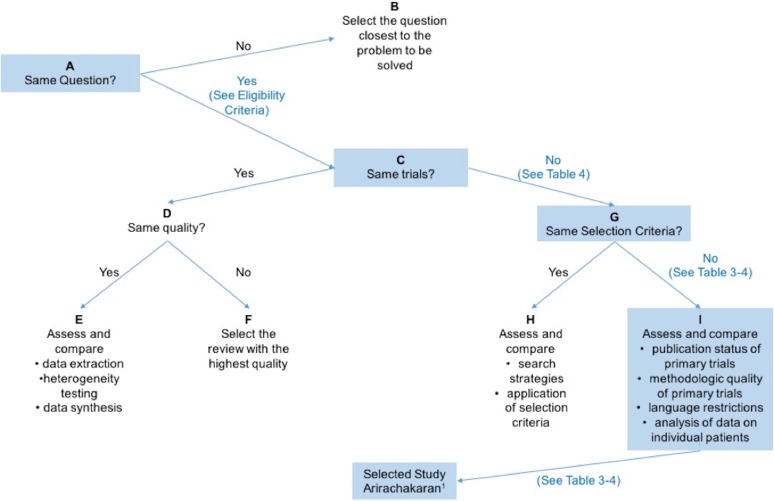
A systematic review was performed by searching PubMed, Embase, and the Cochrane Library to locate meta-analyses that compared clinical outcomes of CSI, AB, and PRP for the treatment of LE. Search terms included "injection," "corticosteroid," "platelet-rich plasma," "autologous blood," "tennis elbow," "lateral epicondylitis," and "meta-analysis." Results were reviewed to determine study eligibility. Patient outcomes were extracted from these meta-analyses. Meta-analysis quality was assessed with the Oxman-Guyatt and Quality of Reporting of Meta-analyses (QUOROM) systems. The Jadad decision algorithm was then used to determine which meta-analyses provided the best level of evidence.
Nine meta-analyses (two level 1 studies, seven level 2 studies) containing 8656 patients met the eligibility criteria. Seven meta-analyses found that autologous blood products such as AB and PRP significantly improved pain and elbow function in the intermediate term (12-26 weeks), while 4 studies found that CSI effectively relieved pain and improved elbow function in the short term (<12 weeks). The study by Arirachakaran et al in 2016 received the highest QUOROM and Oxman-Guyatt scores; therefore, this meta-analysis appears to have the highest level of evidence. In addition, this study was rated the highest-quality study in this systematic review according to the Jadad decision algorithm. Lower-quality meta-analyses indicated that dosage, number of injections, and differences in therapeutic duration between CSI and autologous blood products may be essential factors in determining the appropriate treatment injection protocol for LE.
The current best available evidence suggests that CSI improves functional outcomes and pain relief in the short term, while AB and PRP are the most effective treatments in the intermediate term.
之前已进行过荟萃分析,以比较各种治疗性注射剂用于外侧上髁炎(LE)的疗效,包括皮质类固醇注射(CSI)以及自体血制品,如自体血(AB)和富血小板血浆(PRP)。
对比较LE的不同注射治疗方法(CSI、AB、PRP)的重叠荟萃分析进行系统评价,以确定哪些荟萃分析提供了最佳现有证据。
系统评价;证据等级,2级。
通过检索PubMed、Embase和Cochrane图书馆进行系统评价,以查找比较CSI、AB和PRP治疗LE的临床疗效的荟萃分析。检索词包括“注射”“皮质类固醇”“富血小板血浆”“自体血”“网球肘”“外侧上髁炎”和“荟萃分析”。对结果进行审查以确定研究的合格性。从这些荟萃分析中提取患者的疗效数据。使用Oxman-Guyatt和荟萃分析报告质量(QUOROM)系统评估荟萃分析的质量。然后使用Jadad决策算法确定哪些荟萃分析提供了最佳证据水平。
9项荟萃分析(2项1级研究,7项2级研究)纳入8656例患者,符合纳入标准。7项荟萃分析发现,AB和PRP等自体血制品在中期(12 - 26周)能显著改善疼痛和肘部功能,而4项研究发现CSI在短期内(<12周)能有效缓解疼痛并改善肘部功能。Arirachakaran等人在2016年进行的研究获得了最高的QUOROM和Oxman-Guyatt评分;因此,该荟萃分析似乎具有最高的证据水平。此外,根据Jadad决策算法,该研究在本系统评价中被评为质量最高的研究。质量较低的荟萃分析表明,CSI与自体血制品之间的剂量、注射次数以及治疗持续时间差异可能是确定LE合适治疗注射方案的关键因素。
目前最佳现有证据表明,CSI在短期内可改善功能结局并缓解疼痛,而AB和PRP在中期是最有效的治疗方法。