Division of Systems and Digestive Medicine, Department of Surgery and Cancer, Imperial College London, Exhibition Road, London, SW7 2AZ, UK.
Department of Biochemistry, Faculty of Biotechnology and Biomolecular Sciences, Universiti Putra Malaysia, 43400 UPM, Serdang, Selangor, Malaysia.
Acta Diabetol. 2019 May;56(5):493-500. doi: 10.1007/s00592-019-01312-x. Epub 2019 Mar 22.
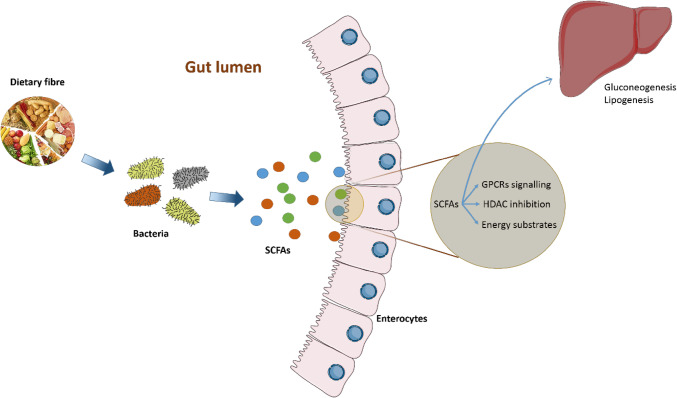
The human gut is a home for more than 100 trillion bacteria, far more than all other microbial populations resident on the body's surface. The human gut microbiome is considered as a microbial organ symbiotically operating within the host. It is a collection of different cell lineages that are capable of communicating with each other and the host and has an ability to undergo self-replication for its repair and maintenance. As the gut microbiota is involved in many host processes including growth and development, an imbalance in its ecological composition may lead to disease and dysfunction in the human. Gut microbial degradation of nutrients produces bioactive metabolites that bind target receptors, activating signalling cascades, and modulating host metabolism. This review covers current findings on the nutritional and pharmacological roles of selective gut microbial metabolites, short-chain fatty acids, methylamines and indoles, as well as discussing nutritional interventions to modulate the microbiome.
人体肠道是超过 1000 万亿细菌的家园,远远超过身体表面其他常驻微生物群体。人类肠道微生物组被认为是一个在宿主中协同运作的微生物器官。它是一个能够相互沟通和与宿主沟通的不同细胞谱系的集合,并且具有自我复制以进行修复和维护的能力。由于肠道微生物群参与许多宿主过程,包括生长和发育,其生态组成的失衡可能导致人类疾病和功能障碍。肠道微生物对营养物质的降解产生生物活性代谢物,这些代谢物结合靶受体,激活信号级联,调节宿主代谢。这篇综述涵盖了关于选择性肠道微生物代谢物、短链脂肪酸、甲基胺和吲哚的营养和药理作用的最新发现,并讨论了调节微生物组的营养干预措施。