Abbass Marwa M S, AbuBakr Nermeen, Radwan Israa Ahmed, Rady Dina, El Moshy Sara, Ramadan Mohamed, Ahmed Attera, Al Jawaldeh Ayoub
Oral Biology Department, Faculty of Dentistry, Cairo University, Cairo, Egypt.
Specialized Dental Hospital, Armed Forces Medical Complex, Cairo, Egypt.
F1000Res. 2019 Mar 1;8:243. doi: 10.12688/f1000research.17892.1. eCollection 2019.
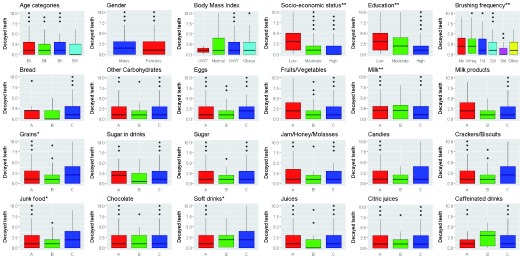
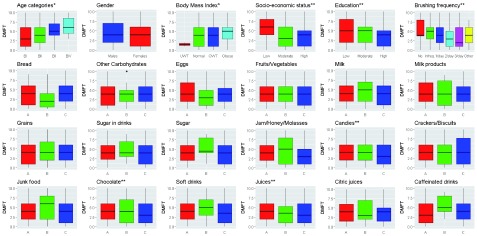
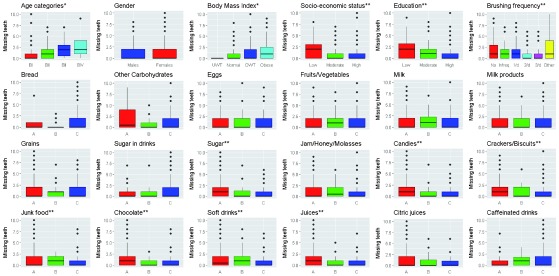
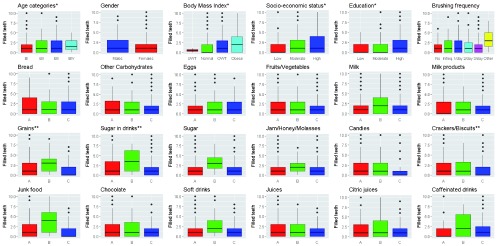
Dental caries is a major public health problem and the most widespread chronic disease to affect individuals throughout their lifetime. Little information exists about the prevalence of dental caries among Egyptian adults. Therefore, this study investigated the dental caries experience among Egyptian adults in correlation with different risk factors. A total of 359 Egyptian adults (age range, 18-74 years) were examined over a period of 3 months, starting on the 15 of November 2017 until the 13 of January 2018. Socio-demographic data, brushing frequency, body mass index (BMI) and eating habits were recorded and collected using a questionnaire. Dental examination was performed using the Decayed, Missing and Filled tooth (DMFT) index. In total, 86.63% of participants had dental caries experience. Of the participants, 60.45%, 48.47% and 55.43% had at least one decayed, missing and filled tooth, respectively. The mean number of decayed, missing, filled or DMFT for the whole sample were 2.4±3.6, 1.98±3.99, 1.79±2.45, 6.09±5.7, respectively. Decayed teeth were inversely correlated with socio-economic status (SES), education level, brushing frequency and milk consumption and positively correlated with grains, junk food and soda drinks consumption. Missing teeth were inversely correlated with SES, education level and brushing frequency, while positively correlated with age, BMI and caffeinated drink consumption. Conversely, filled teeth were positively correlated with age, BMI, SES and education level, while negatively correlated with grains and sugars in drinks. The present study clarifies that age, BMI, SES, education level and brushing frequency are risk factors significantly associated with dental caries prevalence amongst Egyptian adults. Egyptian adults' dietary habits might lead to obesity, which indirectly causes dental caries rather than directly as in children.
龋齿是一个主要的公共卫生问题,也是影响人们一生的最普遍的慢性疾病。关于埃及成年人龋齿患病率的信息很少。因此,本研究调查了埃及成年人的龋齿经历及其与不同风险因素的相关性。在2017年11月15日至2018年1月13日的3个月时间里,共检查了359名埃及成年人(年龄范围为18 - 74岁)。使用问卷记录并收集社会人口统计学数据、刷牙频率、体重指数(BMI)和饮食习惯。使用龋失补牙指数(DMFT)进行牙齿检查。总体而言,86.63%的参与者有龋齿经历。在参与者中,分别有60.45%、48.47%和55.43%至少有一颗龋齿、缺失牙和补牙。整个样本的龋齿、缺失牙、补牙或DMFT的平均数分别为2.4±3.6、1.98±3.99、1.79±2.45、6.09±5.7。龋齿与社会经济地位(SES)、教育水平、刷牙频率和牛奶摄入量呈负相关,与谷物、垃圾食品和苏打水摄入量呈正相关。缺失牙与SES、教育水平和刷牙频率呈负相关,与年龄、BMI和含咖啡因饮料摄入量呈正相关。相反,补牙与年龄、BMI、SES和教育水平呈正相关,与谷物和饮料中的糖分呈负相关。本研究表明,年龄、BMI、SES、教育水平和刷牙频率是与埃及成年人龋齿患病率显著相关的风险因素。埃及成年人的饮食习惯可能导致肥胖,肥胖间接导致龋齿,而不像儿童那样直接导致龋齿。