Stojanovska Vanesa, Prakash Monica, McQuade Rachel, Fraser Sarah, Apostolopoulos Vasso, Sakkal Samy, Nurgali Kulmira
Institute for Health and Sport, Victoria University, Melbourne, VIC 8001, Australia.
Department of Medicine, Western Health, Faculty of Medicine, Dentistry and Health Sciences, The University of Melbourne, Australia.
Biomed Res Int. 2019 Feb 18;2019:4650695. doi: 10.1155/2019/4650695. eCollection 2019.
Oxaliplatin is a platinum-based chemotherapeutic agent demonstrating significant antitumor efficacy. Unlike conventional anticancer agents which are immunosuppressive, oxaliplatin has the capacity to stimulate immunological effects in response to the presentation of damage associated molecular patterns (DAMPs) elicited upon cell death. However, the effects of oxaliplatin treatment on systemic immune responses remain largely unknown. Aims of this study were to investigate the effects of oxaliplatin treatment on the proportions of (1) splenic T cells, B cells, macrophages, pro-/anti-inflammatory cytokines, gene expression of splenic cytokines, chemokines, and mediators; (2) double-positive and single-positive CD4 and CD8 T thymocytes; (3) bone-marrow hematopoietic stem and progenitor cells.
Male BALB/c mice received intraperitoneal injections of oxaliplatin (3mg/kg/d) or sterile water tri-weekly for 2 weeks. Leukocyte populations within the spleen, thymus, and bone-marrow were assessed using flow cytometry. RT-PCR was performed to characterise changes in splenic inflammation-associated genes.
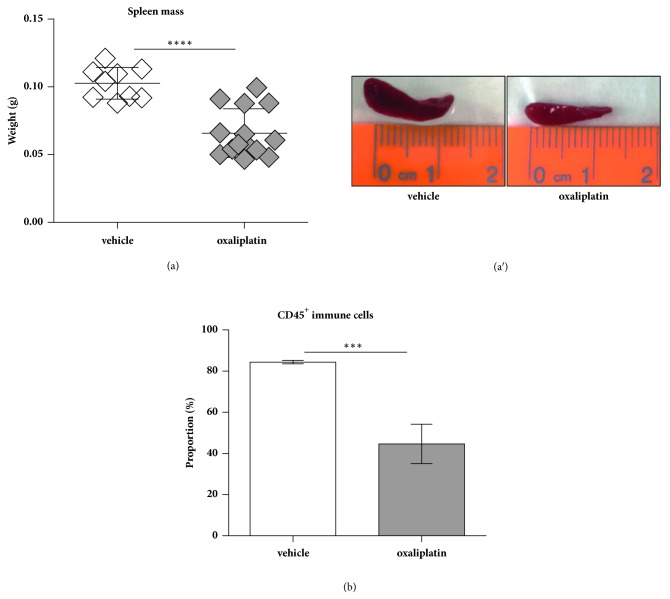
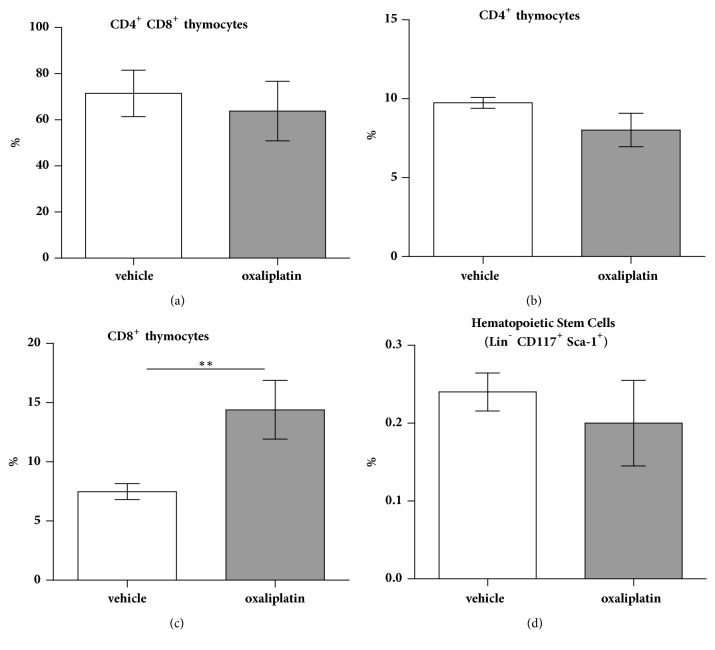
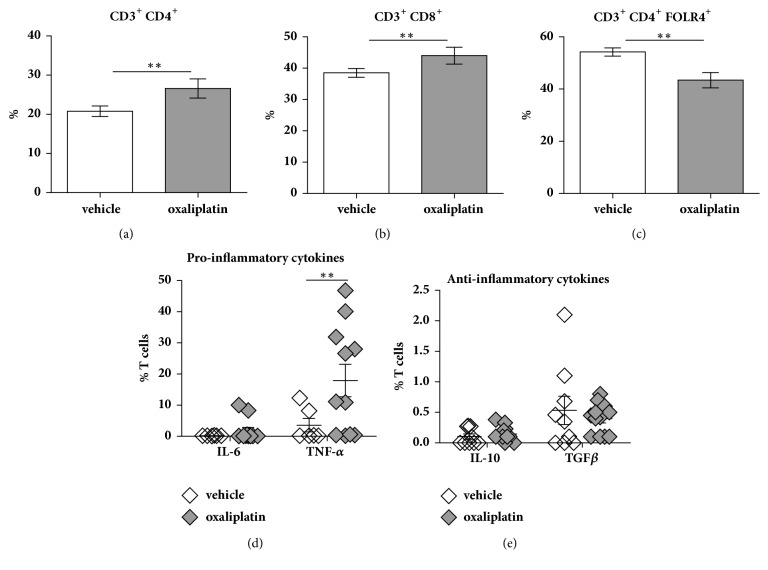
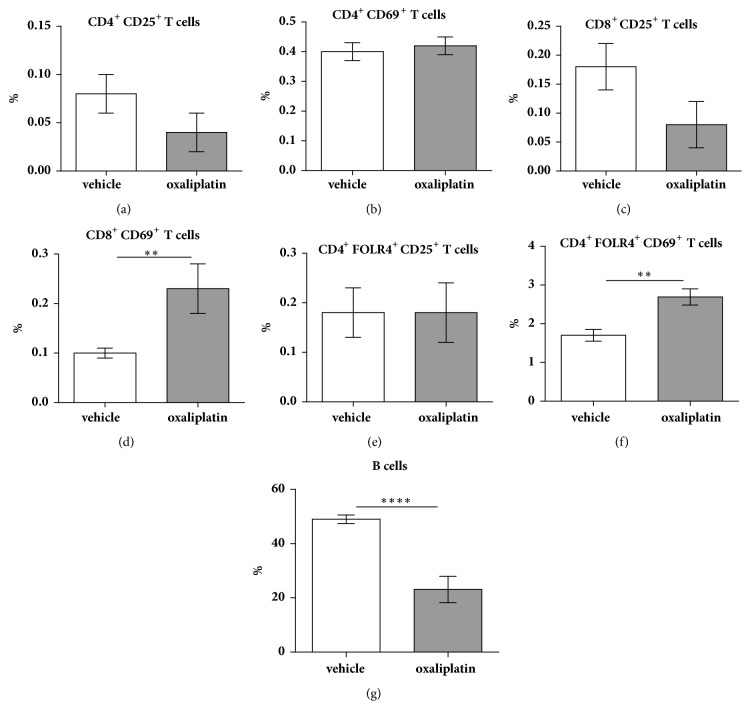
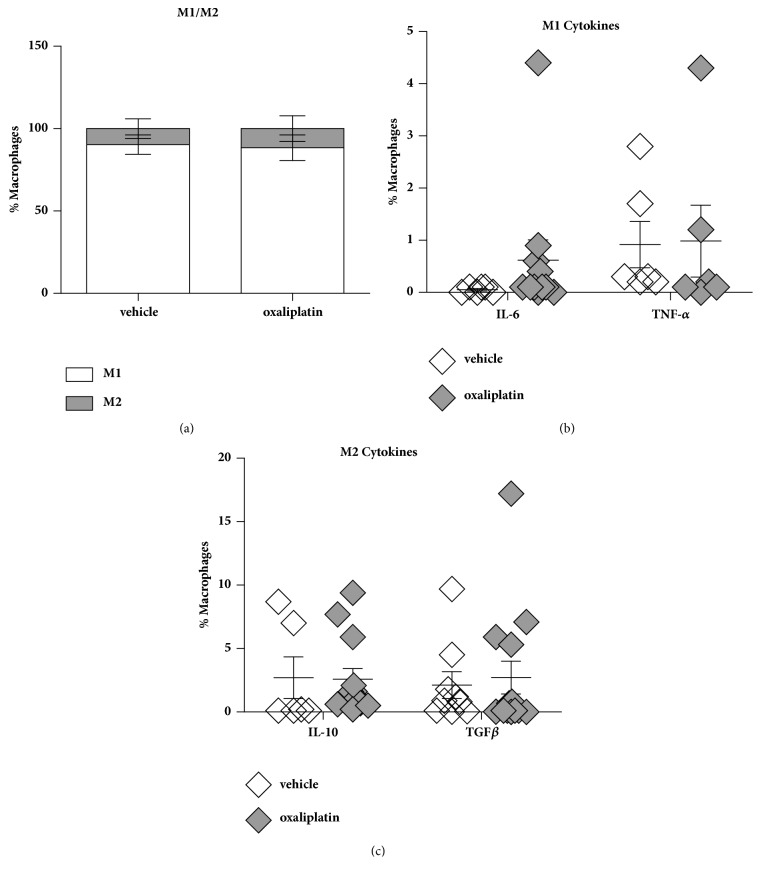
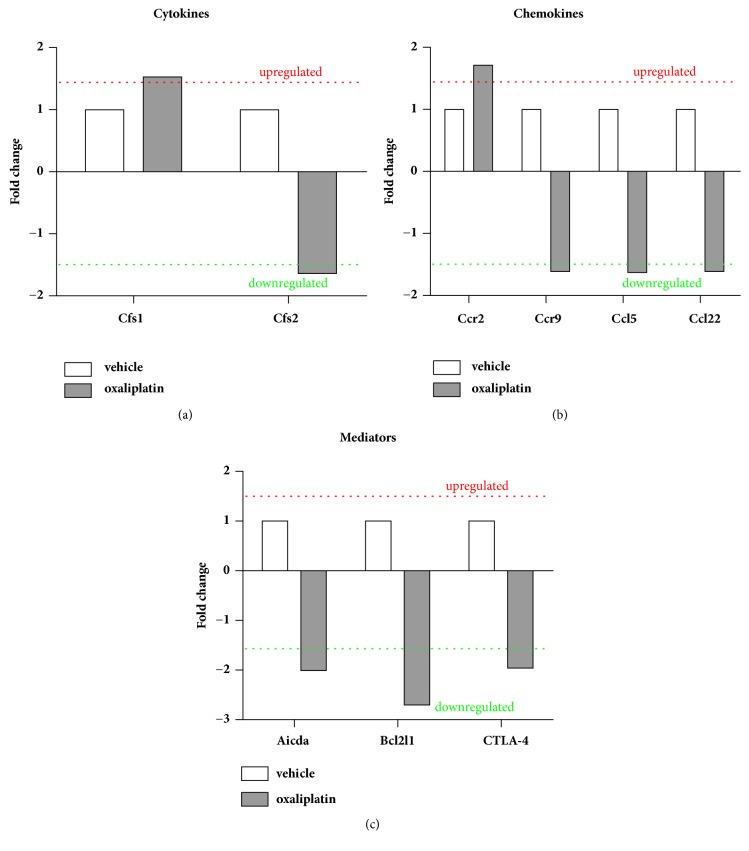
Oxaliplatin treatment reduced spleen size and cellularity (CD45 cells), increased the proportion of CD4, CD8, and Treg cells, and elevated TNF- expression. Oxaliplatin was selectively cytotoxic to B cells but had no effect on splenic macrophages. Oxaliplatin treatment altered the gene expression of several cytokines, chemokines, and cell mediators. Oxaliplatin did not deplete double-positive thymocytes but increased the single-positive CD8 subset. There was also an increase in activated (CD69) CD8 T cells. Bone-marrow hematopoietic progenitor pool was demonstrably normal following oxaliplatin treatment when compared to the vehicle-treated cohort.
Oxaliplatin does not cause systemic immunosuppression and, instead, has the capacity to induce beneficial antitumor immune responses.
奥沙利铂是一种铂类化疗药物,具有显著的抗肿瘤疗效。与具有免疫抑制作用的传统抗癌药物不同,奥沙利铂能够在细胞死亡引发损伤相关分子模式(DAMPs)时刺激免疫反应。然而,奥沙利铂治疗对全身免疫反应的影响在很大程度上仍不清楚。本研究的目的是调查奥沙利铂治疗对以下方面比例的影响:(1)脾脏T细胞、B细胞、巨噬细胞、促炎/抗炎细胞因子、脾脏细胞因子、趋化因子和介质的基因表达;(2)双阳性和单阳性CD4和CD8 T胸腺细胞;(3)骨髓造血干细胞和祖细胞。
雄性BALB/c小鼠每周接受三次腹腔注射奥沙利铂(3mg/kg/d)或无菌水,持续2周。使用流式细胞术评估脾脏、胸腺和骨髓中的白细胞群体。进行逆转录聚合酶链反应(RT-PCR)以表征脾脏炎症相关基因的变化。
奥沙利铂治疗可减小脾脏大小并降低细胞数量(CD45细胞),增加CD4、CD8和调节性T细胞(Treg)的比例,并提高肿瘤坏死因子(TNF)的表达。奥沙利铂对B细胞具有选择性细胞毒性,但对脾脏巨噬细胞无影响。奥沙利铂治疗改变了几种细胞因子、趋化因子和细胞介质的基因表达。奥沙利铂不会耗尽双阳性胸腺细胞,但会增加单阳性CD8亚群。活化的(CD69)CD8 T细胞也有所增加。与接受赋形剂治疗的队列相比,奥沙利铂治疗后骨髓造血祖细胞池明显正常。
奥沙利铂不会引起全身免疫抑制,相反,它有能力诱导有益的抗肿瘤免疫反应。